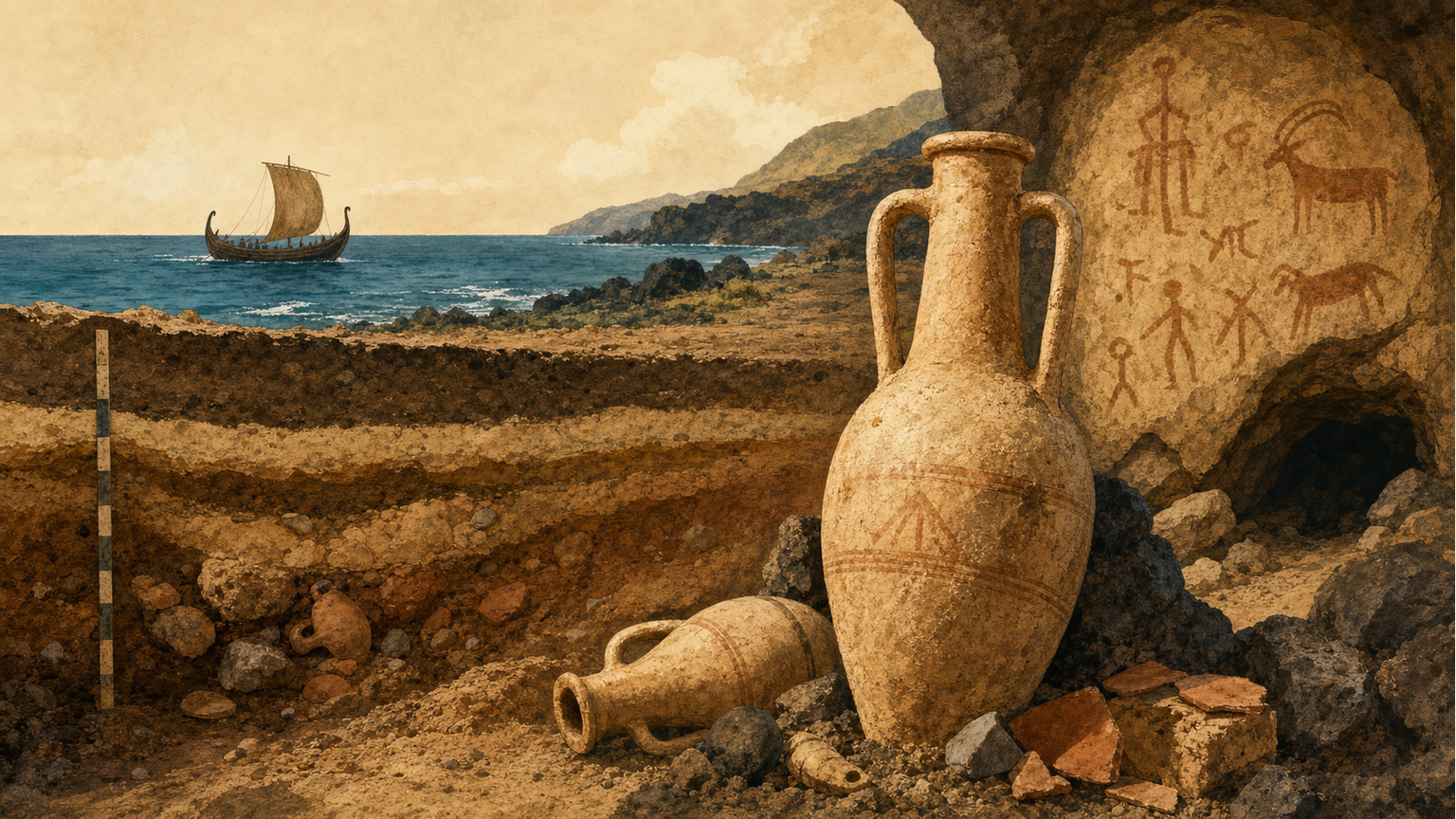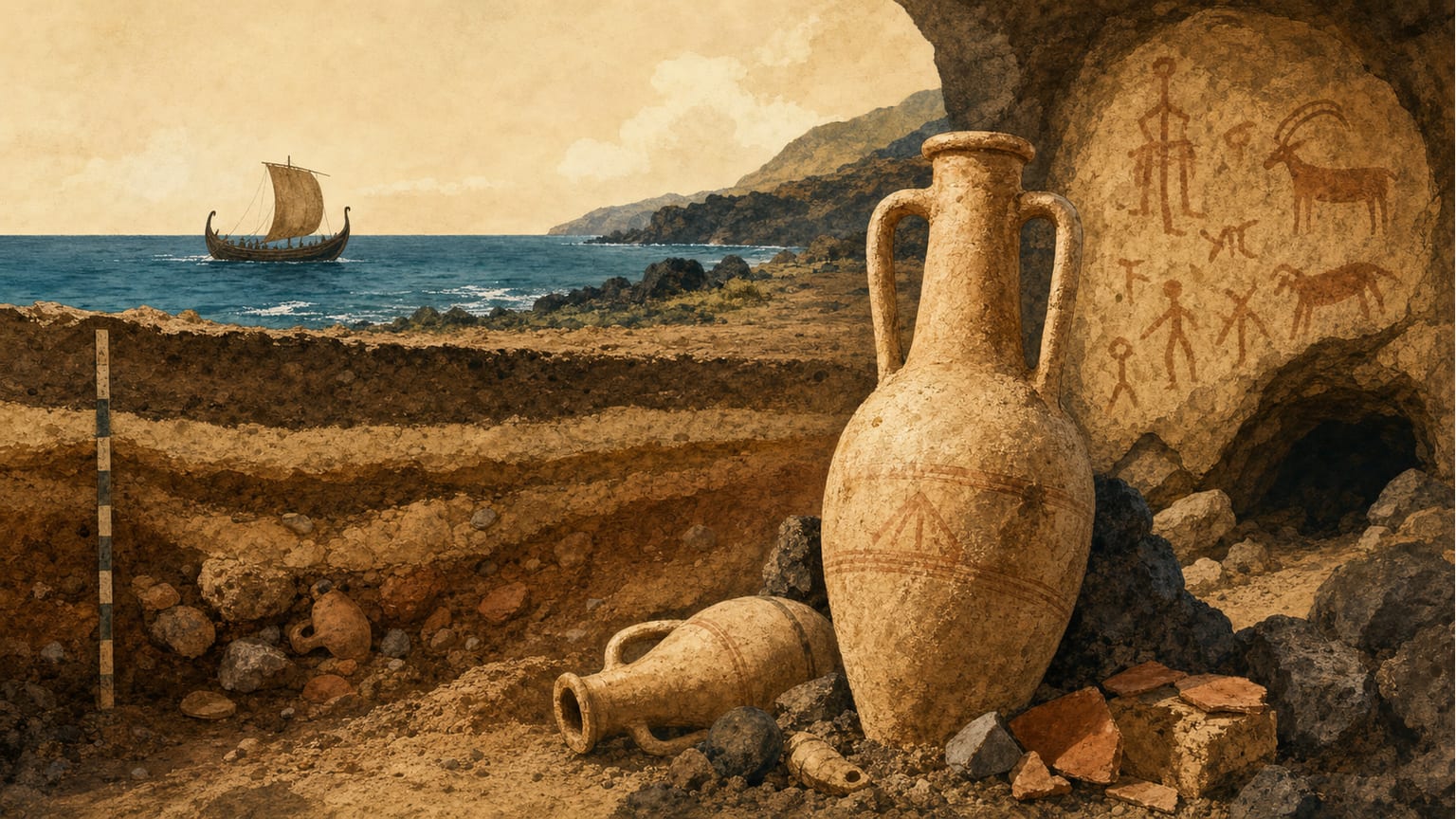

The Hermógenes Afonso (HUPALUPA) collection, housed at the Archaeological Museum of Tenerife, contains a series of ceramic pieces that are significant for the study of Punic-style amphorae on the island[1]. According to González Antón, Rafael; Rosario Adrián, Mª Candelaria; Arco Aguilar, Mª Mercedes del, these amphorae have been identified within the collection, and their analysis provides insights into the chronology and cultural connections of Tenerife’s indigenous population[1].
The amphorae found in the collection are associated with the fish-salting and garum industry and have been classified as belonging to the Tiñosa or Carmona group, with a chronology that, according to the authors, should be placed between the 6th and 3rd centuries BCE[1]. The source notes that their presence has been detected throughout almost the entire island and across a wide range of dates, indicating that they were present for much of the indigenous period[1].
González Antón and co-authors emphasize that these amphorae may have had not only a commercial use but also a ritual or votive function, paralleling what has been documented in the Iberian Peninsula for similar vessels[1]. The source states: “el tipo Tiñosa presenta la particularidad de que también tiene carácter religioso al ser utilizada como ofrenda” (the Tiñosa type also has a religious character as it is used as an offering)[1].
The cultural and chronological attribution of the Punic-style amphorae found in Tenerife is supported by similar finds at the Colla fish-salting factory, where spouts comparable to those on the island have been discovered, as well as by the presence of associated microceramics[1]. The authors consider that the relative chronology of these pieces is recent in archaeological terms, placing them between the 1st century BCE and the 3rd century CE, situating them within a context culturally related to the Punic world[1].
The source stresses that the poverty of indigenous ceramics in Tenerife indicates that there were very few or no later contributions after the colonization period, suggesting a long-standing isolation of the island from other cultural influences[1]. Thus, the Punic-style amphorae stand as material testimony to the contacts and persistence of foreign cultural elements in the indigenous society of Tenerife, as interpreted by González Antón and co-authors in 1998[1].