

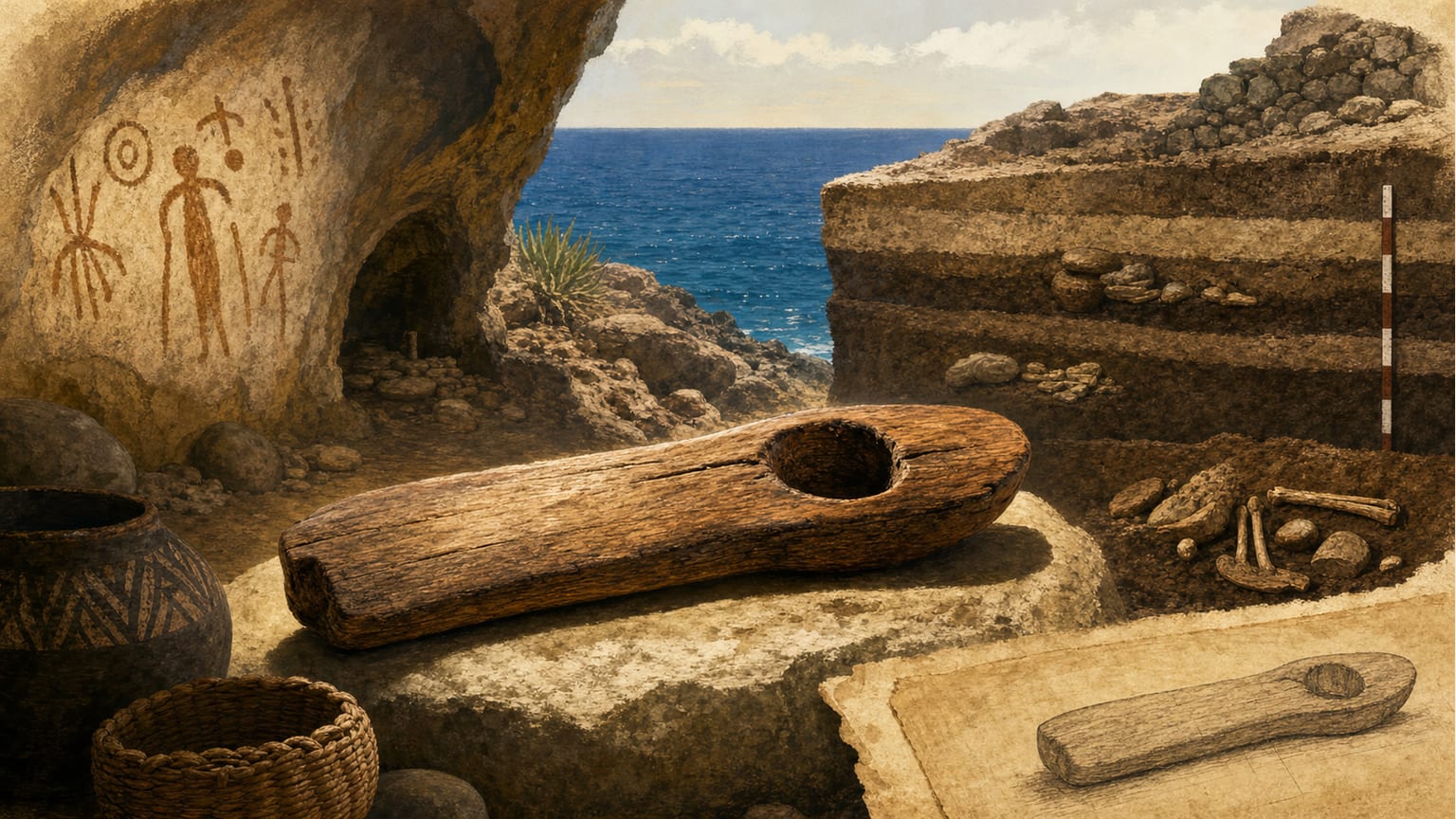
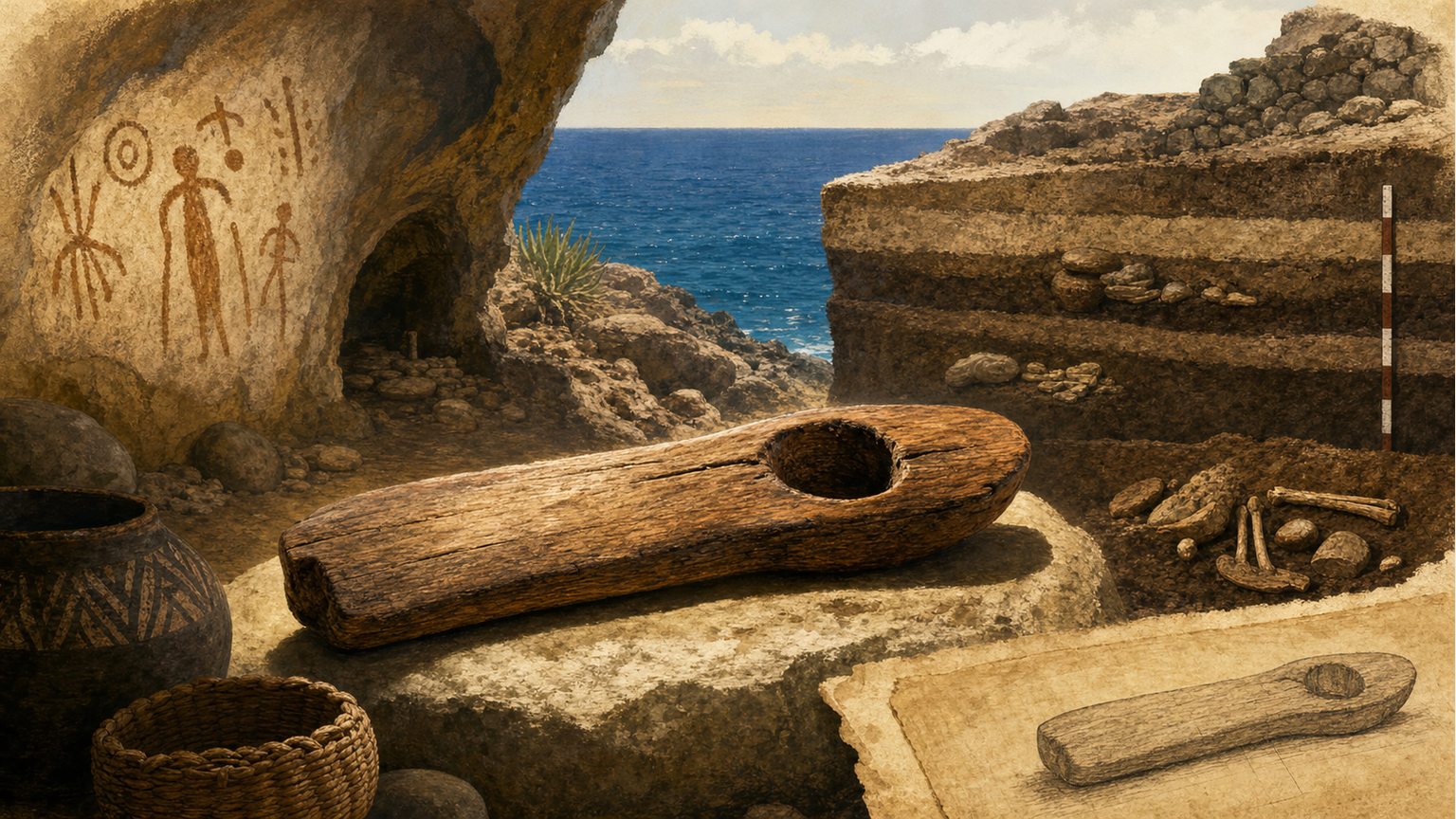
The Hermógenes Afonso (Hupalupa) collection, held at the Archaeological Museum of Tenerife, is notable not only for its ceramics but also for a remarkable wooden artifact. According to González Antón, Rafael; Rosario Adrián, Mª Candelaria; and Arco Aguilar, Mª Mercedes del, this object, catalogued as number 23, is an exceptional find and was previously unknown in the Guanche material culture of Tenerife[1].
The artifact consists of a piece of wood with a central longitudinal groove, accompanied by a cylindrical piece showing signs of burning at one end. The authors suggest that it is probably a fire-making tool, or fire starter[1]. This is significant because, up to the time of the catalog’s publication, no similar item had been documented in the indigenous archaeology of Tenerife.
The importance of this object lies in its contribution to our understanding of the techniques and tools used by the island’s indigenous populations for woodworking and fire production. Wood, while rarely preserved in archaeological contexts compared to ceramics or stone, likely played an important role in the daily life of Tenerife’s early inhabitants[1].
The process of incorporating this artifact into the collection was described as “traumatic” by the catalog’s authors, as it initially made it difficult to obtain supplementary data for study. However, after contacting Hermógenes Afonso, additional information was gathered about the find’s context and characteristics, though his passing prevented the completion of full documentation[1].
The wooden piece was found in the Las Cañadas area, a high-mountain region of Tenerife where, according to the authors, other archaeological materials have been discovered in caches, possibly linked to pastoral or ritual activities[1]. The presence of this tool suggests that the ancient Canarians possessed advanced knowledge of natural resources and the manufacture of functional implements for survival.
In summary, the wooden artifact from the Hermógenes Afonso collection is a unique testimony to the indigenous material culture of Tenerife and demonstrates the diversity of techniques and materials used by its inhabitants before European conquest, as documented by González Antón, Rosario Adrián, and Arco Aguilar in 1998[1].