

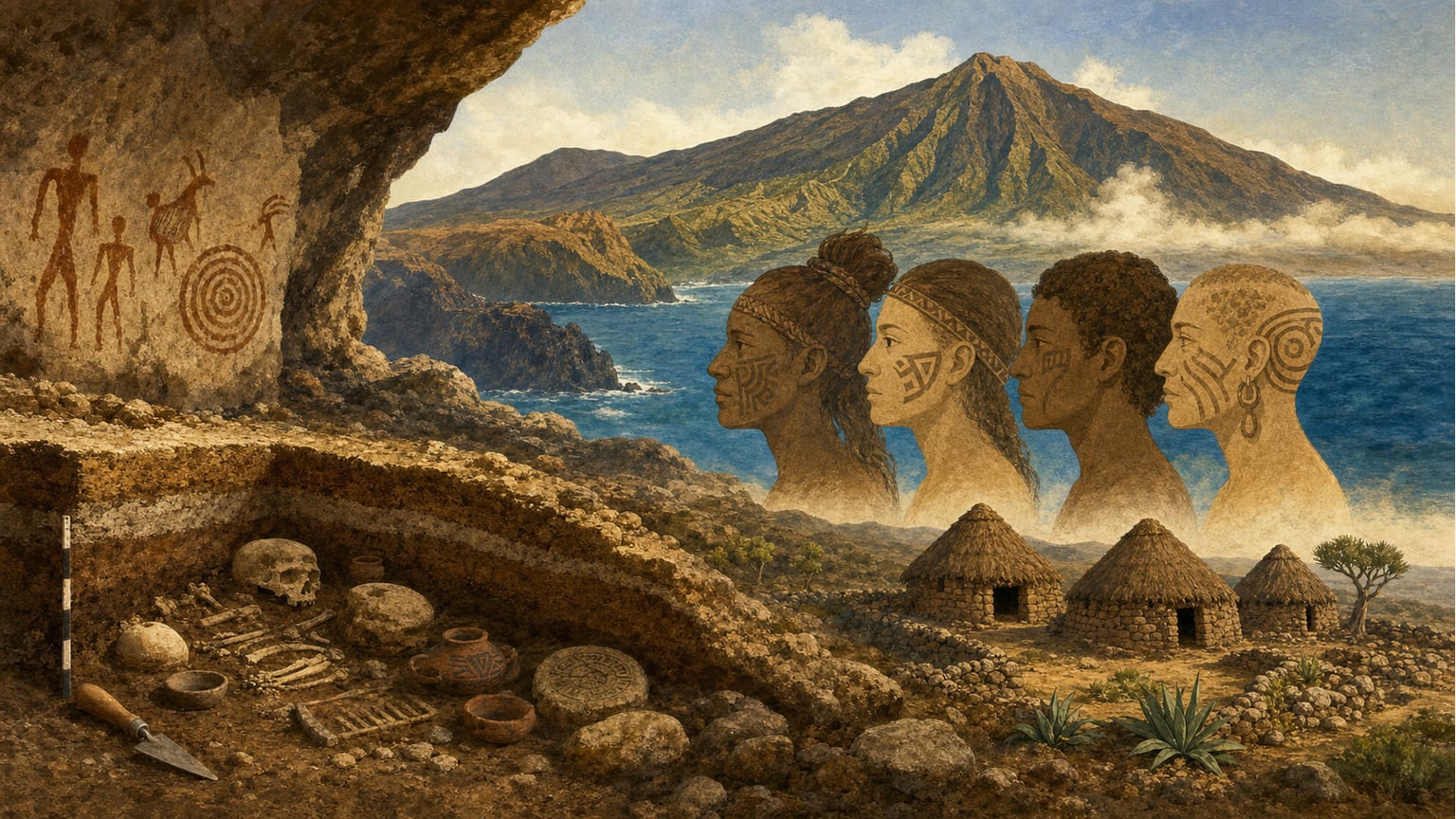
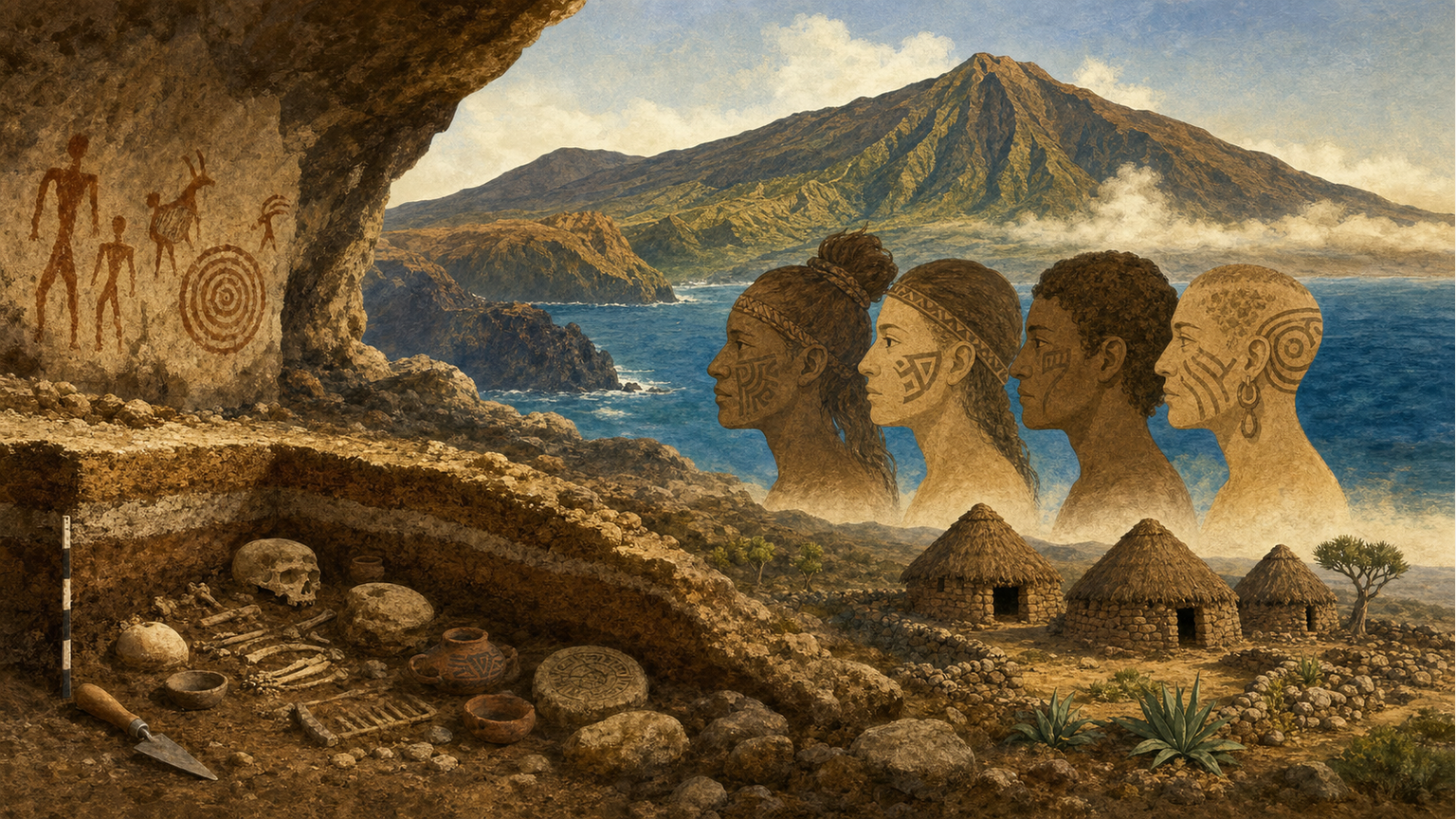
One of the most notable aspects in bioanthropological research on the Guanches of Tenerife is the pronounced isolation not only between islands but also within Tenerife itself. According to Conrado Rodríguez Martín and Mercedes Martín Oval, each island was its own world, and the differences observed in many physical-anthropological, bioarchaeological, and pathological parameters within Tenerife are very marked[1].
This internal diversity is reflected in studies on physical morphology, diet, demography, and pathology of the Guanche population. The authors point out that even within Tenerife, differences between regions are evident, suggesting both inter-island and intra-island isolation. This phenomenon is partly attributed to the island’s mountainous geography, which hindered exchanges between different human groups and favored the development of distinct characteristics in each area[1].
The book “Guanches. Una historia bioantropológica” emphasizes that most of the data collected about the Guanches of Tenerife cannot be extrapolated to indigenous populations of other Canary Islands. This is because each island had its own environmental conditions, resources, and historical trajectories, reinforcing the uniqueness of its inhabitants[1].
In the analysis of physical variability, the authors highlight that studies have identified clear differences in stature, robustness, pigmentation, and cranial typology among Guanches from different areas of Tenerife. These differences have been documented through osteological and genetic research conducted in recent decades at the Archaeological Museum of Tenerife and the Canary Institute of Bioanthropology[1].
Diversity is also evident in patterns of physical activity and the prevalence of certain pathologies. For example, the frequency of traumas or joint diseases can vary significantly between regions, possibly related to different lifestyles and the limitations imposed by geographical isolation[1].
In conclusion, geographical isolation and internal diversity are key elements for understanding the biological and cultural evolution of the Guanches of Tenerife. Recent studies underline the need to analyze each region of the island specifically, avoiding generalizations that do not reflect the real complexity of Tenerife’s pre-Hispanic population[1].