

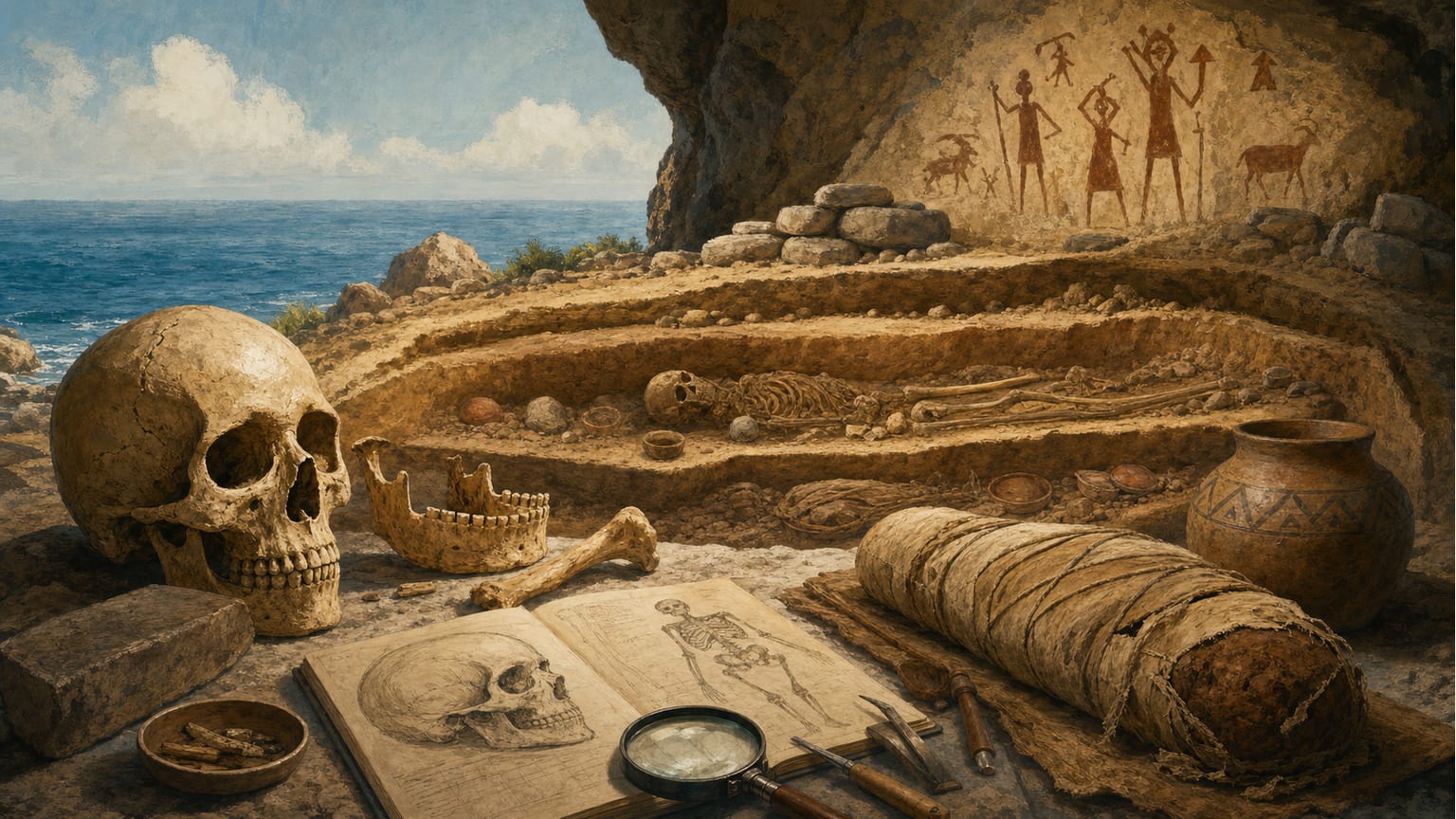
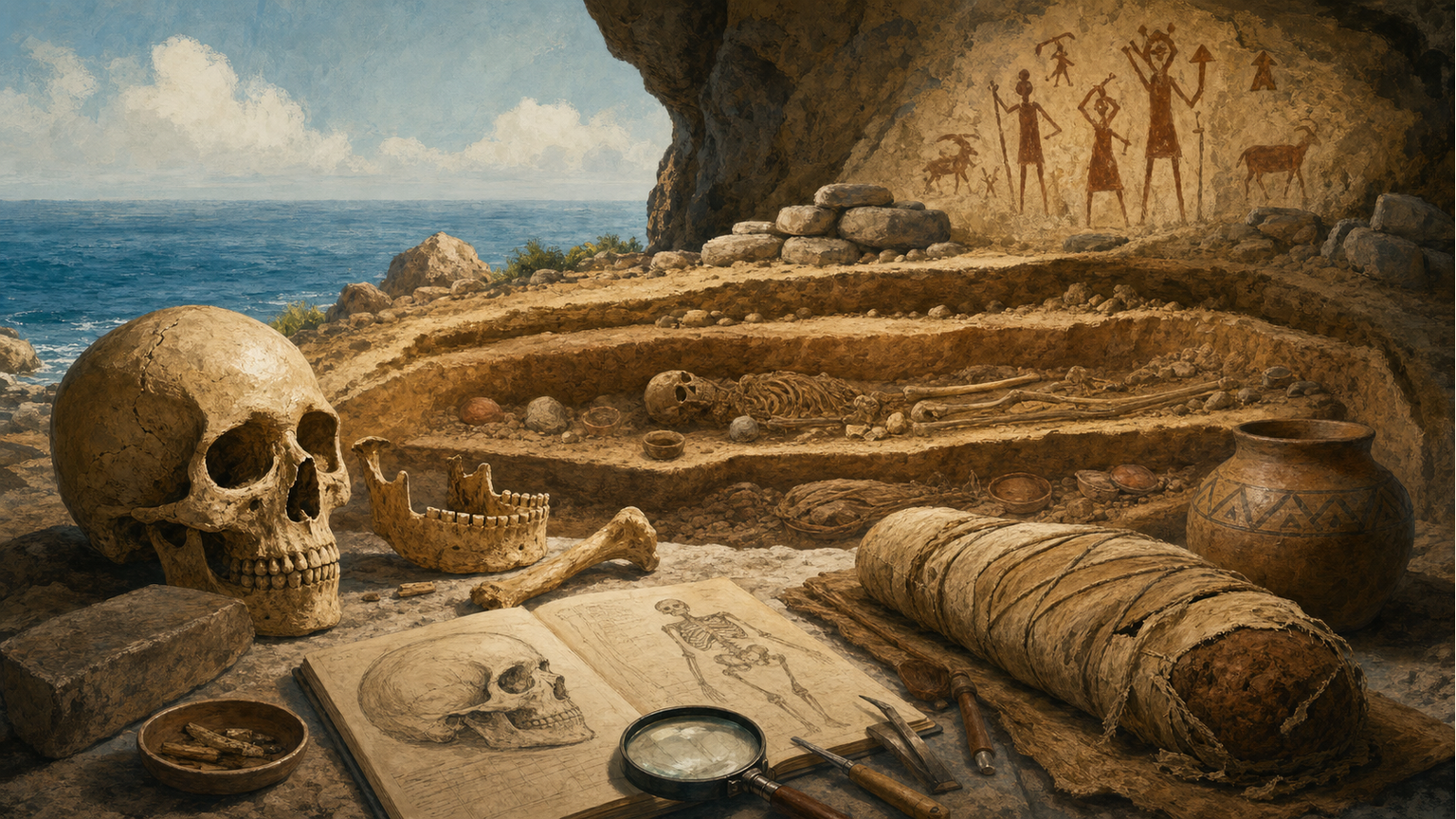
Paleopathology, the study of ancient diseases through skeletal and mummified remains, has played a key role in understanding the biological history of the indigenous populations of the Canary Islands. According to Conrado Rodríguez Martín and Mercedes Martín Oval, the development of this discipline in the archipelago has faced methodological challenges and the dispersion of materials and bibliographic sources[1].
One major obstacle identified by the authors is the dispersion of bibliographic material, as many important works are not found in specialized publications but rather in general works or hard-to-access journals. Additionally, the diversity in the origins of researchers and their methodological schools has made it difficult to compare results and consolidate a unified view of the health and pathologies of the ancient Canarians[1].
Paleopathology in the Canary Islands began to take shape in the 19th century, with pioneering contributions from figures like Gregorio Chil y Naranjo, who in 1878 made observations on bone lesions and ancestral medical practices. However, it was in the 20th century that the discipline advanced notably thanks to the work of Juan Bosch Millares, director of the Museo Canario in Las Palmas. Bosch Millares, aware of his methodological limitations, focused on compiling and analyzing physical-anthropological and paleopathological studies conducted in the islands, highlighting the importance of cranial trauma and the low incidence of specific bone infections among the aboriginal population[1].
Bosch Millares’ general conclusions include the high prevalence of cranial trauma, especially fractures caused by human violence, and the scarcity of postcranial trauma. He also noted the low incidence of nonspecific skeletal infections and the rarity of bone tumors, as well as the significance of degenerative joint disease or osteoarthritis in pre-Hispanic populations[1].
He classified the cranial practices of the aborigines into three groups: trepanation, cauterization, and scarification, providing a more detailed view of the medical interventions practiced in the past. Nevertheless, the authors caution that, although Bosch’s paleopathological diagnoses are often accurate, his interpretations may lack rigorous statistical analysis and comprehensive bibliographic review[1].
The development of paleopathology in the Canary Islands has made it possible to reconstruct key aspects of the lives and health of the ancient inhabitants, revealing how violence, joint diseases, and medical practices were part of their daily reality. However, methodological challenges and the need to integrate new technologies and interdisciplinary approaches remain ongoing tasks for future research[1].