
ContemporaryScience19th CenturyArchaeology and rural life on Gran Canaria

Physician, curator and explorer

The first curator of El Museo Canario, he combined the organisation of collections with explorations and drawings of Gran Canaria’s archaeological sites and rural customs.
Early life

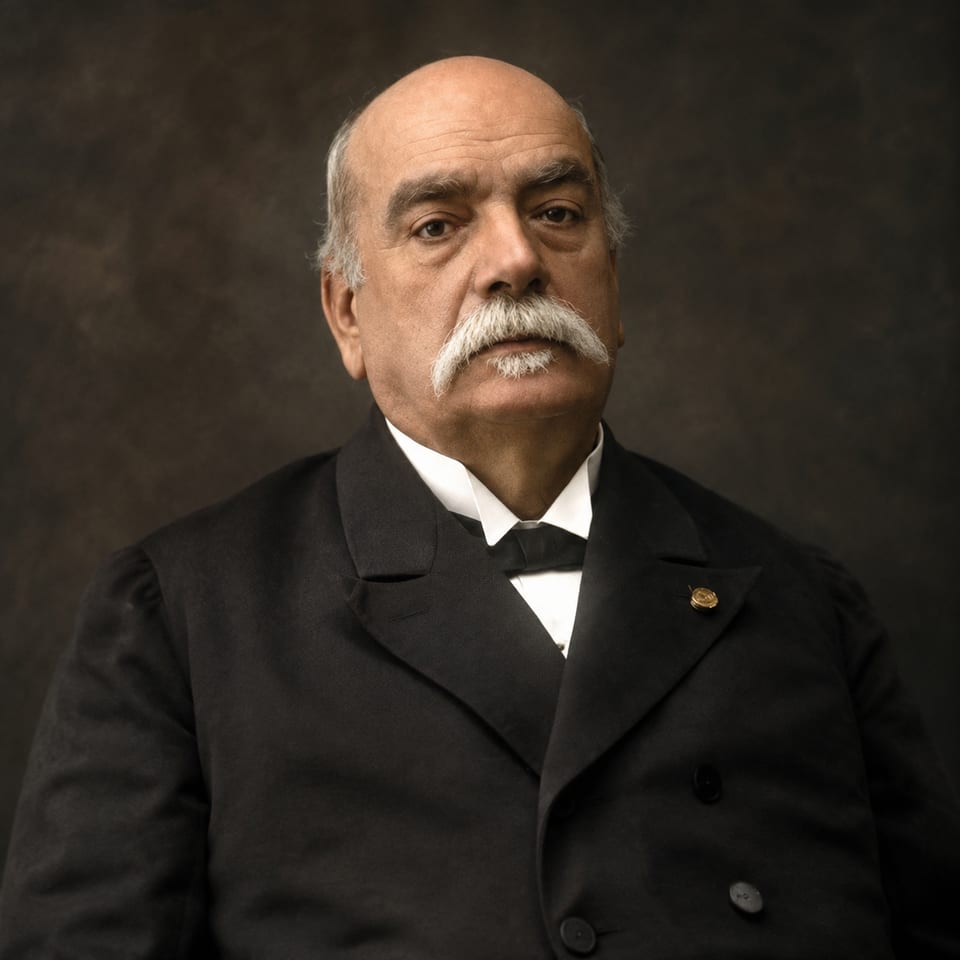
Víctor Grau-Bassas y Mas was born in Barcelona in 1847. He died in Tres Arroyos, Argentina, in 1918. A physician by profession, he was one of the founders of El Museo Canario and its first curator. His career brought together medical practice, the organisation of scientific collections and exploration of Gran Canaria. The drawings, descriptions and letters he left make it possible to study both the island’s archaeological past and the rural ways of life he observed during the nineteenth century.

Historical role

He arrived on Gran Canaria as a child. His father, a pharmacist, settled first in Telde and then in Las Palmas, where the family home was established on Calle de la Pelota. Víctor attended the San Agustín school and, after his medical training, opened a practice in the family house. He became involved in the city’s cultural and social life. In 1873 he was elected provincial deputy for the Teror district, and in 1874 he participated in the creation of the Las Palmas Red Cross, serving as its secretary.

He maintained close ties with Teror, where he married Amalia Bethencourt. He promoted initiatives involving transport and health, including the Álamo and Las Peñas bridges and a bathing establishment at Fuente Agria, opened in 1881. His public career suffered a rupture following the wreck of the French steamship Ville de Pará on the coast of Gando on 11 October 1884. While serving as medical director of Maritime Health, he was accused of theft and removed from professional and public activity. This episode preceded his emigration to Argentina in 1889.

He had participated in the founding of El Museo Canario on 2 September 1879. As curator, together with Diego Ripoche Torrens, he prepared the rooms provided by the city council for the museum’s public opening on 29 May 1880. He donated material, organised collections and undertook taxidermy work for the zoology section. He held the curator’s position until 1889, during a period devoted to assembling, preparing and arranging the holdings of the new scientific society.

Legacy

His journeys around Gran Canaria resulted in descriptions and drawings of archaeological sites, gathered in Viajes de exploración a diversos sitios y localidades de la Gran Canaria. He also recorded information about rural practices and customs, accompanied by illustrations. The museum preserves this documentation and the letters he sent to Juan Padilla from Argentina, where he worked at the Museo de La Plata. He left the island on 30 January 1889 and continued his professional career overseas. His legacy connects the history of the museum’s early collections with observations of the landscape, Indigenous remains and the rural society of his time.

Sources and verification