

The Discovery of Testudo burchardii in Adeje
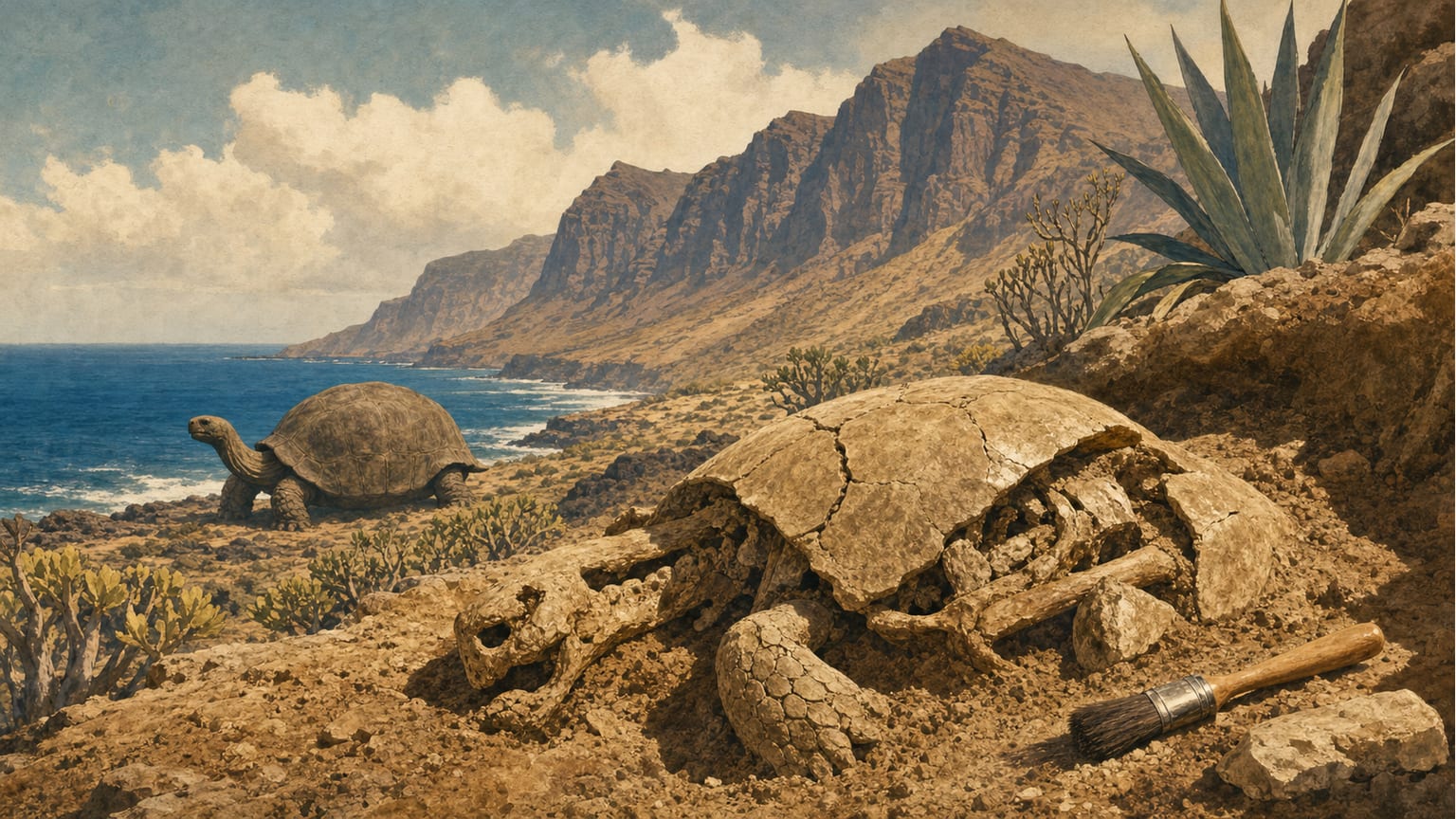
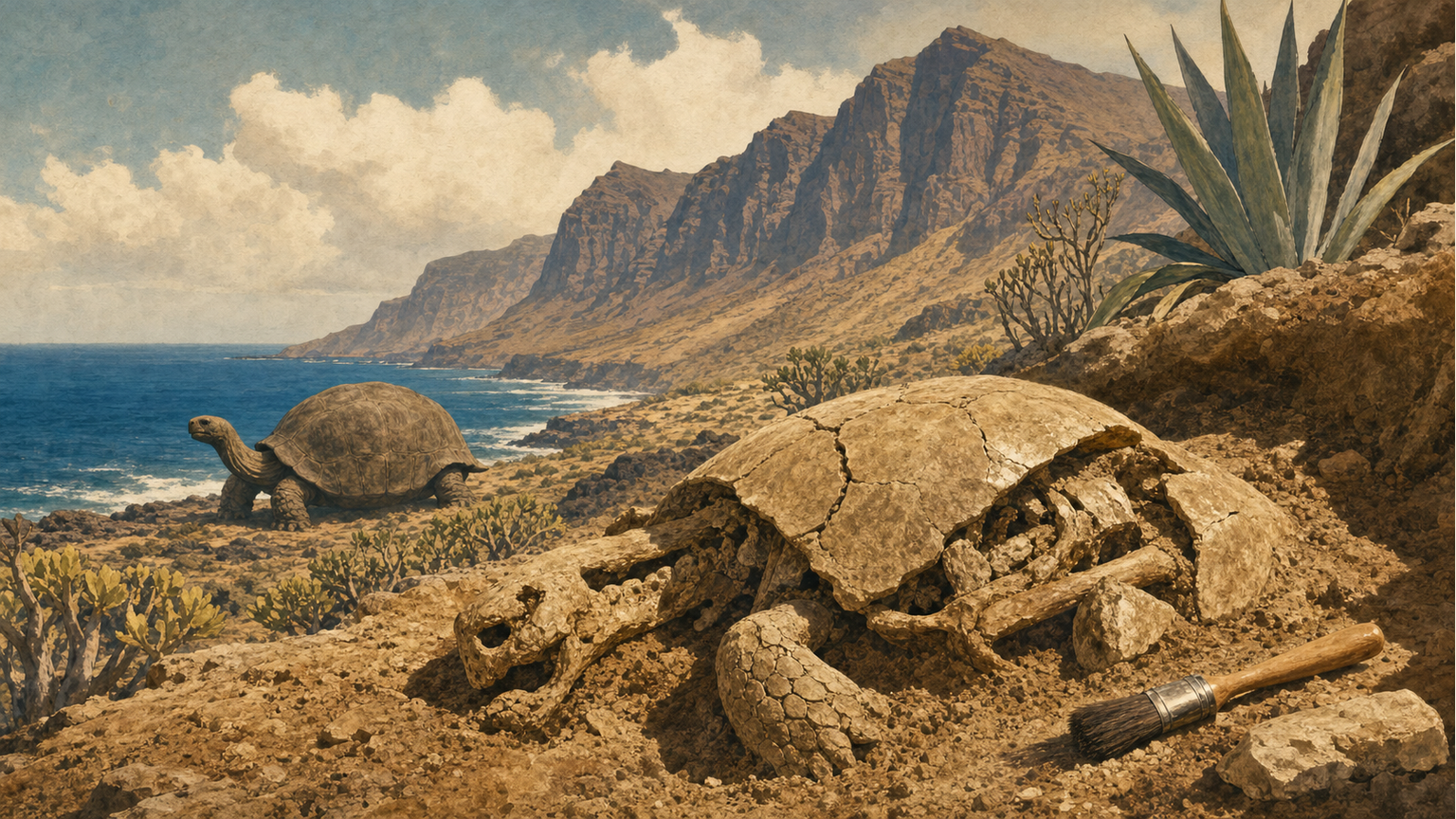
In March 1925, during a short stay in the town of Adeje in southern Tenerife, naturalist Dr. Oscar Burchard was shown some large bones by a local resident. These bones had been found in a quarry called El Lomo del Barranco Seco, at the bottom of the Barranco del Infierno below Adeje. Burchard noted that the bones were surprisingly heavy and petrified, and recognized their scientific value, as no fossils had previously been recorded from the Canary Islands[1].
The bones were later examined by Dr. E. Ahl in Berlin, who determined that they belonged to a previously unknown species of giant land tortoise, named Testudo burchardii. According to Burchard, Oscar, this was the first major fossil discovery in the Canary Islands and showed that giant tortoises once lived on Tenerife in ancient geological times, although no such species exists in the archipelago today[1].
The fossil site was located deep above a basaltic rock layer at the bottom of the ravine, about 210 meters above sea level and four kilometers from the coast. The quarry was at the foot of a tuff ridge, about forty meters high and sloping at a forty-five degree angle[1].
Burchard explained that erosion by water and atmospheric forces over long periods allowed access to this ancient site, which had been covered by more recent volcanic layers. His research suggested that the tortoises found in the Lomo Seco quarry lived during the early Tertiary period, indicating their existence in a very remote era of Tenerife’s geological history[1].
The author compared this find to other giant land tortoise fossils discovered on remote islands such as the Galápagos, the Mascarenes, and Aldabra, highlighting the rarity of such discoveries and the challenges they pose for studying planetary evolution[1].
Among the remains recovered were parts of the limbs (tibia, femur, humerus, ulna), fragments of the shell, and a cervical vertebra. The estimated size of the animal, based on these bones, was about 80 centimeters long. Unfortunately, a second explosion in the quarry destroyed part of the valuable fossil impression found in a cave opened during extraction work[1].
According to Burchard, Oscar, this discovery not only provides information about extinct fauna in the Canary Islands but also contributes to understanding the archipelago’s biological antiquity and uniqueness[1].