

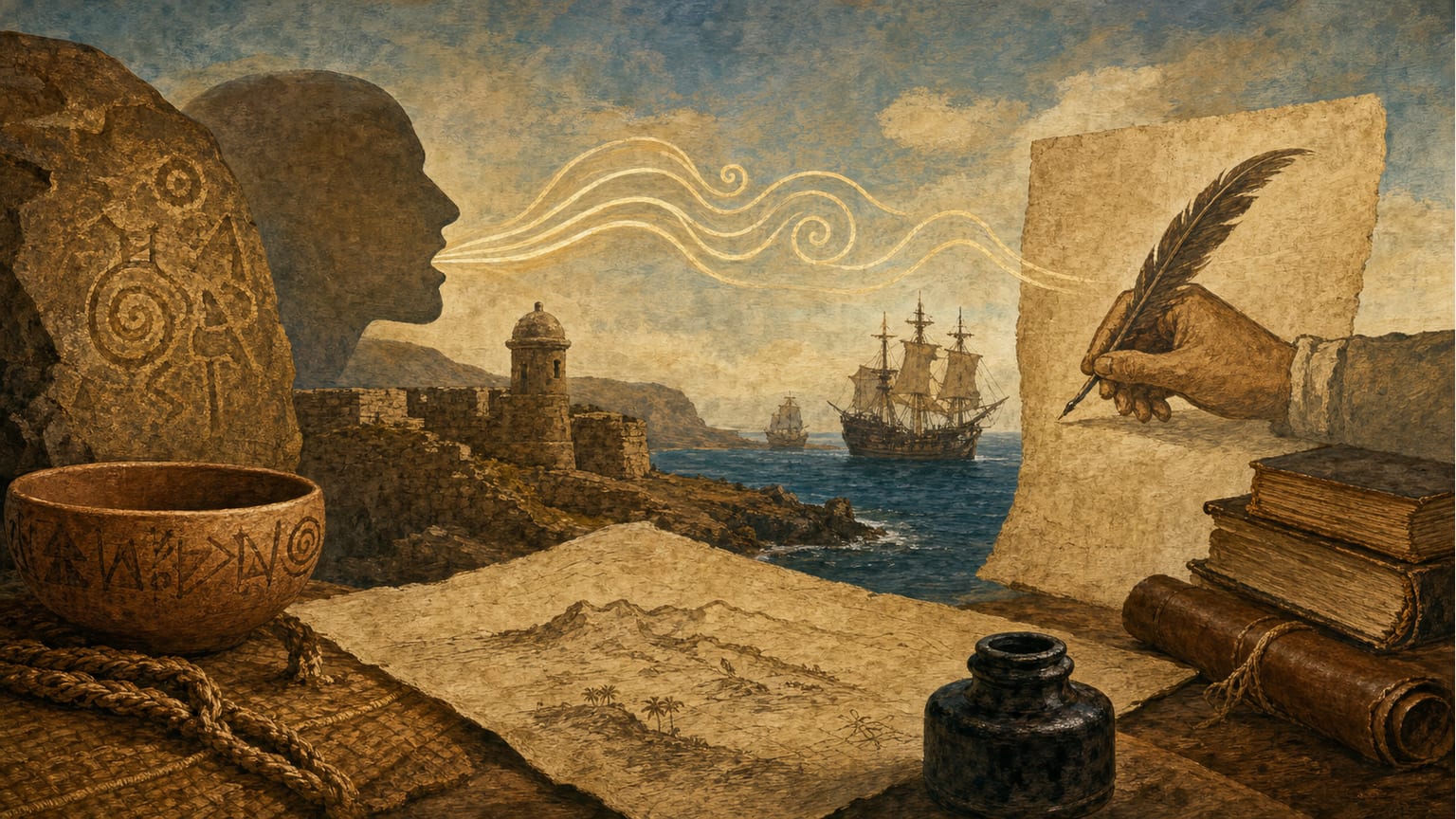
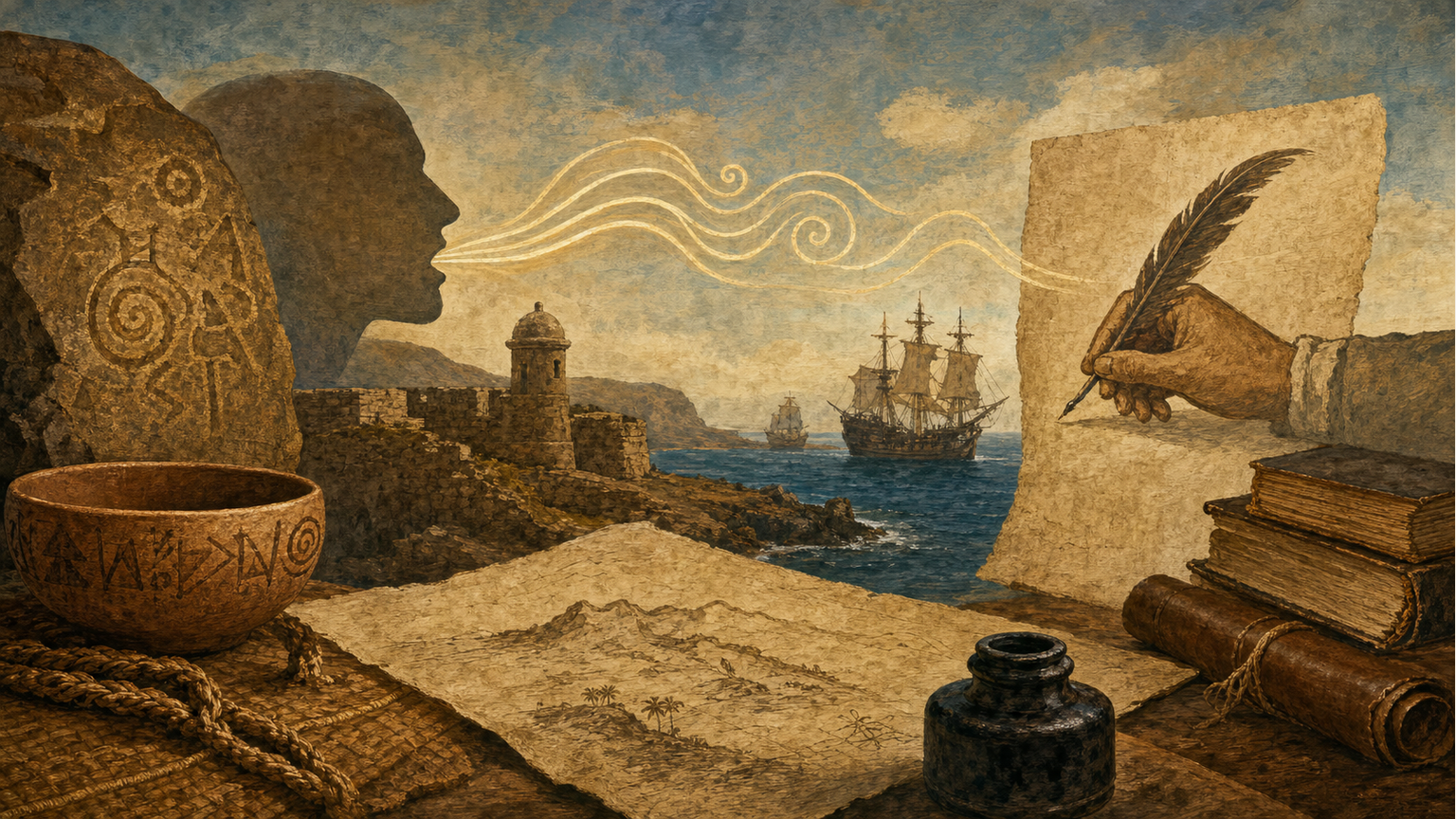
The transmission of the Guanche language, spoken by the indigenous populations of the Canary Islands, has faced significant challenges, especially regarding the reliability of written and oral records. According to Maximiano Trapero, most historical studies have relied almost exclusively on written sources, such as chronicles, documents, and lists of place names, created by chroniclers, conquerors, and scribes after the Spanish conquest[1].
Trapero points out that these written records have important limitations. The authors of these historiographical sources were not linguists, and their linguistic observations were often superficial impressions, influenced by a lack of familiarity with the indigenous language and the absence of standardized writing conventions. Furthermore, written transmission was subject to variations from one scribe to another and from one century to the next, making it difficult to interpret Guanche names and words today[1].
He provides concrete examples of how written transmission can lead to errors or an excessive respect for old printed forms, even when these do not accurately reflect the original language. Trapero argues that, in some cases, oral tradition has preserved forms closer to the original pronunciation than written documents, and proposes that orality should be prioritized as the current standard for representing uncertain forms[1].
Trapero cites the words of chronicler Gómez Escudero, who lamented that the Spanish “always disputed the names of things and despised their words” and that, when trying to trace the customs of the indigenous people, “no one could give an account of them”[1]. This testimony highlights the lack of interest and rigor in recording the Guanche language during the early colonial period.
Trapero also emphasizes the importance of oral tradition in transmitting Guanche place names and terms. He notes that orality has been systematically ignored or undervalued in previous studies, even though it can provide a more faithful and living source of the original language. Trapero argues that oral transmission, though also affected by Castilianization, is generally more faithful to linguistic identity than written transmission, which involves a double transformation: from the signifier of one language to another, and from sound sequence to orthography[1].
He acknowledges that orality is not an absolutely pure source, as Guanche elements have been adapted to Spanish, but insists that its value lies in natural continuity and the possibility of collecting living forms that have endured for centuries. As an example, Trapero mentions the place name “Guarazoca,” which in the oral tradition of El Hierro is pronounced “Guarasoca,” illustrating how orality can clarify doubts created by the variability of old spellings[1].
In conclusion, Maximiano Trapero’s analysis invites us to reconsider the role of orality in the study of the Guanche language and to avoid giving absolute value to written transmission, especially when it presents inconsistencies or contradictions with the living oral tradition[1].