

Orality: The Living Source for Guanche Language Studies
The study of the Guanche language—the tongue of the Canary Islands’ first inhabitants—has long been hampered by the scarcity and unreliability of written records. Early chroniclers, such as Alonso de Espinosa and Abreu Galindo, left behind only scattered words and incomplete lists, often copied from one another and lacking linguistic rigor. The written transmission was further complicated by inconsistent spelling and the absence of fixed orthographic standards, making it difficult to interpret the few surviving testimonies[1].
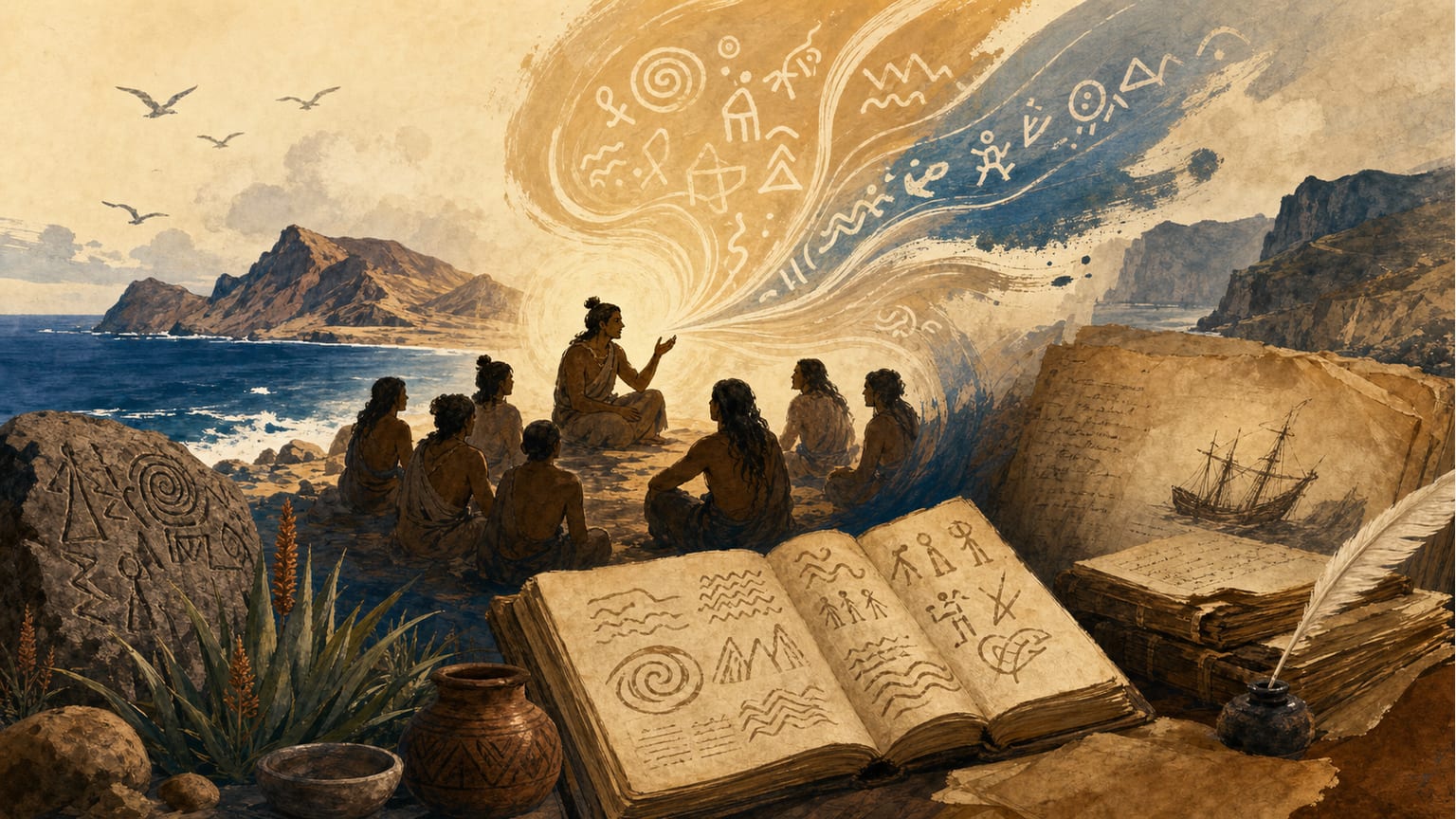
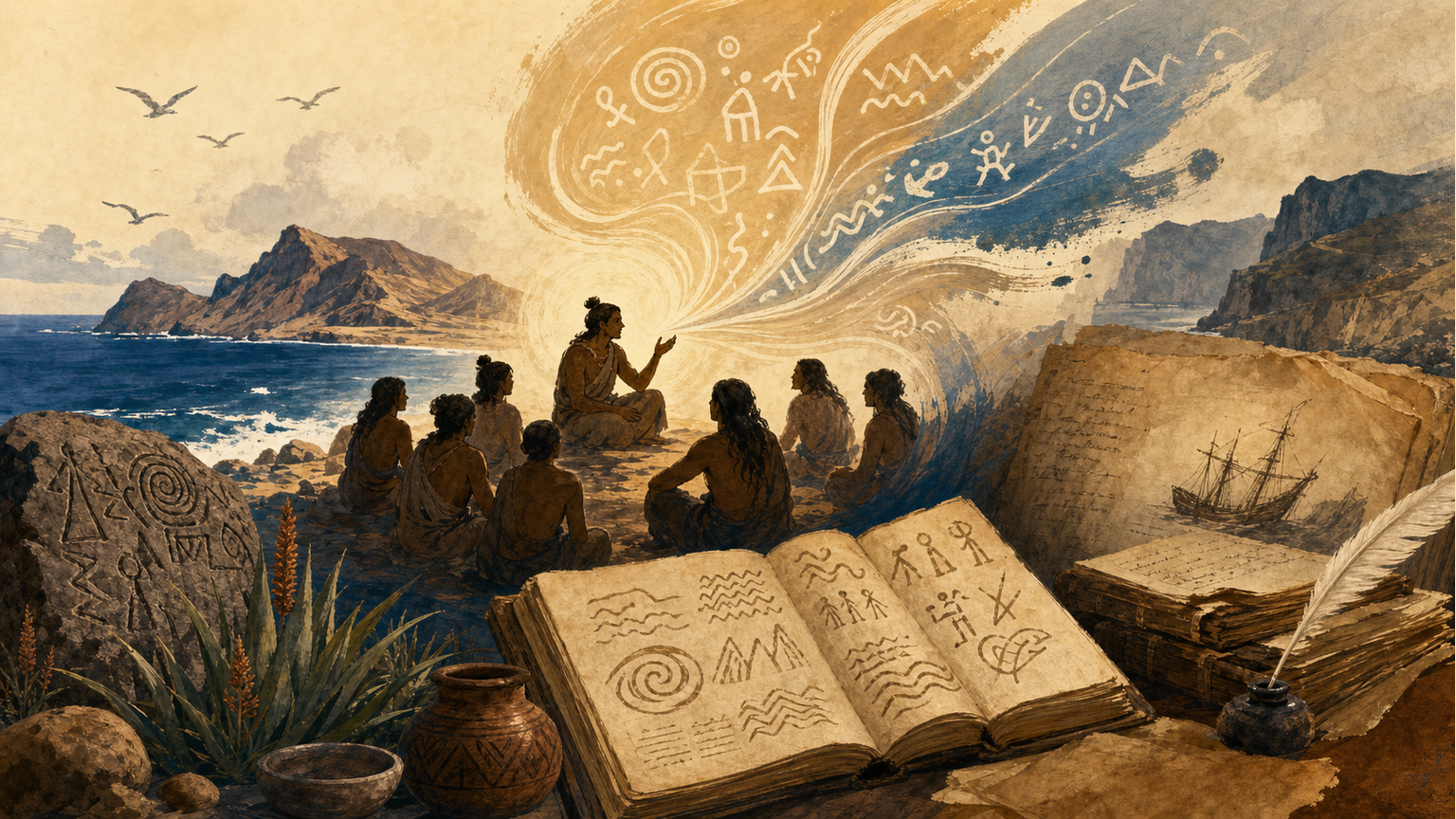
Maximiano Trapero, however, highlights the vital role of oral tradition as a primary and living source for Guanche studies. He challenges the “superstitious respect” for old printed texts and advocates prioritizing orality, since it is in everyday speech that Guanche words, place names, and expressions have survived most naturally. Oral transmission, unlike writing, passes linguistic elements from generation to generation, adapting them while maintaining a closer fidelity to the original language[1].
This approach is supported by the observation that many Guanche words recorded in ancient documents are still present in modern Canarian speech, especially in toponymy and vocabulary related to nature and traditional activities. Trapero argues that orality should not be seen as less authentic than writing, as both have undergone processes of “Spanishization” and adaptation. In fact, oral tradition has preserved terms that would otherwise have been lost entirely.
Trapero illustrates this with examples such as the place name “Guarazoca” (El Hierro), which appears in various written forms in historical documents, but whose current pronunciation, “Guarasoca,” reflects the continuity of oral tradition. Thus, he asserts that when faced with conflicting written variants, the form preserved in local speech should take precedence[1].
In summary, orality not only complements written sources but often surpasses them in value for studying the Guanche language. Listening to and documenting the living speech of the Canary Islands is essential for reconstructing, even partially, the vocabulary and linguistic identity of the ancient Canarians. As Trapero aptly puts it, “verba manent”: spoken words endure, and they hold the key to illuminating the linguistic past of the archipelago.