

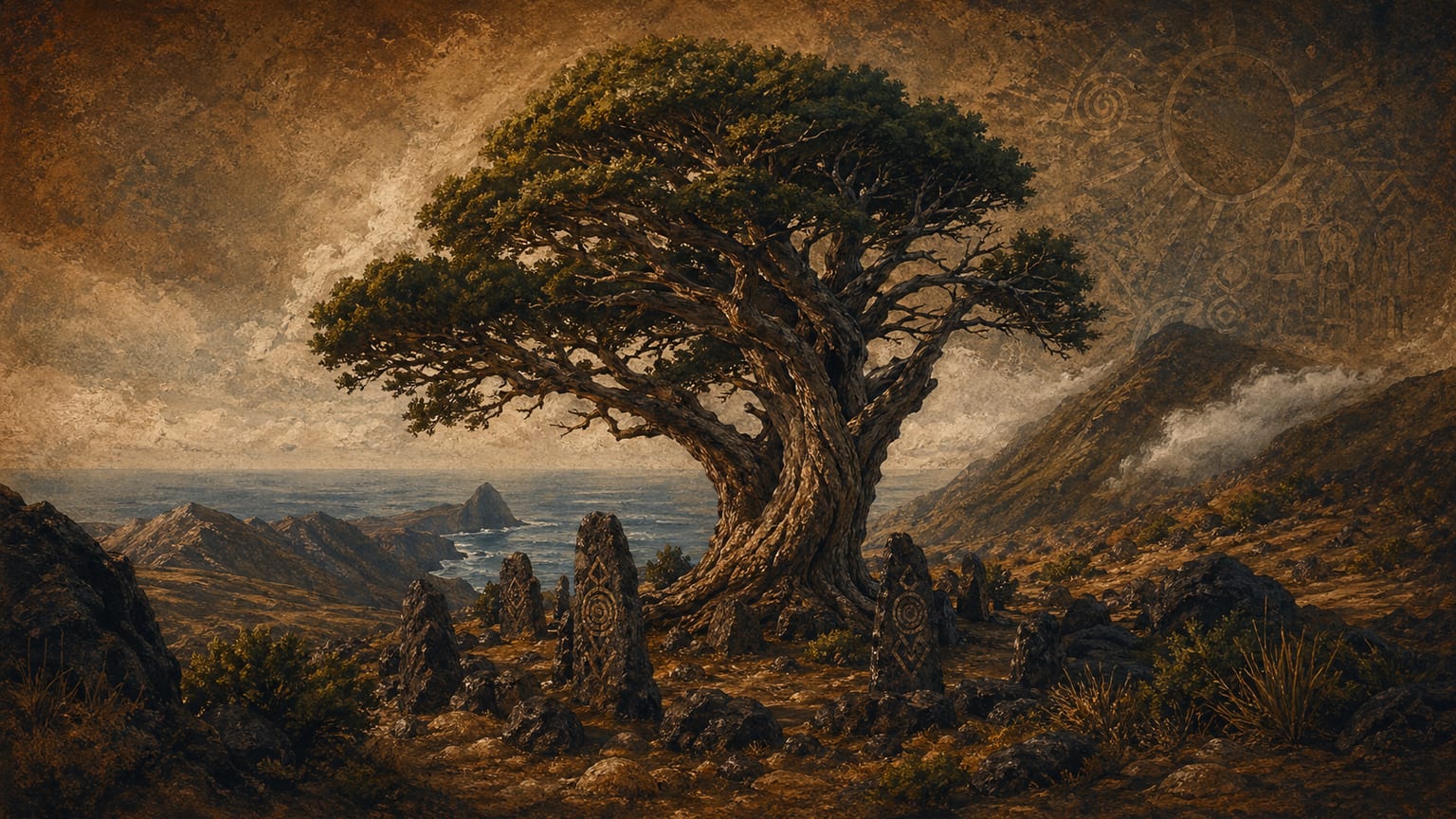

The Holy Tree of El Hierro: Myth and Reality
The Holy Tree of El Hierro, known as Garoé, is one of the most fascinating legends of the Canary Islands. This mythical tree, which supposedly provided water to the island’s ancient inhabitants, has been the subject of numerous tales and studies over the centuries.[1]
Origins of the Myth
The legend of the Garoé dates back to the times of the Bimbaches, the aboriginal people of El Hierro. According to tradition, the tree had the ability to collect water from fog and rain, storing it in its leaves and branches, which allowed the islanders to survive in an environment where water was scarce.[1]
The Destruction of the Garoé
It is said that the Garoé was destroyed by a strong storm in the 17th century. However, the exact dates vary according to sources. Some chroniclers, like Juan Núñez de la Peña, mention that the tree was uprooted in 1610, while others suggest different dates.[1]
The Legacy of the Garoé
Despite its disappearance, the Garoé remains a symbol of the resilience and adaptation of the Herreños to their environment. Today, the site where the tree once stood is a place of tourist and cultural interest, where visitors can learn about the history and legends of El Hierro.[1]
The Holy Tree of El Hierro is not only a testament to the rich Canary mythology but also a reminder of the importance of nature and natural resources in the life of island communities.