

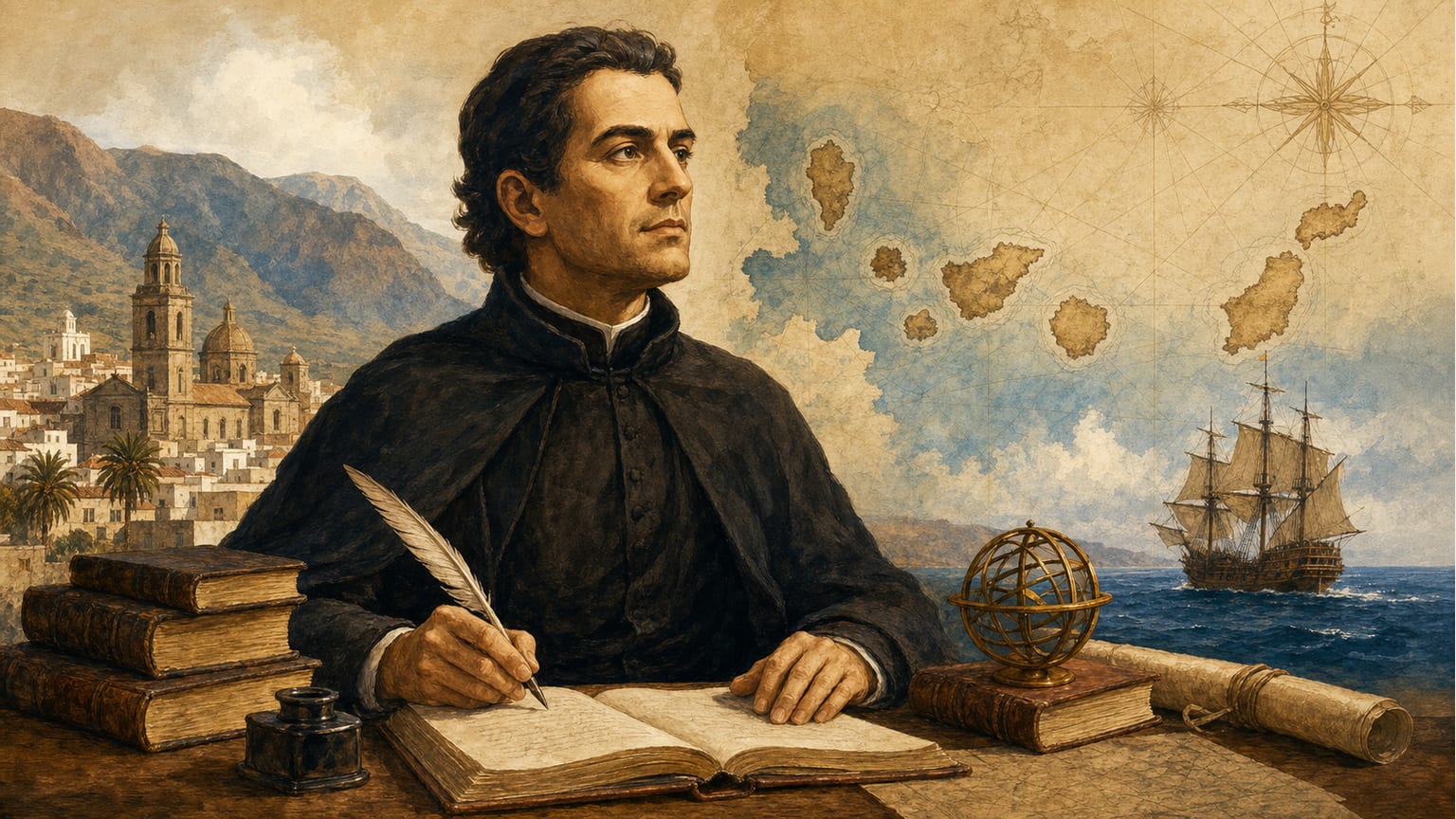
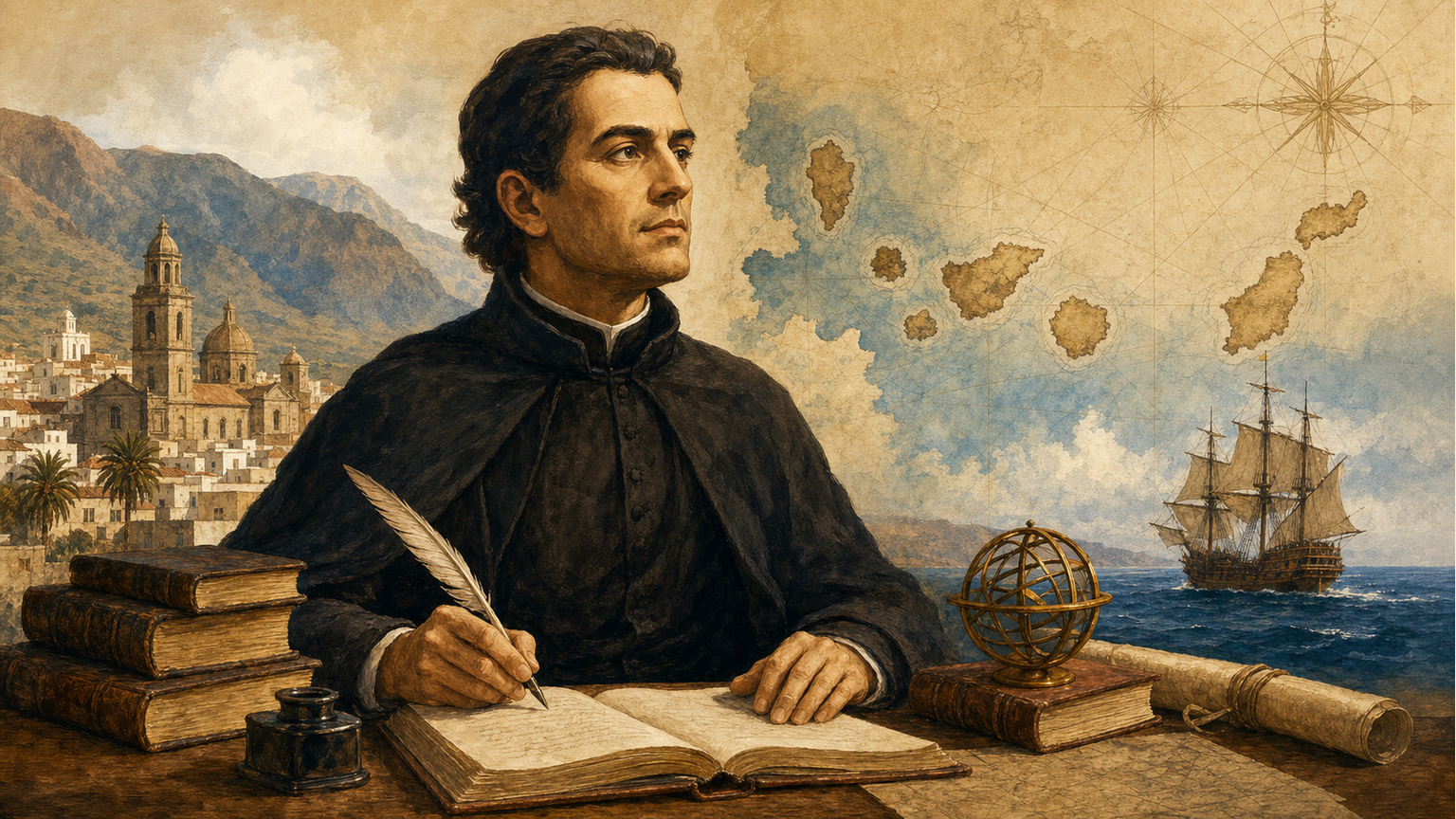
Father Luis de Anchieta y Abréu was born in La Laguna around 1648, the son of Captain Juan de Anchieta and María Ana de Abréu Carvajal[1]. As a child, he was sent to Spain to continue his studies at the Jesuit college in Seville, where he excelled among his peers for his brilliance and quick progress in exams[1]. The Jesuit fathers, recognizing his talent, persuaded him to join the order, which was then at the height of its influence[1].
Soon, Father Anchieta became a professor of Latin at the prestigious San Hermenegildo college in Seville[1]. Before turning 27, he was sent to the Jesuit college in Jerez, where he dedicated himself to preaching and became renowned for his sermons, which blended biblical texts with references to classical poets[1]. His reputation as an orator led to invitations to preach in Córdoba during Lent in 1676[1].
Anchieta’s most lasting contribution was his book “Excelencias y antigüedades de las siete islas de Canaria”, published in Jerez in 1679 under the pseudonym Don Cristóbal Pérez del Cristo[1]. In this work, Anchieta compiled and organized all that had been written about the Canary Islands by both secular and religious authors, demonstrating deep knowledge of literature, philosophy, and history from antiquity, the Middle Ages, and the Renaissance, as well as the original languages of the sources[1]. The book is divided into five treatises, each dedicated to the different names and descriptions given to the islands in antiquity: Fortunate Isles, Elysian Fields, Atlantic Islands, Hesperides and Gorgons, and a collection of ancient and modern descriptions[1].
Anchieta included translations of classical texts, such as Lucian’s description of the Fortunate Isles in “Verae Historiae”, and brought together a collection of fragments and stories summarizing ancient knowledge about the Canary Islands up to the time of the conquest[1]. His work was widely consulted by later historians and is considered a fundamental reference for the study of Canarian history[1].
In 1678, Anchieta returned to the Canary Islands, where he dedicated himself to preaching and founding Jesuit colleges, such as those in La Orotava and Las Palmas, thanks to donations from notable figures like Juan de Llarena and Andrés Romero[1]. He died in Las Palmas on February 10, 1683, at the age of 37, and was buried in the church of the San Ildefonso convent[1]. Although his sermons have been lost, his historical work remains as a testament to his erudition and love for the Canary Islands[1].