

The Cave of La Enladrillada: Methodology and Key Findings from a Landmark Excavation in Tegueste
The Cave of La Enladrillada, located in the municipality of Tegueste (Tenerife), is one of the most significant archaeological sites for studying the aboriginal settlement of the island. Excavated in 1969 by Diego Cuscoy, this funerary cave is situated in the upper section of the Risco Atravesado at 600 meters above sea level, with an interior surface area of 24 m²[1].
Prior to excavation, the cave had an entrance 4.5 meters wide and 0.25 meters high, but archaeological work revealed that the original mouth measured 6 meters wide by 1.75 meters high, closed by a wall preserved in situ up to 1.50 meters[1].
The funerary assemblage was relatively poor, except for numerous clay bead necklaces. In chamber B, 30 beads were found, and in chamber A, 28, along with 202 ceramic fragments, suggesting a small number of burials, probably at least two, as indicated by the two necklaces and remains of wooden chajascos[1].
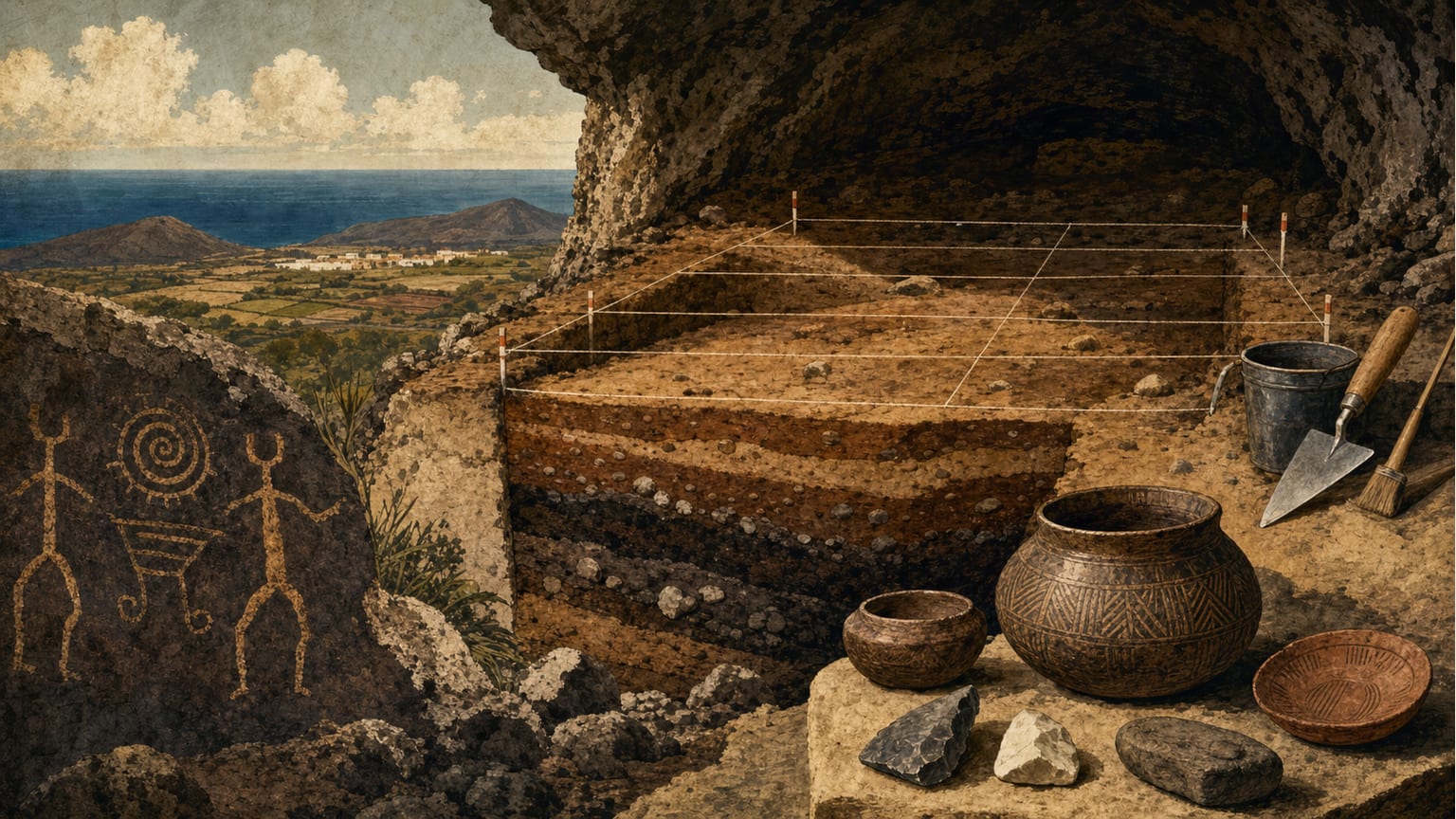
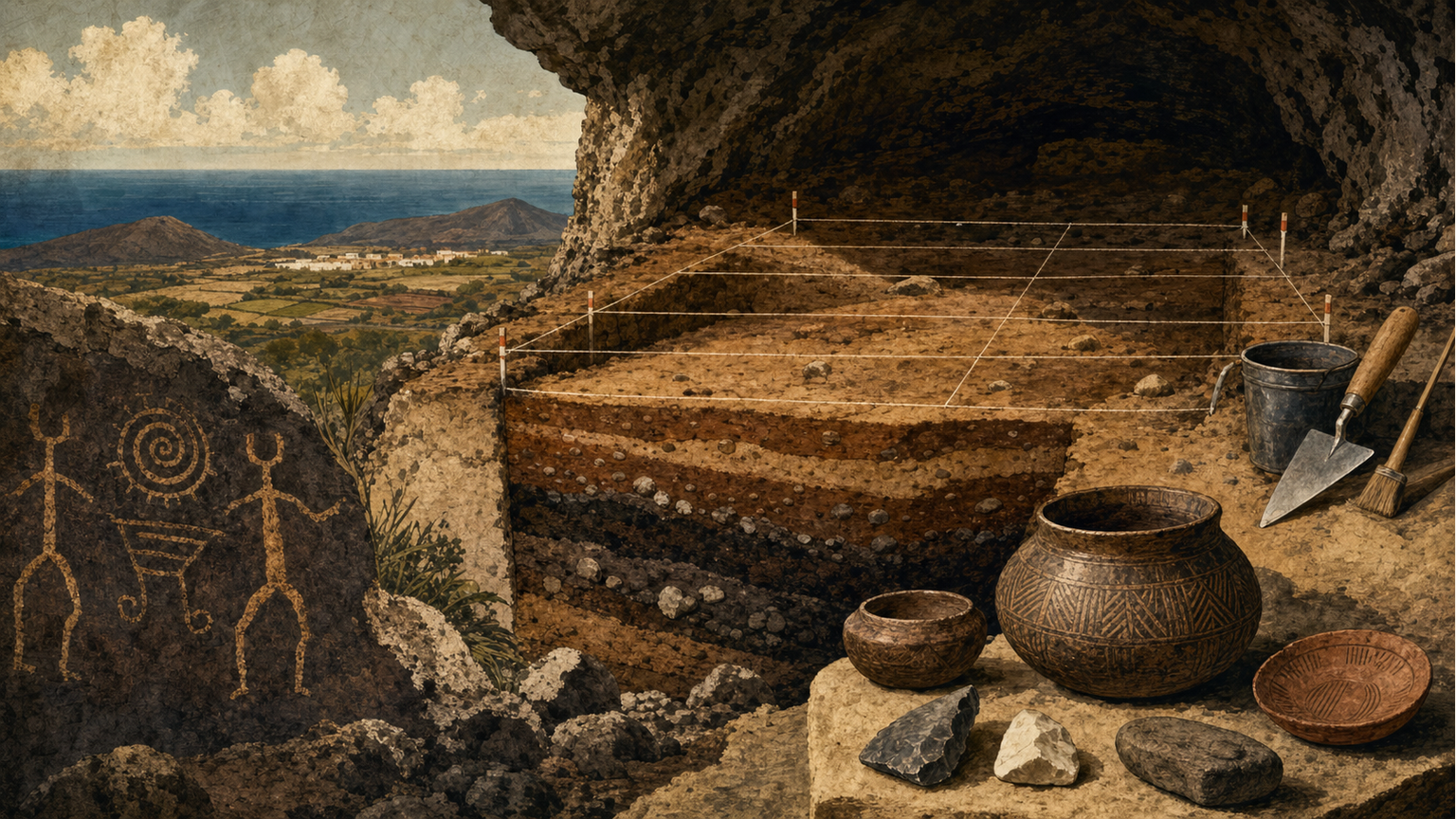
One of the most notable aspects of the La Enladrillada excavation was the application of new analytical methodologies, reflecting the methodological improvements in Spanish archaeology in the early 1970s. For the first time in Tenerife, a detailed stratigraphic sequence was documented in a funerary cave, thanks to a seven-month-long excavation and the creation of detailed plans and profiles to delimit each funerary space[1].
The study included independent analyses of human and material remains. Radiocarbon dating was performed on level 3 burials, identifying blood group A, as well as sedimentological analyses highlighting high levels of phosphorus and calcium carbonate due to bone decomposition. Macroscopic analyses of the beads and ceramic fragments determined a firing temperature between 600 and 900 ºC[1].
The excavation identified up to 25 possible burials, although the state of preservation of the human remains was poor. Different stratigraphic levels were documented: in level 1 (0.25 m deep), 10 possible funerary spaces were delimited, six of which contained anthropological remains. In levels 2 and 3, several ossuaries and skulls were identified, although most bones were fragmented or nearly destroyed[1].
The assemblage included, besides the bead necklaces, seven bone awls, obsidian flakes and splinters, and ceramic fragments, from which four vessel containers were reconstructed[1].
According to the authors, La Enladrillada cave was key to expanding knowledge about decorated ceramics in Tenerife, allowing the association of this type of pottery with a “Neolithic of Capsian tradition” and the arrival of a Mediterranean minority to the island between the third and second millennium BC, although the cave was not ideal for establishing a complete sequence due to looting[1].
In conclusion, the excavation of La Enladrillada cave marked a milestone in Tenerife archaeology for its methodological approach and integration of multidisciplinary analyses, providing fundamental data on funerary rituals and the material culture of the ancient inhabitants of Tegueste[1].