ContemporáneaArt19th CenturyCanarian creator between the 19th and 20th centuries

Painter, poet and writer

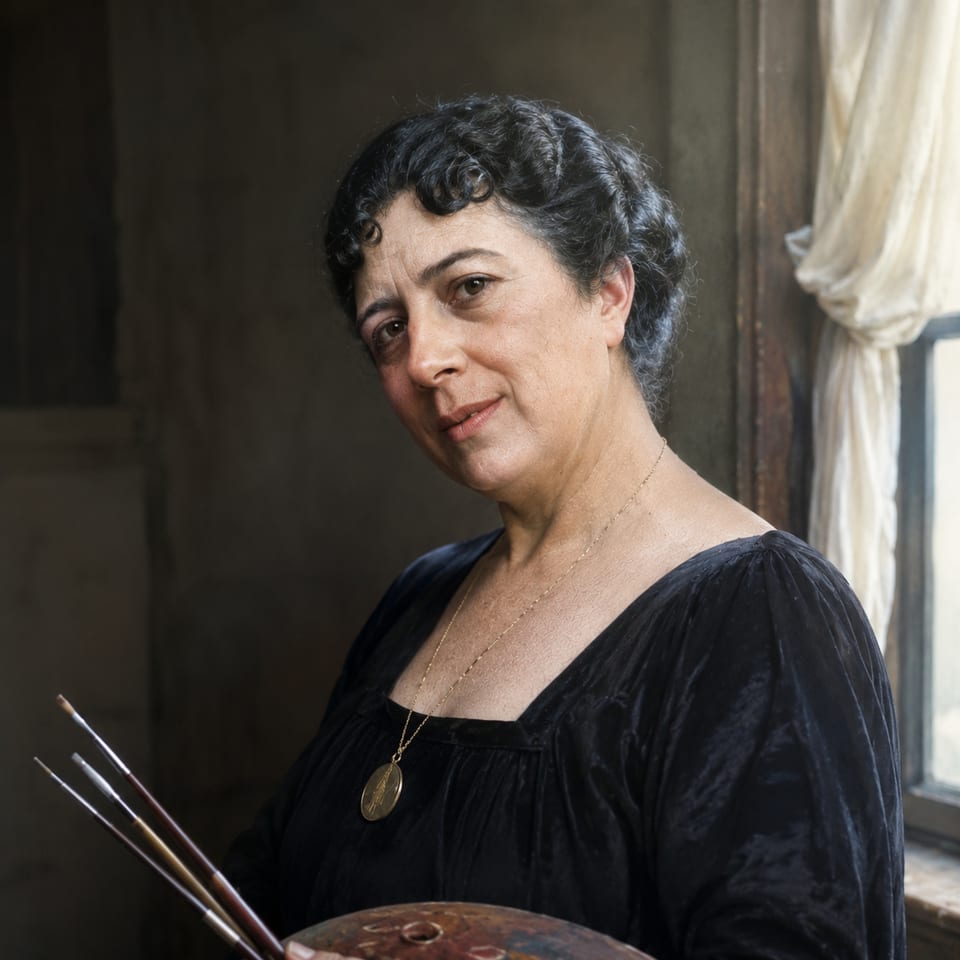
Lía Tavío Martínez was a painter, poet and writer born in Puerto de la Cruz on 20 October 1874 and deceased in Las Palmas de Gran Canaria on 7 November 1965. She developed a multifaceted artistic career spanning painting, drawing, embroidery, music, teaching, writing and photography.
Early life

She trained from childhood in Puerto de la Cruz, taking drawing and painting lessons at Marcos Baeza's academy and studying piano and embroidery. She later attended the Teacher Training School in La Laguna. In 1894 she took part in the artistic, historical, industrial and commercial exhibition organised by Tenerife's Economic Society of Friends of the Country, an early public appearance for her work.

Historical role

After marrying telegraph official Nicolás Soto Sánchez in 1901, she lived in Madrid, where she took lessons from landscape painter Serafín Avendaño, and later in Medina Sidonia and Cádiz. In Medina Sidonia she opened a photographic studio, coloured portraits and took part in restoration work. That period did not interrupt her writing: she contributed to magazines and newspapers and translated chapters of Charles Blanc's Grammaire des arts du dessin for Siglo XX.

Legacy

In 1923 she settled permanently in Las Palmas de Gran Canaria. Her studio and literary gatherings became spaces for making and teaching; she taught painting, drawing, piano and singing, and Jesús Arencibia was among her pupils. Landscape was the genre she practised most, but her work also includes portraits, seascapes, still lifes, popular subjects and traditional costume designs. In the 1950s she exhibited oils in the city again.

Timeline

  1. 1874Born in Puerto de la Cruz, Tenerife.
  2. 1894Takes part in Tenerife's artistic, historical, industrial and commercial exhibition.
  3. 1901Marries Nicolás Soto Sánchez and spends a period in Madrid.
  4. 1923Settles with her family in Las Palmas de Gran Canaria.
  5. 1965Dies in Las Palmas de Gran Canaria.

Sources and verification