

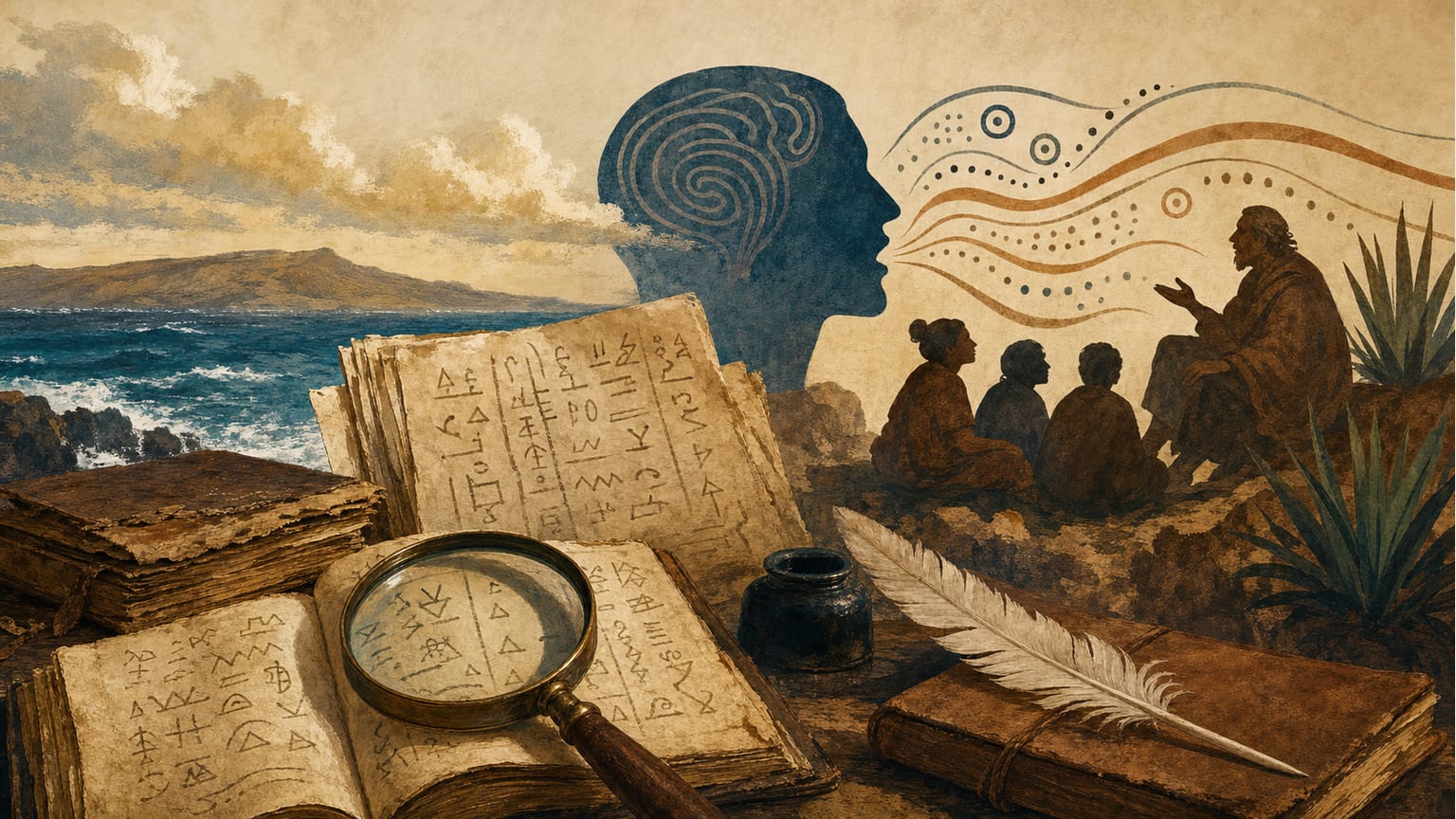
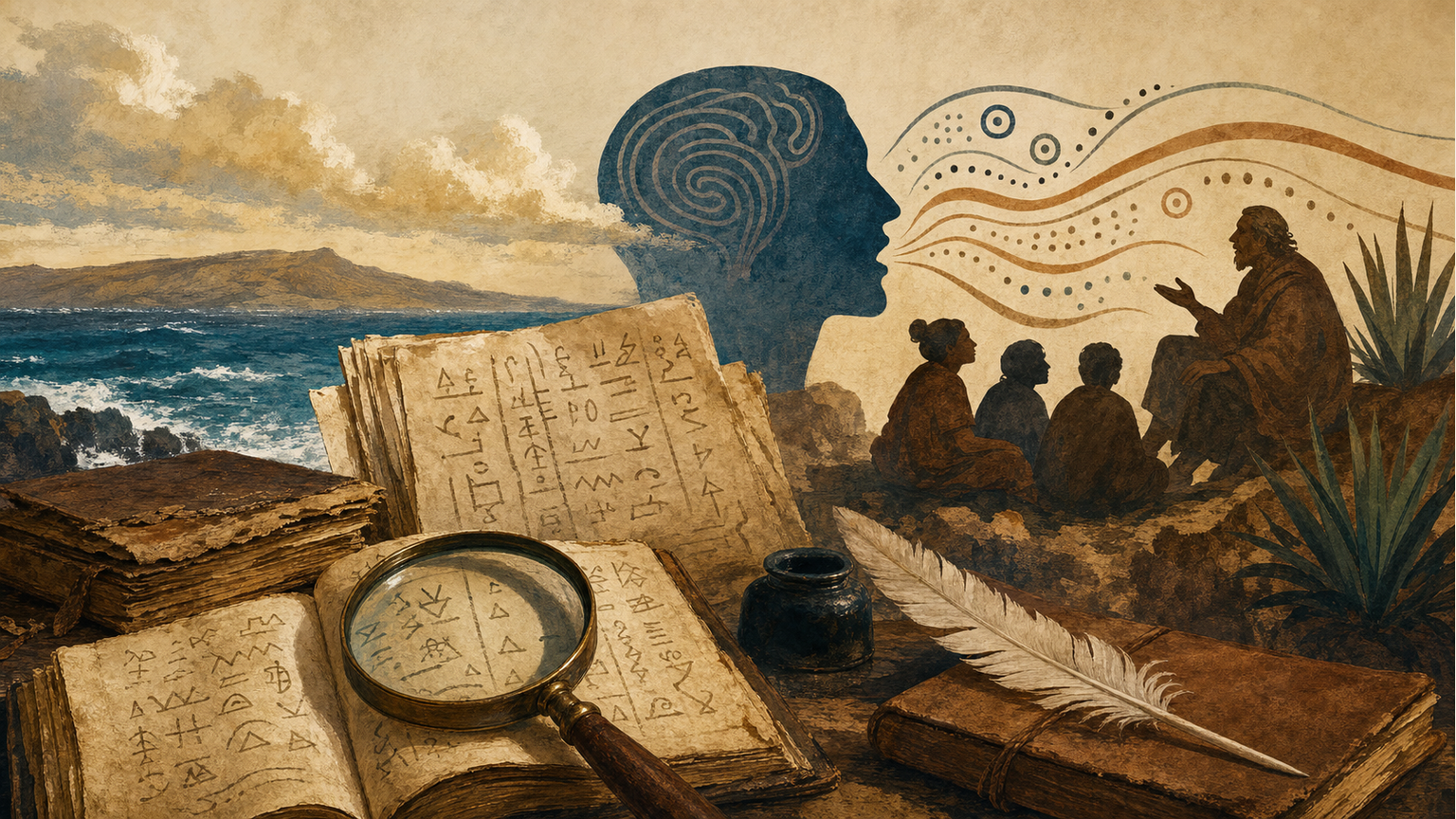
The study of the language of the ancient indigenous populations of the Canary Islands is fraught with methodological challenges, primarily due to the fragmentary and problematic nature of the available sources. According to Dominik Josef Wölfel, the transmission of Canarian linguistic material occurred through various channels of unequal value, and almost nothing can be accepted uncritically [1].
Wölfel points out that, up to his time, there had been no systematic and methodical compilation of all accessible linguistic material, nor a thorough critique of the sources. He observes that even the need for such criticism was often misunderstood, with his own attempts at assembling source citations being misinterpreted as mere variants, when they were actually an initial effort at critical analysis [1].
Indigenous linguistic material has reached us mainly through documents from the time of conquest and colonization, but even these present transmission problems. Often, the original documents are lost, and only copies made by scribes—frequently hurried and error-prone—remain, affecting the fidelity of indigenous names and words [1].
In addition to documents, there are reports from eyewitnesses or those who heard directly from indigenous speakers. However, Wölfel warns that even these testimonies rarely survive in their original form, but rather in edited or summarized versions by later authors, sometimes centuries after the events. This process of indirect transmission introduces further opportunities for error and distortion [1].
The situation is further complicated by the compilations of vocabularies and word lists made by later authors. Wölfel calls these authors “compilers” and notes that, in the 19th century, it was common for compilers to try to surpass their predecessors by adding more words, often copying errors or variants without real source criticism. The first compiler to attempt to indicate the sources of his material, Berthelot, made numerous attribution errors, which were then reproduced by others such as Chil y Naranjo [1].
According to Wölfel, any research based on uncritically compiled linguistic material is inevitably on shaky ground and exposed to significant errors. Nevertheless, he acknowledges that, despite these difficulties, some researchers achieved valuable results, such as John Abercromby, though others did not make significant progress [1].
Finally, Wölfel laments that, unlike in the Americas, where Spanish missionaries produced grammars and dictionaries of indigenous languages, no such works were created in the Canary Islands, likely due to the rapid linguistic and cultural assimilation of the indigenous population after the conquest [1].