

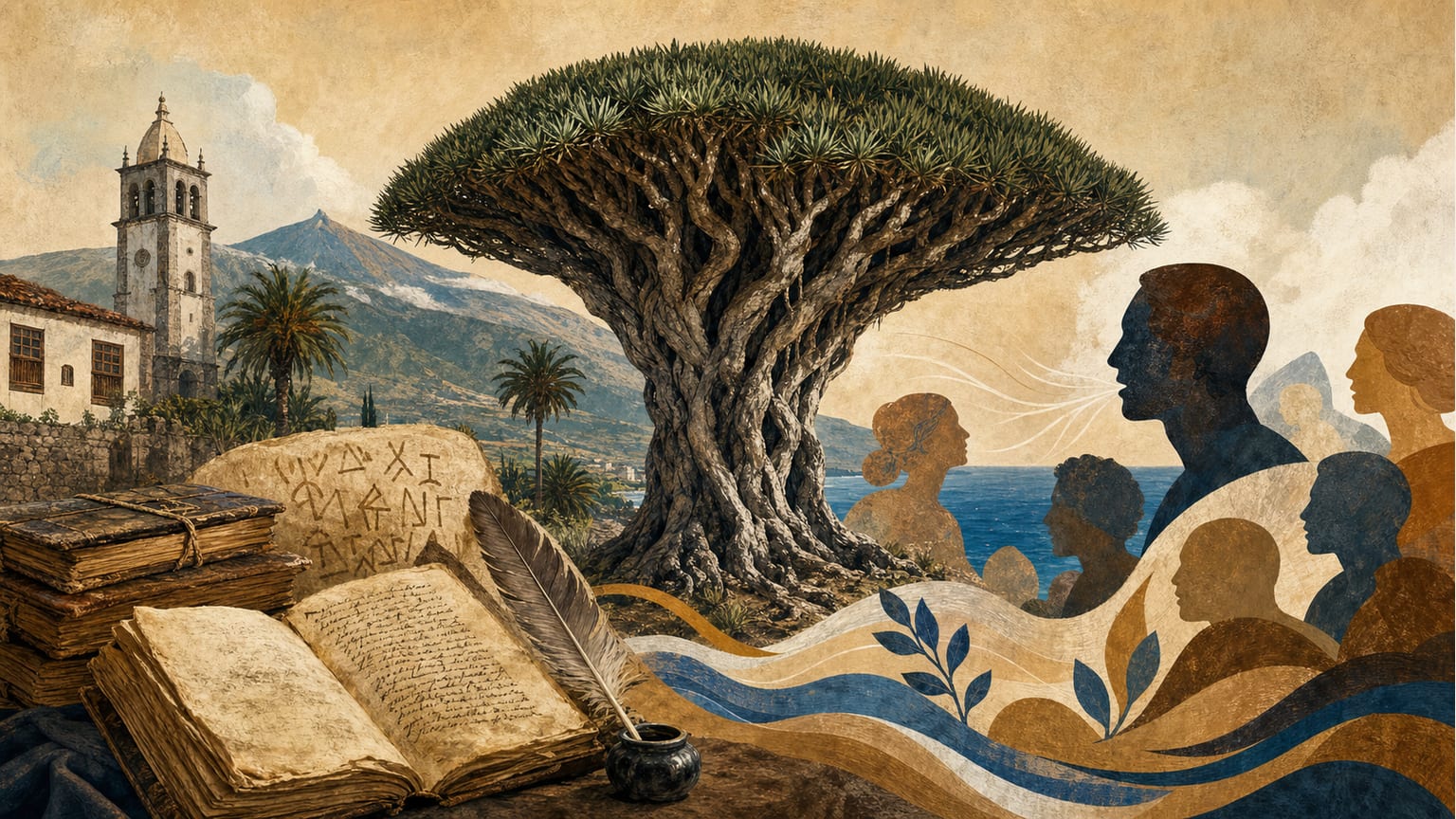
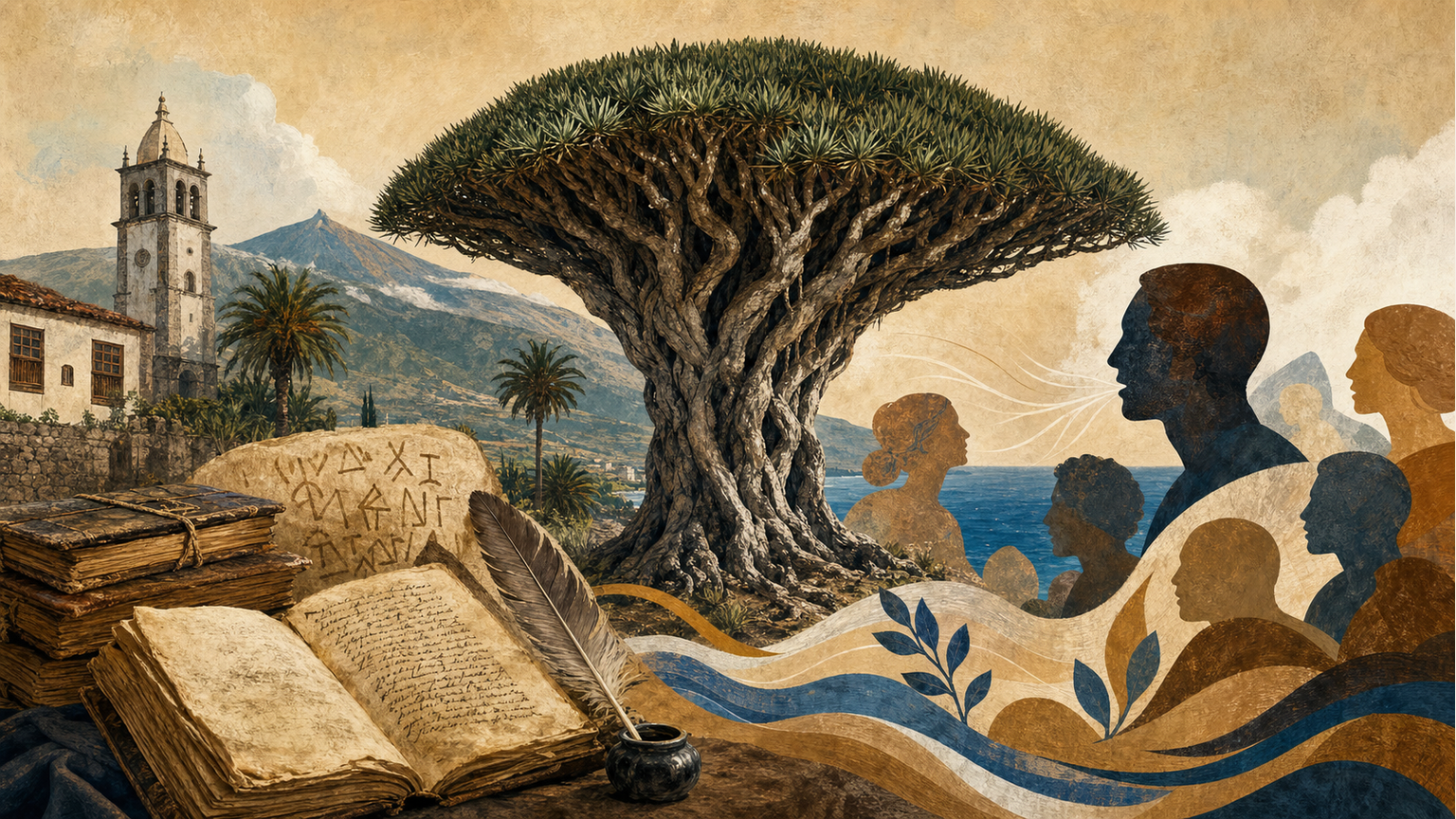
The millennial dragon tree of Icod de los Vinos, located on the island of Tenerife, is described by José M. Esteban as a unique natural element, considered the oldest living being in Spain, with an age exceeding one thousand years, a crown weighing over eighty tons, a trunk about twenty meters in diameter, and a similar height [1]. Around it, a park has been built to allow visitors to admire this singular specimen, and the neighboring houses, such as that of Casimiro Huerta, offer balconies that serve as true viewpoints of history [1].
According to the source, the dragon tree is not the only attraction in Icod de los Vinos, but it is one of the most emblematic, and it has witnessed gatherings where conversations alternated between the Guanche past, Canarian language and folklore, personal memories, and contemporary life [1]. During a visit recounted by Esteban, the table set up next to the dragon tree became a setting for debates about the Guanche language and Canarian vocabulary, involving both locals and visitors [1].
The millennial dragon tree is thus linked to the oral transmission of Canarian culture and language. In its surroundings, words and expressions of Guanche origin and their survival in everyday speech were discussed, as well as the influence of other languages and cultures on contemporary Canarian vocabulary [1]. The source highlights that the Canarian language is an extraordinarily living entity, influenced by Spanish, but also by South American, Berber, and even English languages, due to a history of exchanges and migrations [1].
Therefore, the dragon tree of Icod de los Vinos is not only a natural monument but also a symbol of collective memory and the continuity of Canarian language and traditions. The source recounts how, from the balconies surrounding the dragon tree, one can contemplate both the tree and the historical evolution of the island, alternating the Guanche past with modern life and cultural exchange [1].
In summary, the millennial dragon tree is presented by José M. Esteban as a privileged witness to Canarian history and language, a meeting point between nature, memory, and island identity [1].