

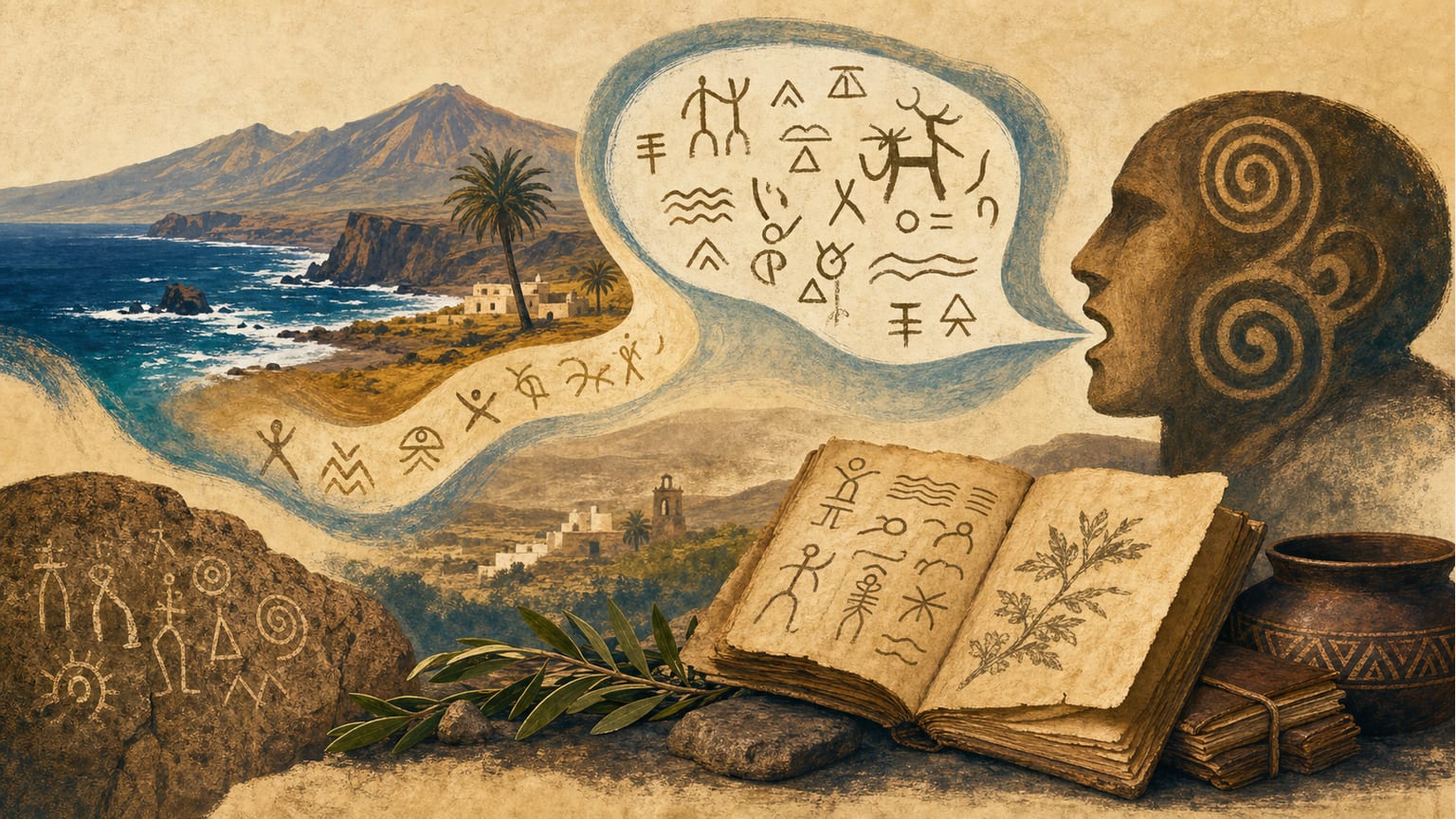
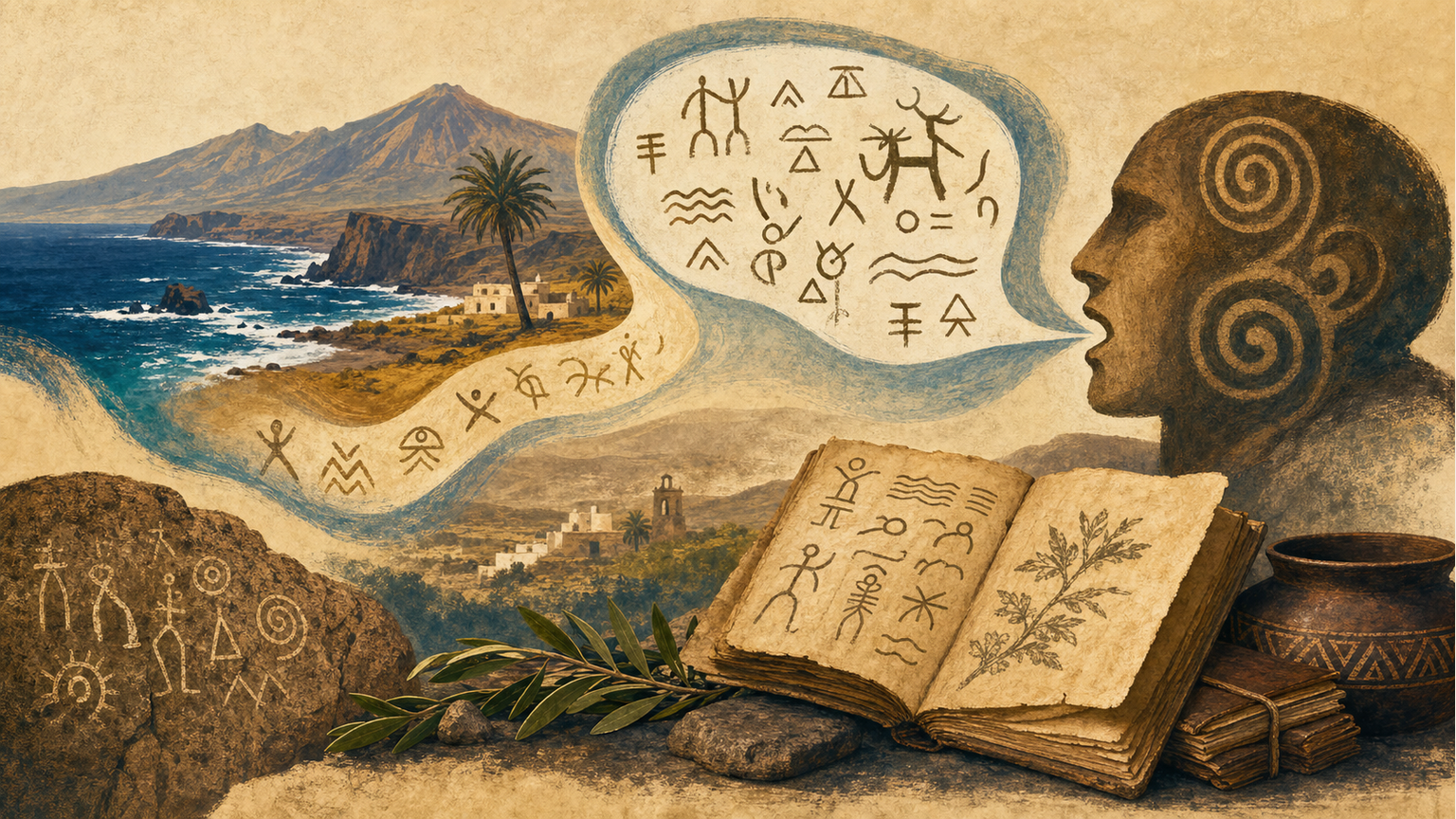
Although the original Guanche language is nearly extinct, its vocabulary remains alive in the daily speech of Canary Islanders through numerous words that have endured and become part of popular usage[1]. These words trace back to the islands’ ancient inhabitants, the Guanches, whose language is plausibly linked to Berber, spoken in parts of Africa from Algeria and Morocco to Mali and Nigeria[1].
Many Guanche terms have survived in the Canaries, especially those related to nature, food, social organization, and daily life. For example, “mencey” refers to the king or chief of a community and is so common that it names hotels and prominent places on the islands[1]. Other examples include “gofio,” the toasted flour that was a staple food for the Guanches and remains central to Canarian cuisine, and “baifo,” meaning kid (young goat)[1].
The Guanche vocabulary also covers terms for natural elements and traditional activities. “Aemon” means water, “ahoren” is barley flour, and “acof” refers to a river[1]. Words such as “guayota” (the devil), “guanarteme” (king in Gran Canaria), and “harimaguada” (priestess or birth assistant) highlight the richness and diversity of this lexicon[1].
These words were transmitted orally, as the Guanche language was not written, leading to phonetic differences between islands and adaptation to Spanish spelling after the conquest[1]. This explains the variety of forms and meanings found in today’s Canarian vocabulary.
Contact with other languages, such as mainland Spanish, Portuguese, English, and South American Spanish, has further enriched Canarian vocabulary, but Guanche roots remain recognizable in many common expressions and words[1].
The extensive glossary compiled by José M. Esteban includes terms like “tagoror” (meeting place), “tamaragua” (good morning), “timple” (small typical guitar), “baifo” (kid goat), “bubango” (Canarian zucchini), “gofio” (toasted flour), “guagua” (bus), and “majada” (strong stick), among many others[1].
This vocabulary not only testifies to the persistence of Guanche culture but is also an essential part of Canarian linguistic and cultural identity, present in daily life, cuisine, music, and popular traditions[1].