

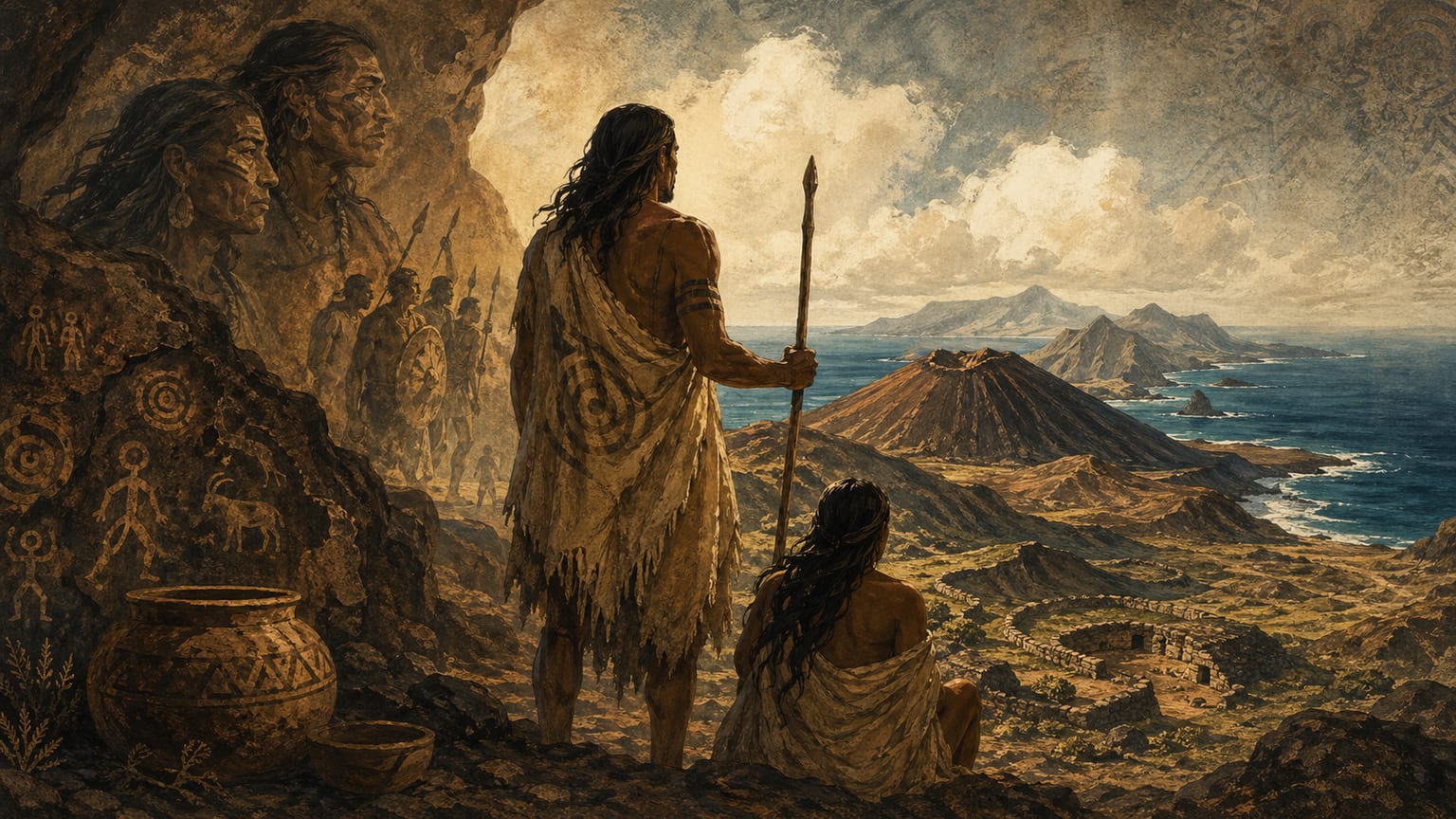
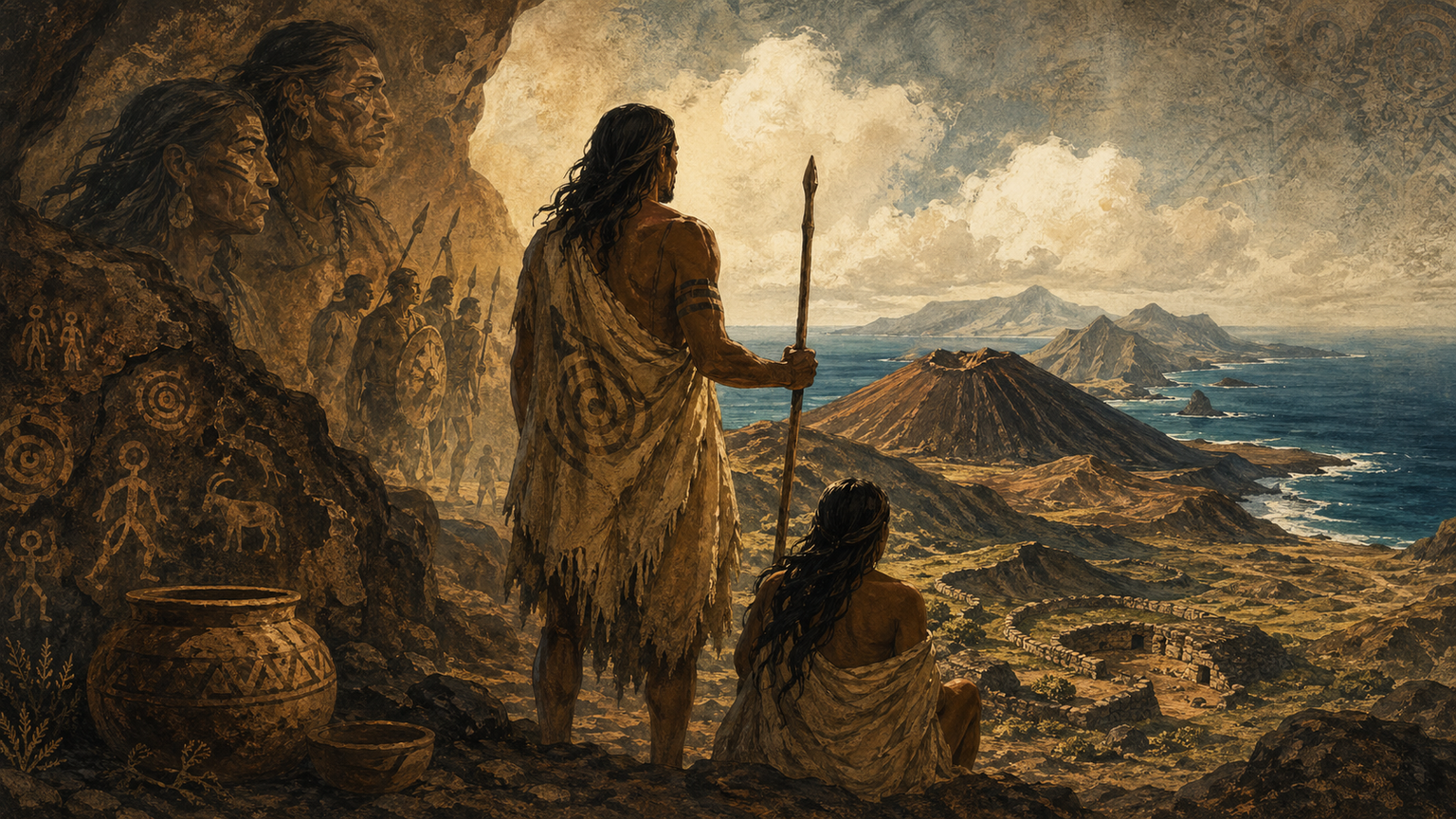
The history of Indigenous Canarians is one of resistance and adaptation. These peoples, who lived on the archipelago before the arrival of Europeans, faced the conquest with various strategies ranging from armed resistance to cultural adaptation.
The arrival of European conquerors in the Canary Islands marked the beginning of a period of drastic changes for the Indigenous population of the archipelago. According to historian Roberto Gil Hernández, the conquest was not a homogeneous process but varied in intensity and form depending on the island and circumstances[1].
In some islands, ancient Canarians chose armed resistance, bravely defending their territory. In others, the strategy was to adapt to the new conditions imposed by the colonizers. This duality in responses reflects the complexity of the interaction between Indigenous Canarian societies and Europeans and how these peoples sought to preserve their identity in the face of foreign domination.
The legacy of Indigenous Canarians is evident today in Canarian culture and traditions. Elements such as the silbo gomero, a unique whistled language, and gofio, a traditional food, testify to the survival of their customs. Additionally, archaeology and historiography continue to reveal aspects of their life and resistance, enriching our understanding of their history.
Through the history of Indigenous Canarians, we can better understand how indigenous societies faced the challenges of colonization and how their legacy remains alive in today’s Canarian identity.