

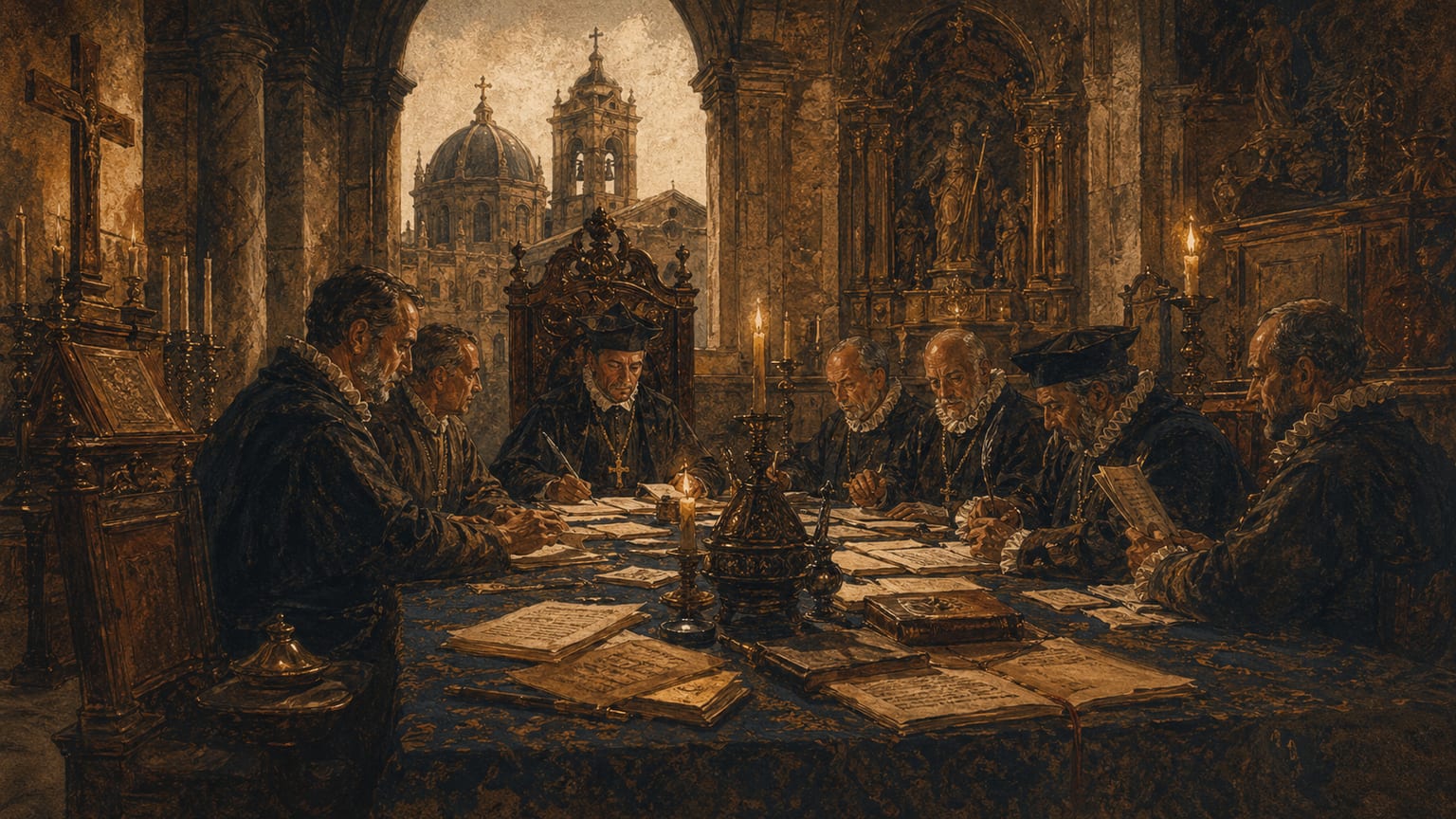

The Chapter of the Canary Islands Cathedral played a crucial role in 17th-century Canarian society. This body was not only responsible for religious matters but also had significant influence in the political and economic spheres of the time. The importance of the Chapter is reflected in its numerous conflicts with other institutions, such as the bishop and religious orders. These confrontations were not merely about power but also reflected the inherent tensions in a society in transition.
One of the most notable conflicts was with Bishop Cristóbal de la Cámara y Murga, whose tenure was marked by constant tensions with the Chapter. Disputes arose over issues of authority and jurisdiction, such as capitular visits and the administration of alms. Despite attempts at conciliation, disagreements persisted, reflecting the complexity of the relationship between ecclesiastical power and the Chapter[1].
In addition to its internal conflicts, the Chapter also had to deal with religious orders, especially the Dominicans. Disputes over the payment of tithes and preaching in the presence of the Chapter were recurrent. These confrontations underscore the struggle for control and influence in a society where religion played a central role[1].
Despite these conflicts, the Chapter also made significant contributions to social welfare. It participated in charitable works, such as the distribution of wheat to the poor and the construction of public infrastructure. These actions not only improved the lives of Canarians but also reinforced the Chapter’s position as a key institution in society[1].
In summary, the Chapter of the Canary Islands Cathedral was much more than a religious body. Its influence extended to all aspects of Canarian life, from politics to the economy, and its legacy endures in the history of the Canary Islands.