

The 1341 Canary Islands Expedition: Boccaccio and the Florentine Merchants’ Account
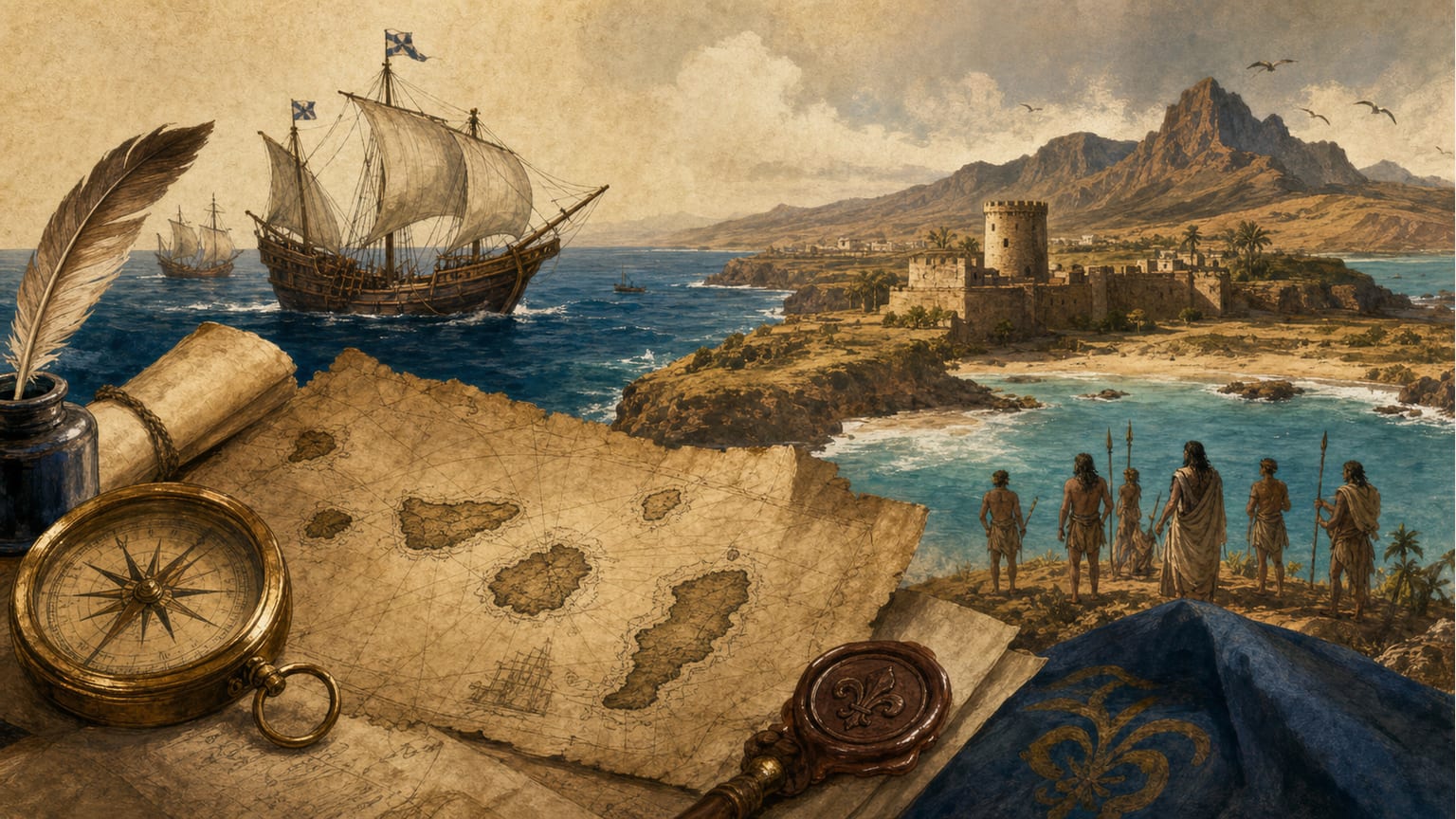
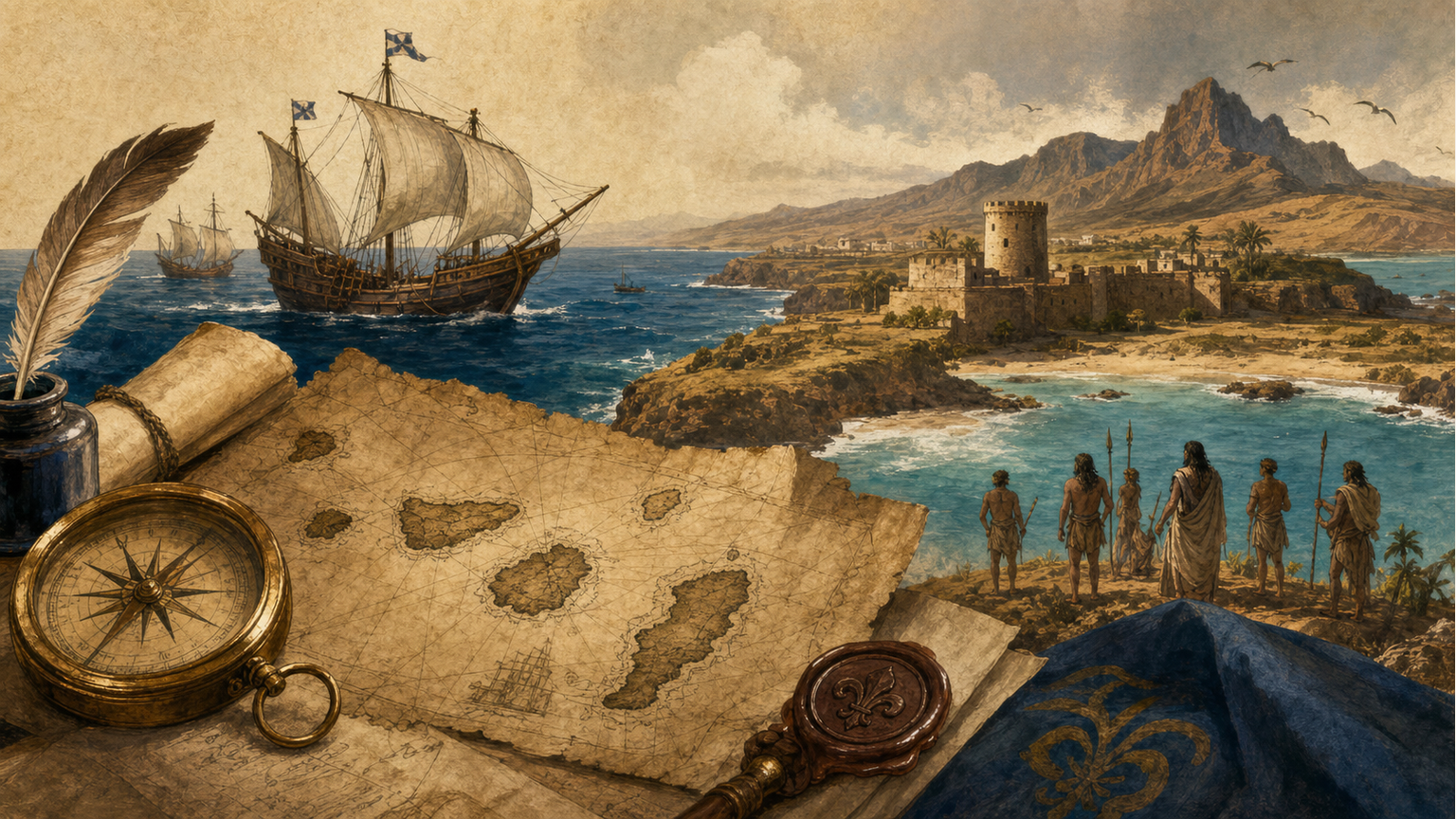
In 1341, a maritime expedition set out from Lisbon to explore the Canary Islands. Financed by the King of Portugal, this venture was documented in letters sent from Seville by Florentine merchants and later compiled by the poet Giovanni Boccaccio. Rediscovered in 1827, this narrative provides one of the earliest and most detailed descriptions of the islands and their inhabitants in the 14th century [1].
The expedition departed on July 1, 1341, with two ships equipped by the King of Portugal and a smaller vessel crewed by Florentines, Genoese, Castilians, and other Spaniards. They carried horses, weapons, and siege engines, seeking islands known as the “Rediscovered.” After five days at sea, they sighted land [1].
Over several months, the explorers visited at least five inhabited islands and several uninhabited ones. On the first island, likely Fuerteventura, they found a stony land full of goats, inhabited by naked men and women with a wild appearance. Most of their cargo of skins and fat was obtained here [1].
On another island, identified as Gran Canaria, the explorers observed many islanders, some covered with goatskins dyed yellow and red. The inhabitants appeared to have a prince to whom they showed respect. Attempts at communication failed due to the language barrier. Four natives were eventually taken aboard and transported to Lisbon [1].
The account also describes the architecture of dwellings, built of stone and wood, clean and well organized. A chapel or temple was found, containing a stone statue of a man holding a ball, covered with an apron of palm leaves. The main foods were wheat, barley, dried figs, and other grains, eaten raw or ground with water [1].
The explorers visited other islands, such as El Hierro and La Palma, noting large trees and abundant birds. In total, they sighted thirteen islands, five of which were inhabited. The narrative highlights linguistic diversity, as people from one island could not understand those from another, and swimming was the only means of communication between islands [1].
The testimony of the captives taken to Lisbon reveals details about their physical appearance and customs: they were young, robust, with long, light hair, and wore only an apron of plant fibers. They showed intelligence, courtesy, and skill in singing and dancing. They refused wine, preferring water, bread, and cereals [1].
The 1341 expedition, as recounted by Boccaccio and the Florentine merchants, provides a unique view of the Canary Islands before European conquest, documenting daily life, social organization, and natural resources of the ancient Canarians in the 14th century [1].