

The Papal Bull Establishing the Diocese of Rubicón: The First Episcopal See in the Canary Islands
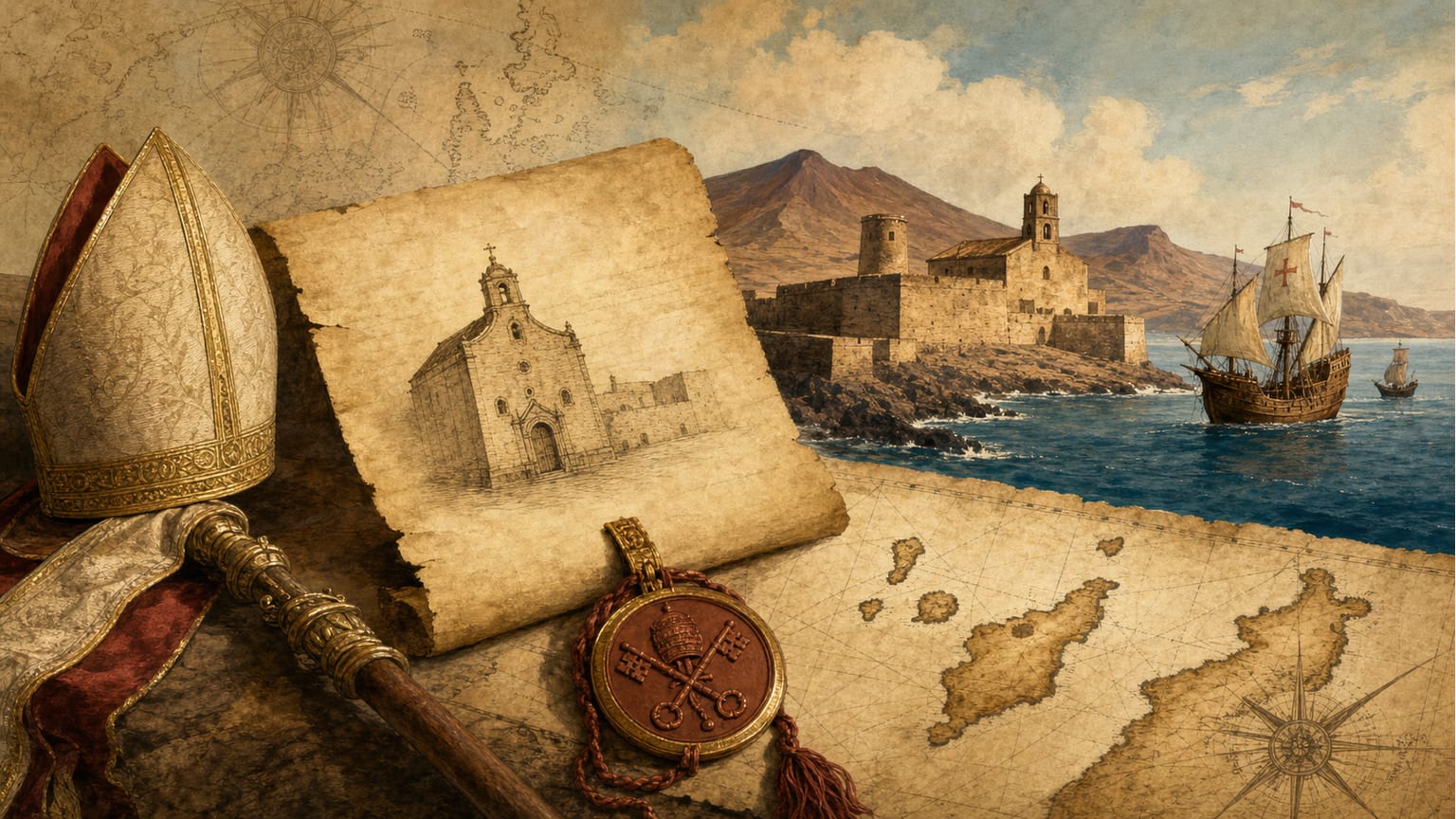
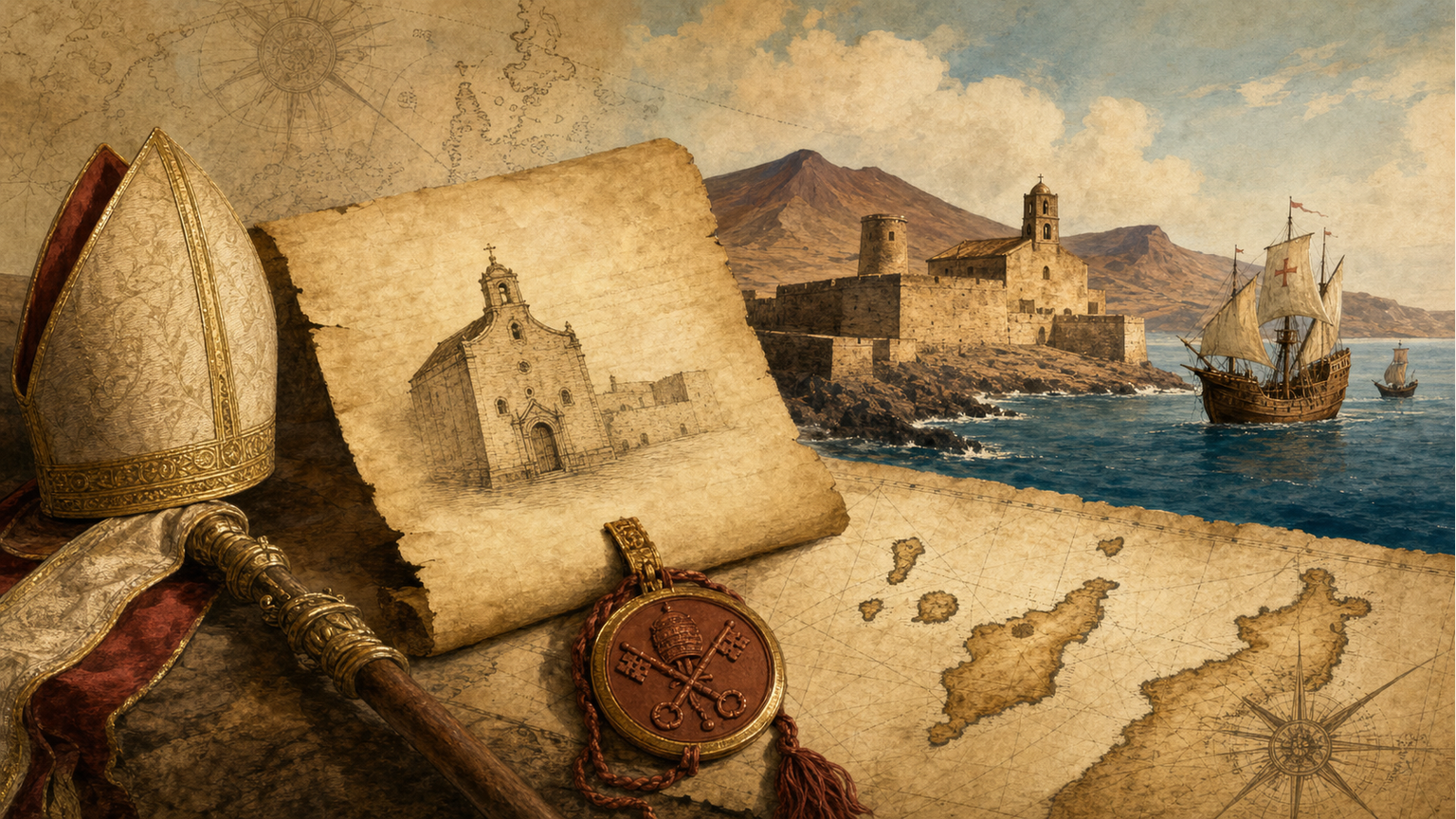
The official beginning of ecclesiastical organization in the Canary Islands was marked by the papal bull issued by Benedict XIII in 1404, which established the castle of Rubicón in Lanzarote as the seat of the first Canarian diocese [1]. This document, long sought by historians and eventually found in the Vatican Secret Archives, is a cornerstone for understanding the process of Christianization and the institutionalization of the Church in the archipelago [1].
As translated by Viera y Clavijo, the bull states that Pope Benedict XIII, informed of the recent conquest of Lanzarote and the conversion of many of its inhabitants, decided to elevate the castle of Rubicón and its church (dedicated to Saint Martial) to the status of city and cathedral, respectively [1]. The text reads: “erigimos el referido castillo de Rubicon en Ciudad, y la honramos con el nombre de tal. siendo nuestra voluntad que se llame perpetuamente Ciudad Rubicense; y señalamos por su Diócesis lo restante de aquella Isla, y todas las otras comarcanas. Y la dicha Iglesia, de consejo de los dichos nuestros hermanos, la hacemos y establecemos Catedral” [1].
The new diocese’s jurisdiction covered not only Lanzarote but also the neighboring islands, and the cathedral was made a suffragan of the archbishopric of Seville, thus linking the new see to the mainland [1]. The bull also stipulated the appointment of a bishop by the Apostolic See and the provision of necessary resources for worship and church administration [1].
The context of the bull reflects the Church’s commitment to expanding the faith in newly conquered territories and its intention to provide stable hierarchical structures for new Christian communities. Benedict XIII emphasizes his desire that “el Mundo dividido en Cismas, vuelva á la unidad de la Fé Ortodoxa, para que haya un solo rebaño bajo de un solo Pastor” [1].
The establishment of the Diocese of Rubicón marked the beginning of ecclesiastical institutionalization in the Canaries and laid the foundation for the later religious organization of the archipelago. The bull, dated in Marseille on July 7, 1404, is the founding charter of the first Canarian episcopal see and a milestone in the islands’ religious history [1].