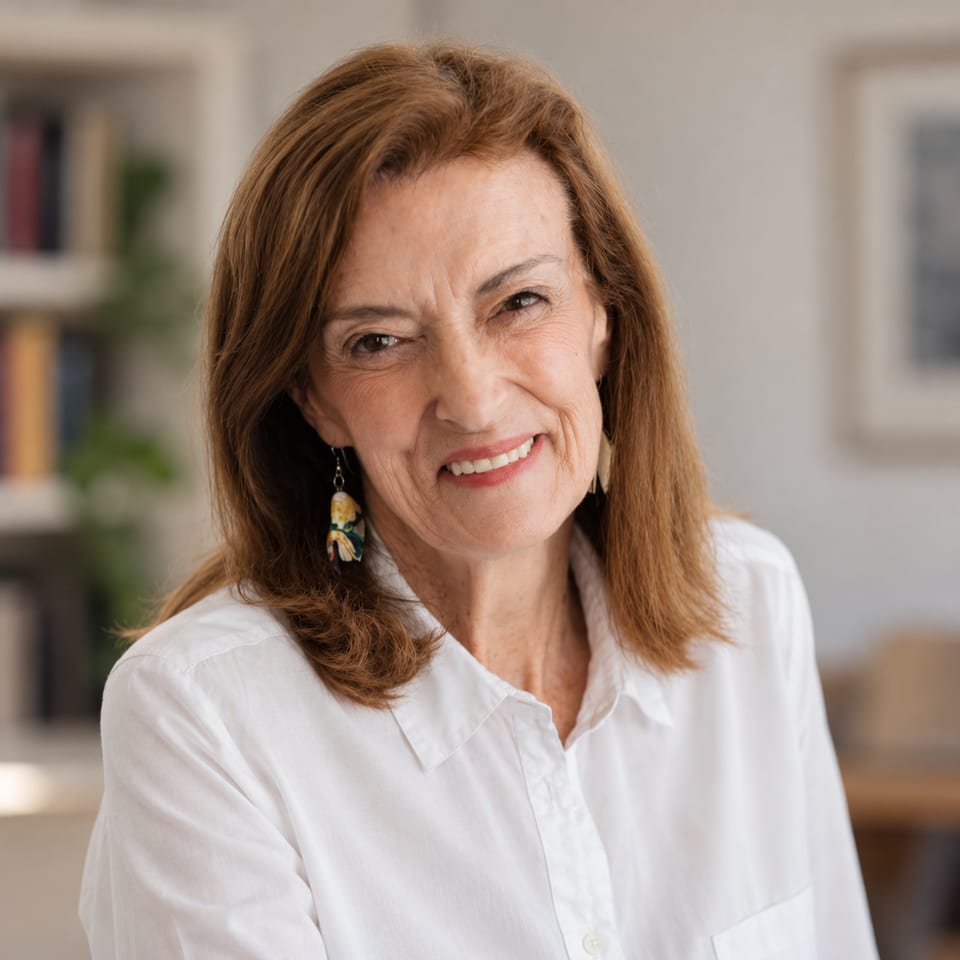
Lola Suárez
ContemporaryLiterature20th CenturyCanarian children's and young adult literature

Writer and educator

Lola Suárez, the literary name of María de los Dolores Suárez Suárez, was born in Arrecife on 6 June 1955. A teacher, educator and author of children's and young adult literature, she has linked her work to reading promotion, school libraries and cultural work in the Canary Islands.
Early life

Lola Suárez was born in Arrecife, Lanzarote, on 6 June 1955. Reading was important from childhood: her early favourites included Antoñita la Fantástica, the adventures of William and the El Capitán Trueno comics. Later she read stories by the Brothers Grimm and Andersen and novels by Salgari and Jules Verne. Her full name is María de los Dolores Suárez Suárez. Her relationship with books preceded her training as an educator and a career combining teaching, oral storytelling and writing for young readers. Reading remained a connection between these different areas of her work.

Historical role

In 1973 she moved to La Laguna to study teacher training and pedagogy at the University of La Laguna. She taught for more than three decades in Tenerife schools, an experience that runs through her writing and explains her sustained involvement in educational renewal and reader development.

From 1984 she served on the editorial committee of Marañuela, a children's and young adult literature magazine created by teachers. She also took part in the Antonio Robles and Atalanta groups, the Island Programme for Reading Promotion and Study Techniques, and activities at the Los Silos International Storytelling Festival. These projects connect literary creation with school libraries, oral storytelling and direct encounters with pupils and teachers.

Her advocacy for school libraries sought to make them central spaces within schools and connect them with surrounding neighbourhoods. She participated in “El museo de los cuentos”, a project combining oral storytelling with an exhibition of objects associated with the stories, such as Bluebeard’s ring or Snow White’s apple. It was shown in teacher training centres and at the university. Her first article in Marañuela concerned Antoniorrobles and appeared in the magazine’s second issue. These activities show how her work promoting reading included publications, encounters and resources through which stories could be shared.

Her books for young readers include Cleta y Domitila, ¡Hoy no me quiero levantar!, Juan cabeza de nido, Maresía, Historias de fantasmas, Calima, El secreto de la foto, Las aventuras de Motita de Polvo and El callejón de la sangre. The Canary Islands Academy of Language highlights writing that brings oral and written language together, rooted in island imagination and attentive to young readers' experience.

Legacy

She also contributed to Hadas, a collective volume published by Diego Pun in 2016, and to Perdone que no me calle, which brought together 62 Canarian women writers opposing violence against women. Her publications continued with Encuentros con fantasmas (2020), Cuentos a la luz de Mafasca (2023) and ¿Quién es Bruno? (2026). The Biblioteca de Canarias records her selection as the featured writer for the 2026 Día de las Escritoras. Cecilia Domínguez Luis’s assessment highlights humour, mystery and Canarian vocabulary in dialogue, describing the presence of Lanzarote in her work as both affectionate and critical.

Timeline

  1. 1955June 6, 1955Born in Arrecife, Lanzarote.
  2. 1973Moves to La Laguna to study teacher training and pedagogy.
  3. 1984Joins the editorial committee of Marañuela.
  4. 1996Publishes Cleta y Domitila.
  5. 2001Contributes as a co-author to Textos canarios para la escuela.
  6. 2016Contributes to the collective volume Hadas.
  7. 2026Is selected as the featured writer for the 2026 Día de las Escritoras.

Sources and verification