

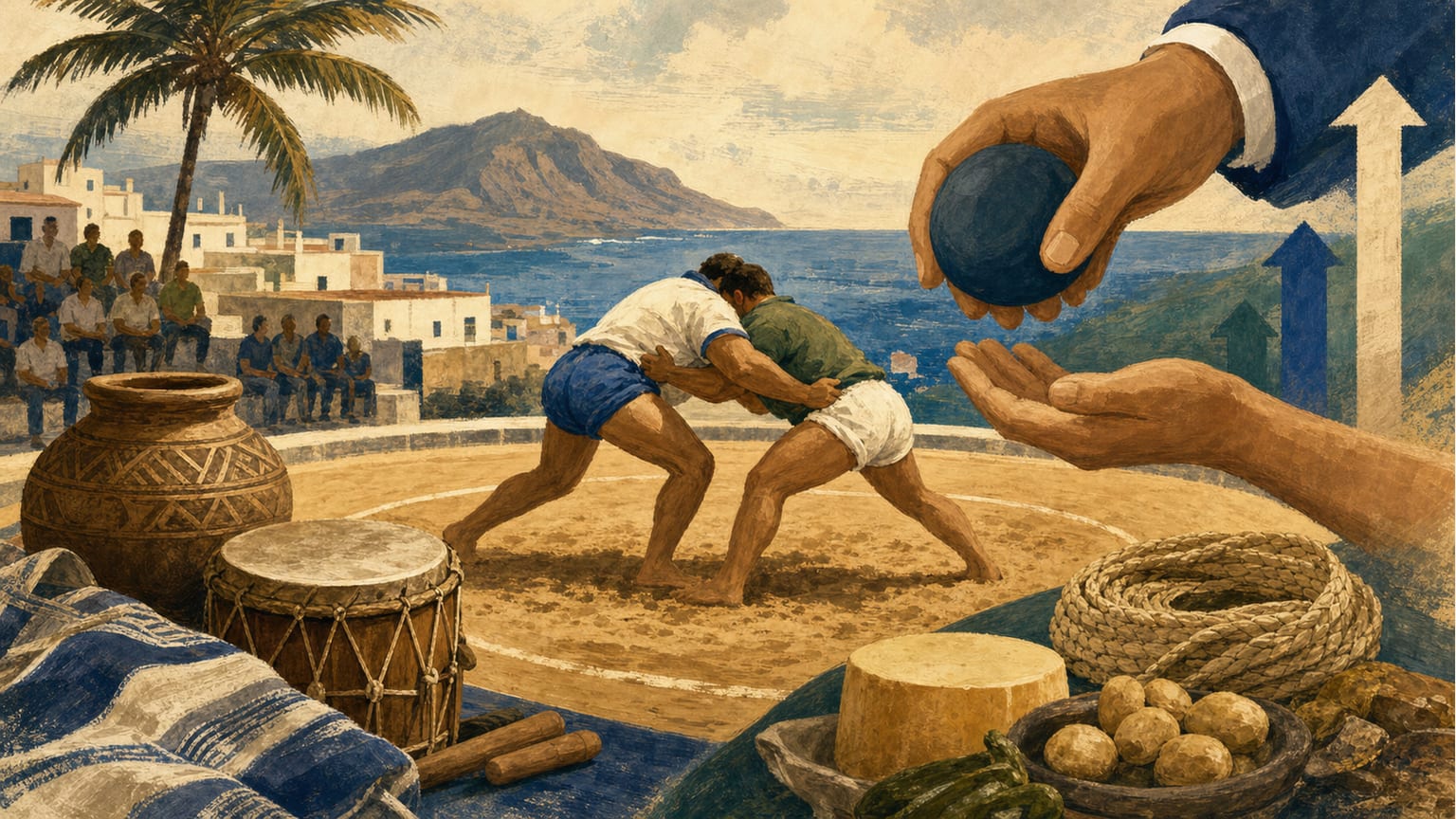
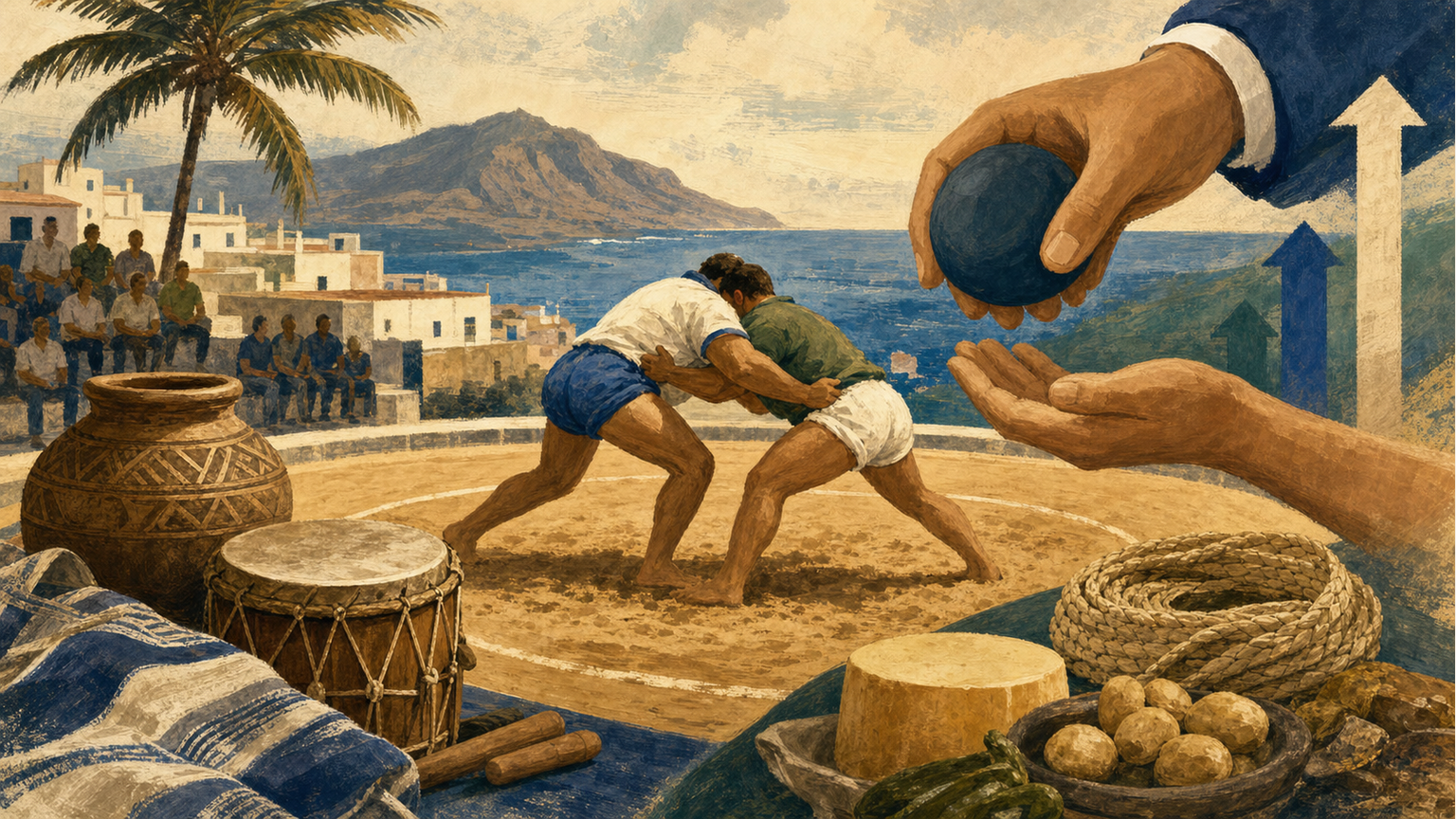
Sponsorship in Canarian Wrestling: Types, Challenges, and Opportunities (2006/07)
Sponsorship has been a cornerstone in funding Canarian Wrestling clubs and federations, particularly on the island of Gran Canaria during the 2006/07 season, according to Emmerichs[1]. For clubs, up to 80% of their total income came from sponsors, underscoring the significance of this marketing tool[1].
Main Forms of Sponsorship
One of the most visible forms of sponsorship is the inclusion of the sponsor’s name in the official club name (naming right). Emmerichs documents that, in the 2006/07 season, almost all wrestling clubs in Gran Canaria had the support of a private company that obtained the right to include its brand in the club’s official title[1]. For example, teams such as Castillo, Tinamar, or Maninidra bore the names of construction or service companies. Only C.L. Adargoma had a period without a title sponsor in the five years prior to the study[1].
Emmerichs also notes a trend of frequent sponsor changes: in the five years analyzed, most top-division clubs changed their official sponsor at least once. According to the specialized literature cited by the author, this can hinder the main goal of sponsorship: increasing brand awareness, which requires consistency and duration, ideally at least five years[1].
Another important form is sponsorship of competition names. In 2006/07, all team competitions in senior, youth, and cadet categories had sponsors in their titles, whether private companies or public institutions[1]. Notable examples include the Torneo La Caja de Canarias and the Liga Cabildo de Gran Canaria. The income from these sponsorships represented around 50% of all the insular federation’s revenue[1].
Advertising on Uniforms and at Events
Sponsorship also appeared on wrestling attire. Clubs allowed multiple logos on their shirts and shorts, with the largest space reserved for the main sponsor, but also including other sizable logos[1]. Emmerichs observes that some clubs used shirts from different seasons in the same event, creating confusion about the current official sponsor and reducing advertising effectiveness[1].
In the wrestling arenas, advertising was mainly presented on static billboards. The number of billboards varied greatly between clubs: C.L. Adargoma placed 39 billboards in its arena, while other clubs had only a few[1]. According to the author, advertising efficiency decreases as the number of billboards in a small space increases.
Challenges and Opportunities
Emmerichs identifies several challenges in Canarian Wrestling sponsorship. These include the lack of consistency in contracts, which are usually for only one season, and the presence of excessively long club names due to the inclusion of two sponsors, making brand identification difficult[1]. Additionally, the limited media presence of Canarian Wrestling on television and in the press restricts the reach and value of sponsorships.
Nevertheless, the author highlights that Canarian Wrestling offers a wide variety of sponsorship opportunities and a grateful environment, where sponsors are seen as saviors of the traditional sport[1]. The involvement of foreign companies is also welcomed, especially given the difficulties clubs face in finding support.
In conclusion, sponsorship in Canarian Wrestling during the 2006/07 season was essential for the survival and development of clubs, although it faced organizational, consistency, and media visibility challenges, according to Emmerichs’ analysis[1].