
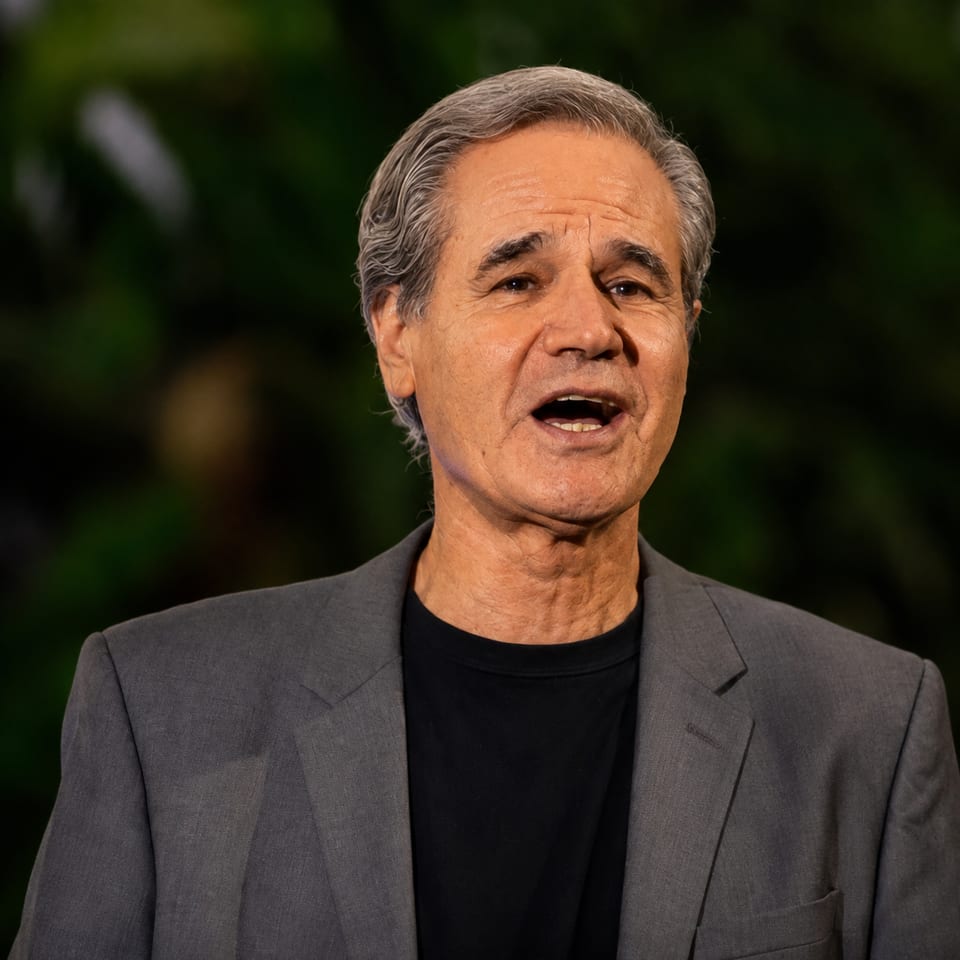
Luis Morera
Roles
Singer · Songwriter · Multidisciplinary artist
Genres
Nueva Canción Canaria · Canarian roots music · Folk rock · Singer-songwriter music
Instruments
Voz · Percusión
Activity
1974

Music career

Luis Morera’s public musical career is tied to Taburiente, founded on La Palma in 1974 with Miguel Pérez and Manolo Pérez after the earlier La Contra experience. CanariWiki and the Canary Islands Government place Taburiente within the musical change of the 1970s: Nuevo Cauce introduced Canarian folklore, protest song and synthesisers, while Ach-Guañac expanded that line with progressive rock. Morera later developed solo production, but this music profile documents him from sources that present him chiefly as voice and songwriter linked to Taburiente.

Contribution

The Boletín Oficial de Canarias highlights Morera as Taburiente’s musical leader, soloist and composer of some songs, and places the group’s first two LPs as reference points for Canarian roots musicians. His individual contribution lies in giving a recognisable voice to a contemporary music that did not abandon popular roots and that integrated landscape, identity, social claims and environmental sensibility.

Style

Official sources document his vocal style as one of Taburiente’s distinctive traits. The musical context combines singer-songwriter idioms, La Palma and Canarian folklore, tajarastes, sirinoques, rock, synthesisers, jazz concepts and Atlantic sonorities. In Morera’s work, music dialogues with his visual-art practice: landscape, island memory, defence of territory and natural symbols recur as central axes.

Repertoire

The verified repertory includes Nuevo Cauce and Ach-Guañac as milestones in Taburiente’s first period, and the Spanish National Library record for Taburiente, released in 1985, which documents lyrics by Luis Morera, music by Miguel Rodríguez and songs such as A Tara, A la Caldera de Taburiente, Malagueña del agua and Canto de tierra. This profile does not treat that selection as a complete discography.

Legacy

His musical legacy is transmitted through Taburiente’s continuity, songs associated with Canarian collective memory and a form of creation in which music, painting, public space and environmentalism feed each other. The Canary Islands Gold Medal granted to Taburiente in 2001 officially recognises that collective trajectory; within it, Morera’s voice is one of its most identifiable signs.

Canary Islands connection

He was born in Santa Cruz de La Palma and his musical career is structured around Taburiente, Nueva Canción Canaria, La Palma’s landscape and the cultural and natural defence of the archipelago.

Works and recordings

1978

Ach-Guañac

CanariWiki lo presenta como tema convertido en referencia de la Nueva Canción Canaria.

1985

A la Caldera de Taburiente

Tema documentado en el registro BNE de Taburiente, con letra de Luis Morera.

1985

A Tara

Tema incluido en el contenido catalogado por BNE para Taburiente.

Timeline

  1. Nacimiento

    Nace en Santa Cruz de La Palma el 10 de octubre de 1946.

  2. Taburiente

    Funda Taburiente en La Palma junto a Miguel Pérez y Manolo Pérez.

  3. Nuevo Cauce

    Taburiente publica su primer álbum, producido por Teddy Bautista.

  4. Ach-Guañac

    El segundo álbum amplía la fusión de folclore, sintetizadores y rock progresivo.

  5. Taburiente / A Tara

    BNE documenta el disco Taburiente, con letras de Luis Morera y repertorio de raíz canaria.

  6. Medalla de Oro de Canarias

    El Gobierno de Canarias concede la Medalla de Oro al grupo Taburiente.

  7. Ach Guañac. Geografías del vínculo

    Una exposición retrospectiva en Santa Cruz de La Palma muestra la conexión entre música, artes plásticas y territorio en su obra.

Sources