

It was the last island to be fully incorporated into the Crown of Castile, after Benahoarite resistance and the defeat of leaders such as Tanausú. In the early modern period Santa Cruz de La Palma stood out as an important Atlantic port, while the interior developed farming systems adapted to a complex topography.
It was the last island to be fully incorporated into the Crown of Castile, after Benahoarite resistance and the defeat of leaders such as Tanausú. In the early modern period Santa Cruz de La Palma stood out as an important Atlantic port, while the interior developed farming systems adapted to a complex topography.
Among its main reference points are Benahoarite heritage, Atlantic port, Living volcanic island, which connect landscape, memory and everyday life. This historical reading connects settlement, conquest, economy, institutions, migrations and cultural memory rather than reducing the island to isolated dates.
Key points
Los benahoaritas
Los habitantes prehispanicos de La Palma (Benahoare) se organizaban en cantones sin un poder centralizado, con una vida pastoral y una cultura material bien documentada arqueologicamente.
Conquista y resistencia de Tanausu (1492-1493)
La isla fue la primera en ser conquistada por Alonso Fernandez de Lugo; Tanausu, caudillo del canton de Aceró, resistio en la Caldera de Taburiente antes de ser capturado mediante engano.
Auge del puerto de Santa Cruz
En los siglos XVI y XVII, Santa Cruz de La Palma fue el tercer puerto del Imperio español, nexo entre Europa, America y Africa, lo que explico su riqueza arquitectonica y comercial.
Erupciones históricas y contemporaneas
La Palma tiene uno de los registros eruptivos mas activos de Europa: erupciones en 1585, 1646, 1677, 1712, 1949, 1971 y la mas reciente de Cumbre Vieja en 2021.
Municipalities of La Palma
See all →- Barlovento Barlovento es el municipio más septentrional de La Palma, con las piscinas naturales del Charco Azul, los restos de ermitas históricas y una economía agrícola orientada al plátano y al aguacate.
- Breña Alta Breña Alta es un municipio del este de La Palma que ocupa las medianías entre la capital y el centro de la isla, con acceso al pinar de El Pilar y una actividad agrícola diversificada.
- Breña Baja Breña Baja incluye Los Cancajos, el principal núcleo turístico costero de La Palma, junto al aeropuerto insular y una costa de pozas naturales y senderos.
- El Paso El Paso es la puerta de entrada al Parque Nacional de la Caldera de Taburiente y el centro histórico de la sericultura palmera, con una artesanía de seda que se mantiene como referente cultural.
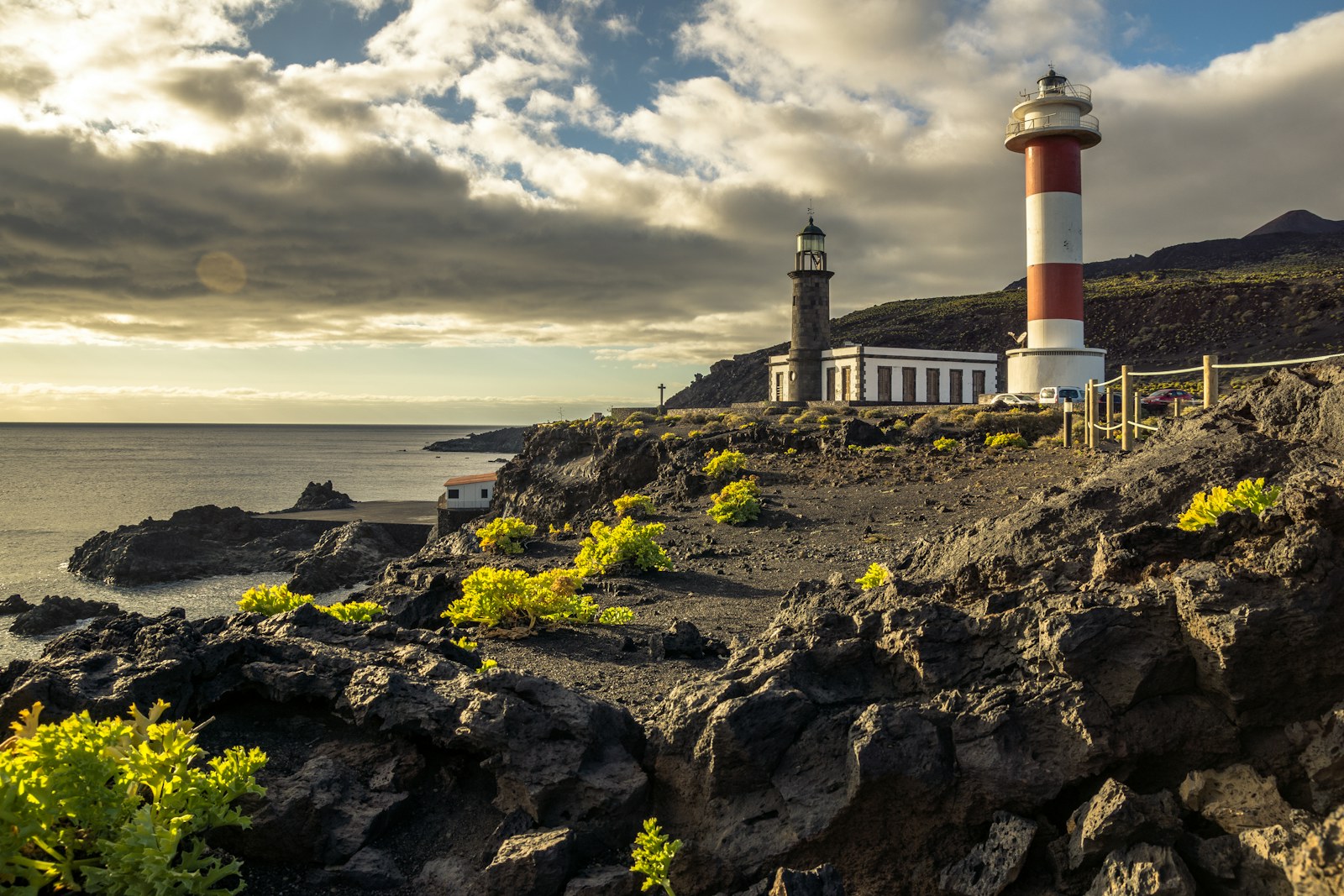
- Fuencaliente de La Palma Fuencaliente es el municipio más meridional de La Palma, con el volcán Teneguía, el faro de punta sur y las salinas que producen la sal volcánica más conocida de Canarias.
- Garafía Garafía es el municipio del extremo noroeste de La Palma, el más despoblado y aislado, con el Observatorio del Roque de los Muchachos como hito científico de relevancia mundial.