

La Palma's society has been shaped by production, mobility, ports, migration and the changing value of its landscapes.
It was the last island to be fully incorporated into the Crown of Castile, after Benahoarite resistance and the defeat of leaders such as Tanausú. In the early modern period Santa Cruz de La Palma stood out as an important Atlantic port, while the interior developed farming systems adapted to a complex topography. The island economy has changed according to available resources, external connections, population mobility and pressure on the territory.
Among its main reference points are Benahoarite heritage, Atlantic port, Living volcanic island, which connect landscape, memory and everyday life. This section links production, society and landscape to explain the contemporary island without separating it from its history.
Key points
Puerto atlantico y comercio colonial
Santa Cruz de La Palma fue escala obligada en la ruta a America durante los siglos XVI y XVII; el comercio de azucar, vinos y esclavos conformo su primera sociedad urbana.
Platano y agricultura de exportacion
La Palma es el municipio platanero mas activo de Canarias por unidad de superficie; el cultivo de platano sostiene buena parte de la economia agricola insular.
Emigracion a Cuba y Venezuela
Entre los siglos XIX y XX, La Palma tuvo una de las emigraciones mas intensas del archipielago, especialmente hacia Cuba; las remesas y el retorno transformaron la sociedad local.
Astronomia y nueva economia
La instalacion del Observatorio Roque de los Muchachos en 1985 convirtio a La Palma en referencia internacional de ciencia; el turismo astronómico se desarrolla como nuevo recurso.
Municipalities of La Palma
See all →- BarloventoBarlovento es el municipio más septentrional de La Palma, con las piscinas naturales del Charco Azul, los restos de ermitas históricas y una economía agrícola orientada al plátano y al aguacate.
- Breña AltaBreña Alta es un municipio del este de La Palma que ocupa las medianías entre la capital y el centro de la isla, con acceso al pinar de El Pilar y una actividad agrícola diversificada.
- Breña BajaBreña Baja incluye Los Cancajos, el principal núcleo turístico costero de La Palma, junto al aeropuerto insular y una costa de pozas naturales y senderos.
- El PasoEl Paso es la puerta de entrada al Parque Nacional de la Caldera de Taburiente y el centro histórico de la sericultura palmera, con una artesanía de seda que se mantiene como referente cultural.
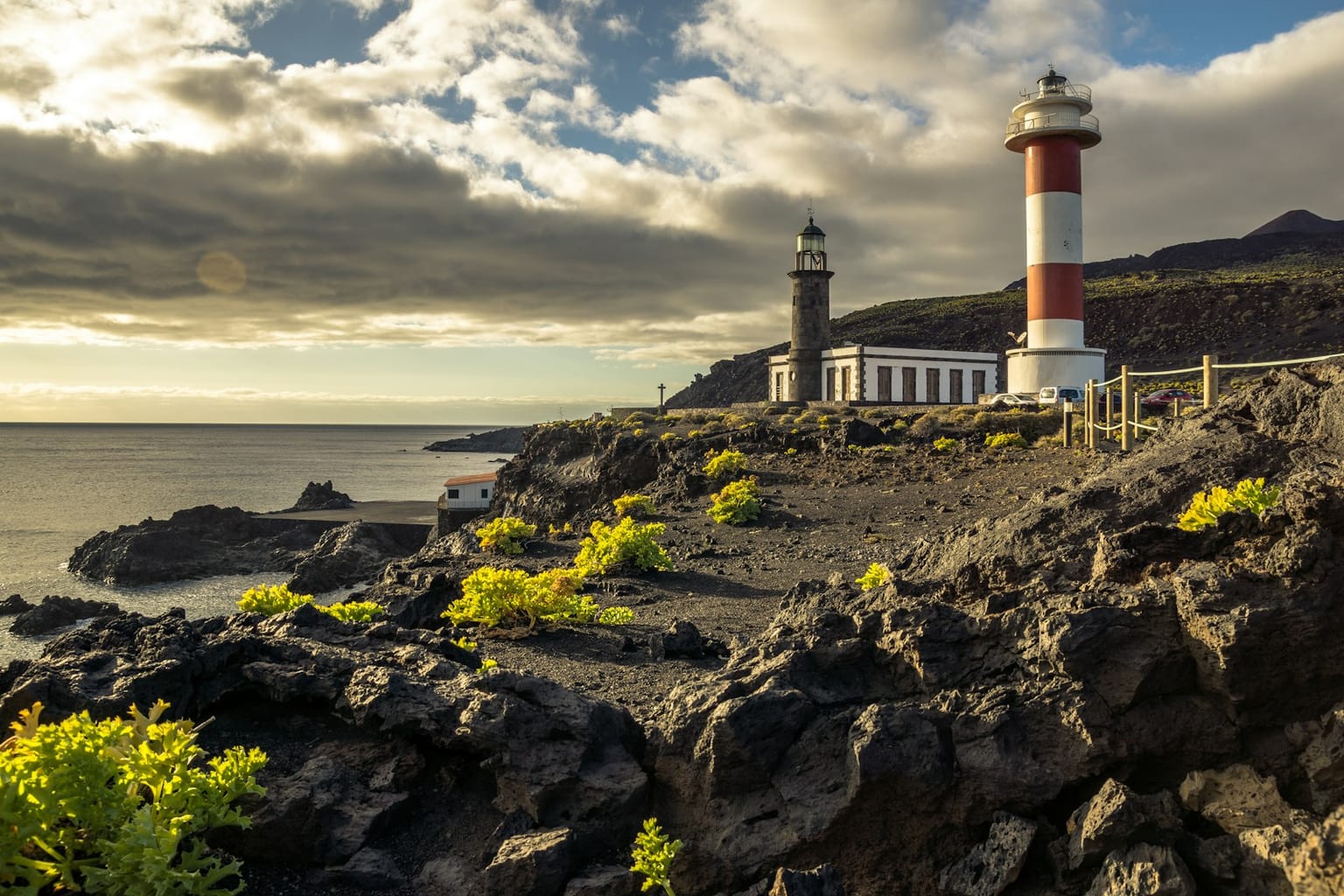
- Fuencaliente de La PalmaFuencaliente es el municipio más meridional de La Palma, con el volcán Teneguía, el faro de punta sur y las salinas que producen la sal volcánica más conocida de Canarias.
- GarafíaGarafía es el municipio del extremo noroeste de La Palma, el más despoblado y aislado, con el Observatorio del Roque de los Muchachos como hito científico de relevancia mundial.