

The Dragon Tree: Myth, Science, and Symbol of Tenerife
The Dragon Tree (Dracaena draco) stands as one of the most iconic plants of the Canary Islands, especially Tenerife, where it is the official botanical symbol. Its unique appearance and deep roots in local culture have made it a subject of fascination, blending legend, history, and science1.
A tree of legend and reality
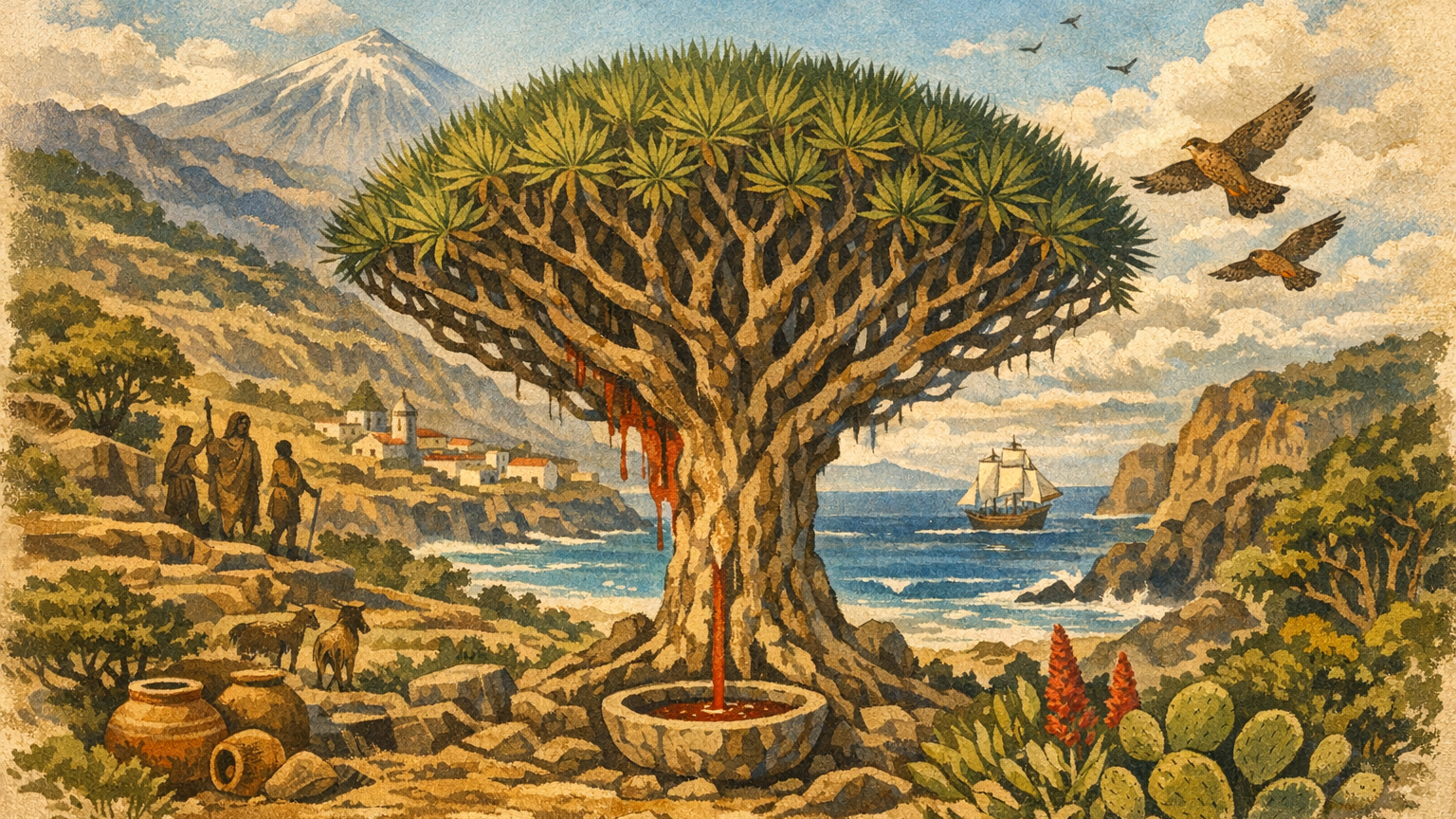
Since ancient times, the Dragon Tree has been surrounded by myths. In the legendary Garden of the Hesperides, guarded by a dragon, golden apples were said to grow, and the “dragon’s blood” resin was believed to be the dragon’s own. Phoenicians, Carthaginians, and Romans traded with the Canary aborigines for products like orchilla and the red resin of the dragon tree, used as dye and in traditional medicine.
The Guanches of Tenerife used the resin to dye their hair red, make shields, and, after the conquest, for beehives and ferret boxes. In folk medicine, dragon tree sap was used to treat gums, dysentery, stomach bleeding, ulcers, and to help heal wounds. Its fruit is also edible.
A symbol of identity and biodiversity
The Dragon Tree exemplifies the Canary Islands’ richness in endemic species. While the flora is less diverse than on the continent due to insularity, unique species like the dragon tree more than make up for it. The tree is especially prominent in Tenerife, home to the famous “Drago Milenario” of Icod de los Vinos. Other notable specimens exist in Gran Canaria (Pino Santo) and Fuerteventura (Tetir).
Environmental education and conservation
The “Libro Vivo de la Educación Ambiental en Canarias” emphasizes that to protect nature, we must first know and love it. Only what is known and loved will be cared for. The book recommends visiting areas with wild dragon trees, studying their development, and promoting educational activities that connect young people to these natural treasures.
The dragon tree, with its ecological value and mythical aura, bridges science and legend. Its study and protection are vital for preserving Canarian identity and fostering sustainable development in the islands’ fragile environment.
Footnotes
-
Cabrera Mujica, J.J. (2004). Libro Vivo de la Educación Ambiental en Canarias. ↩