

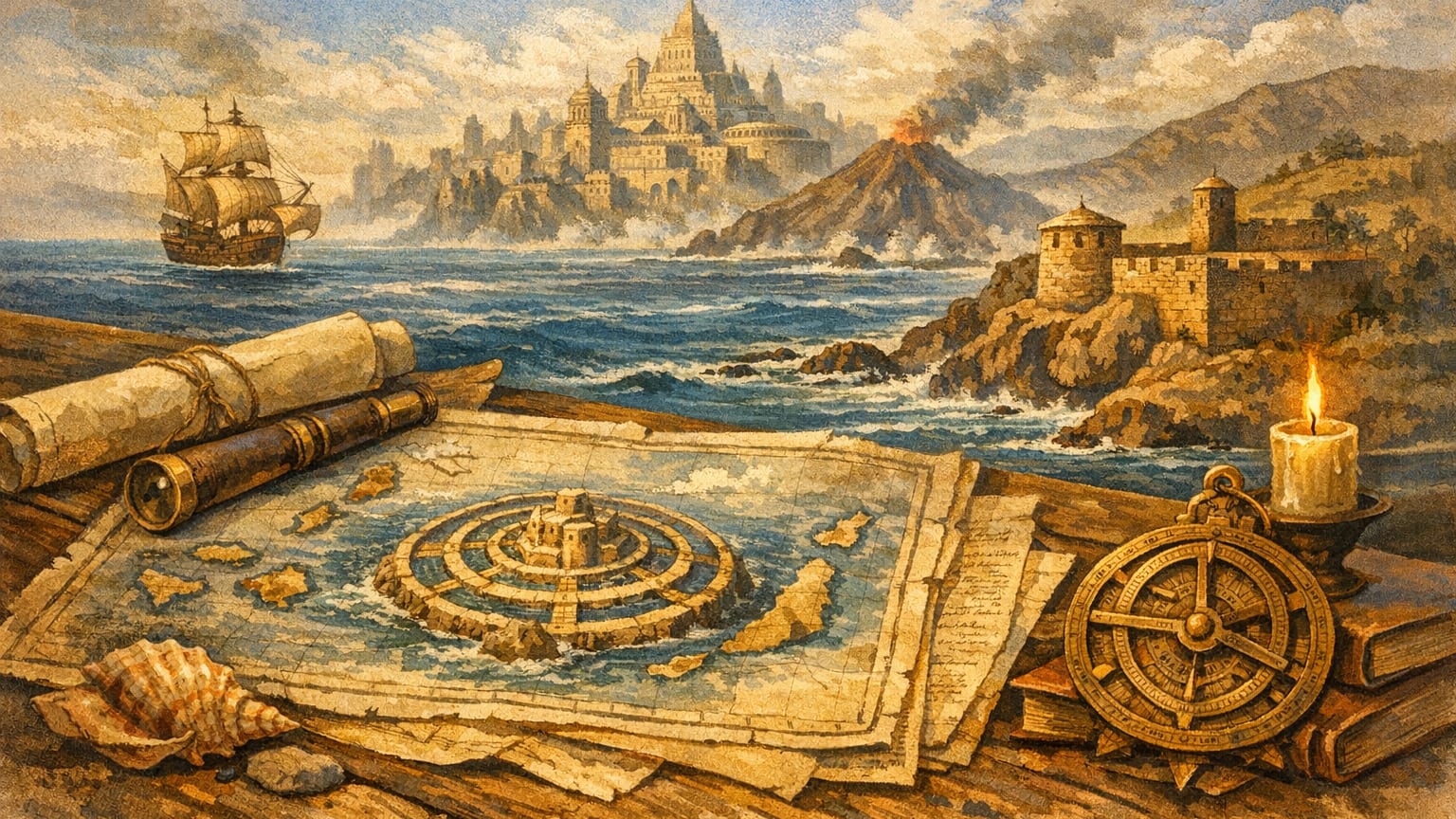
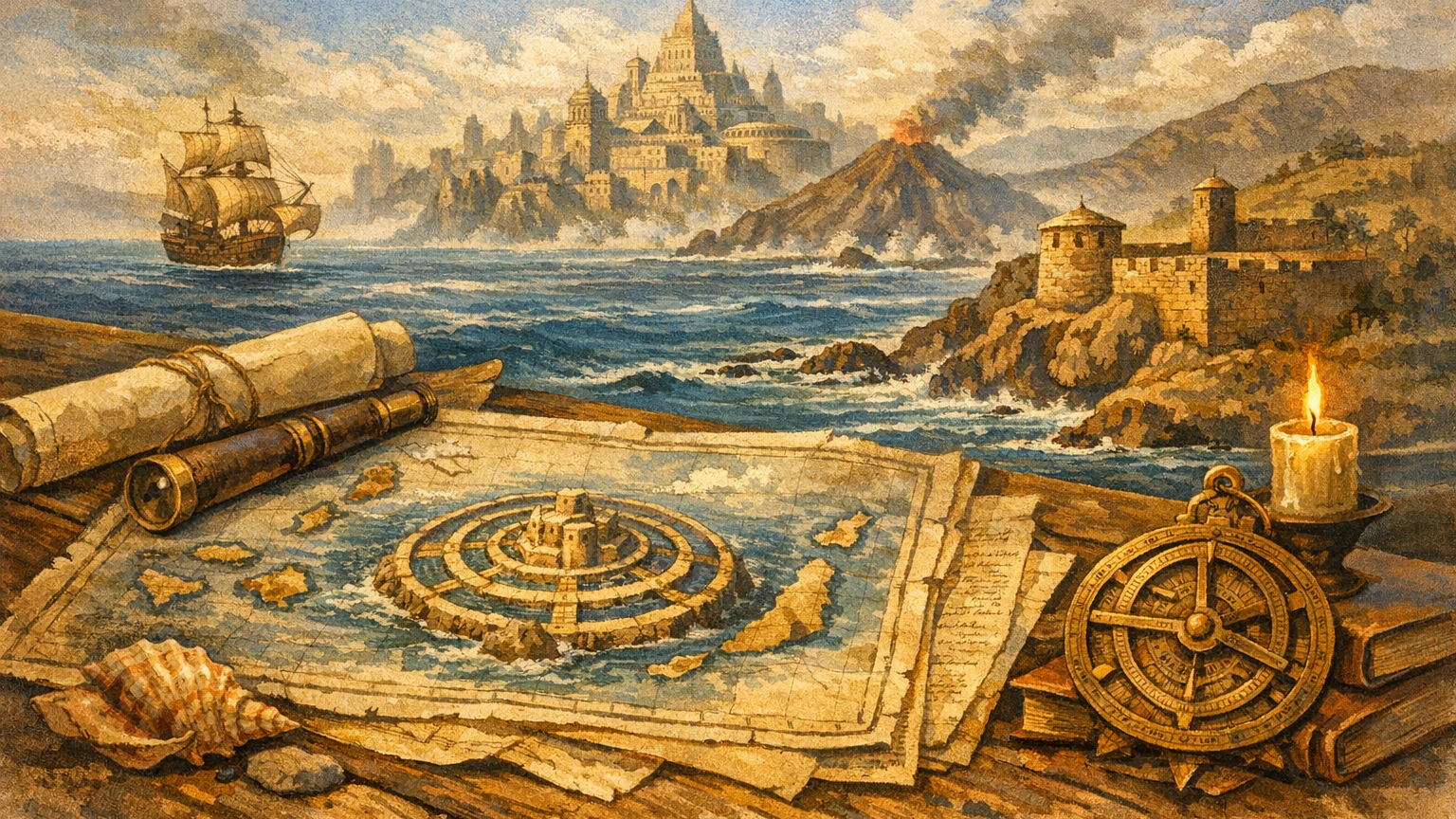
Atlantis and the Canary Islands: Myth, Science, and Reality
Since antiquity, the Canary Islands have been shrouded in mystery, much of it fueled by the enduring legend of Atlantis. In his General History of the Canary Islands, Agustín Millares Torres explores how this myth influenced both the historical and scientific understanding of the archipelago[1].
The Atlantis Myth and Its Connection to the Canaries
Plato first described Atlantis as a land larger than Libya and Asia combined, located beyond the Pillars of Hercules. According to his account, Atlantis vanished beneath the ocean after angering the gods, leaving only the peaks of its mountains visible—later identified with Madeira, the Salvage Islands, the Canaries, Cape Verde, and the Azores[1].
This story was echoed by classical authors such as Aristotle and Diodorus Siculus, who referred to the “Fortunate Isles” in vague and ambiguous terms. The idea that the Canaries were remnants of mythical Atlantis persisted for centuries, inspiring both popular imagination and scientific inquiry[1].
Science Versus Myth: Theories on the Archipelago’s Origin
Over time, two main theories have sought to explain the origin of the Canary Islands. The first, the subsidence theory, claims the islands are the remains of a sunken continent—Atlantis. Geologists like Germain supported this view, suggesting the Azores, Madeira, Canaries, and Cape Verde once formed a vast landmass connecting Africa and America[1].
However, other scientists, including Professor Buchard and Dr. Verneau, dismissed this idea, considering Atlantis a myth and attributing the islands’ formation to volcanic activity. Charles Lyell, for example, championed the volcanic theory, stating the archipelago was formed by successive eruptions from the ocean floor, first raising Mount Teide and then the other islands[1].
The Myth’s Legacy in Canarian Culture
Despite scientific advances, the Atlantis myth remains alive in Canarian culture and identity. The allure of a lost, mysterious land has inspired poets, historians, and travelers, contributing to the islands’ image as a privileged, almost magical place where nature and history intertwine.
Thus, while Atlantis may be relegated to legend, its influence endures in the history and imagination of the Canary Islands, reminding us that the boundary between myth and reality is often blurred, and both can coexist in a people’s collective memory[1].