

The Mystery of the Guanches: First Inhabitants of Tenerife
The Guanches, known as the first inhabitants of Tenerife, represent one of the most fascinating chapters in the history of the Canary Islands. Despite numerous studies, the exact origin of the Guanches remains a mystery that intrigues historians and archaeologists alike.
Who were the Guanches?
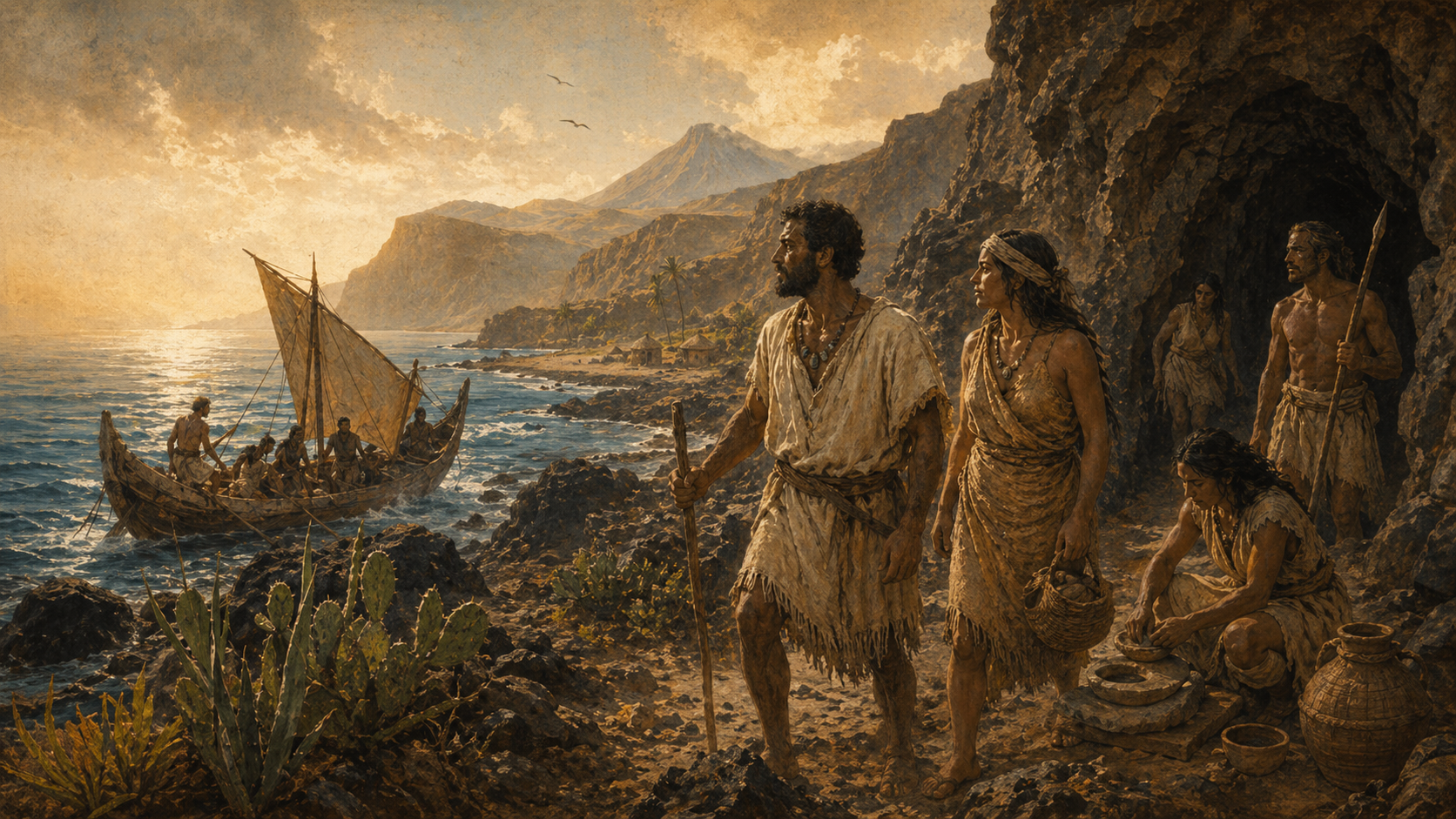
The term ‘Guanche’ originally referred only to the inhabitants of Tenerife, but over time it has been extended to describe all the ancient inhabitants of the Canary Islands[^historia-y-patrimonio-vol1-eso-bach-1-1]. The Guanches were a people of Berber origin, who arrived on the islands from North Africa. Their arrival, estimated to have occurred around the 1st century BC, was a crucial event that marked the beginning of human history in the archipelago.
Culture and Society
Guanche society was organized into menceyatos, which were small kingdoms governed by a mencey. Each menceyato operated autonomously but shared a common culture that included a language, tamazigh, and religious practices that worshipped a supreme deity known as Achamán[^historia-y-patrimonio-vol1-eso-bach-1-1].
Daily Life
The Guanches lived in caves and stone constructions, adapting to the volcanic environment of Tenerife. Their economy was based on agriculture and livestock, with a particular focus on cereal cultivation and goat and sheep herding. Additionally, fishing and shellfish gathering were essential activities for their subsistence[^historia-y-patrimonio-vol1-eso-bach-1-1].
Legacy
The legacy of the Guanches is visible in the current Canarian culture, from language to culinary and festive traditions. Despite European colonization, many elements of Guanche culture have endured, integrating into the modern Canarian identity[^historia-y-patrimonio-vol1-eso-bach-1-1].
The Guanches are not only an essential part of Tenerife’s history but also represent a vital link to the pre-Hispanic past of the Canary Islands, offering a window into a world that, although largely lost, remains alive in the cultural memory of the islands.