

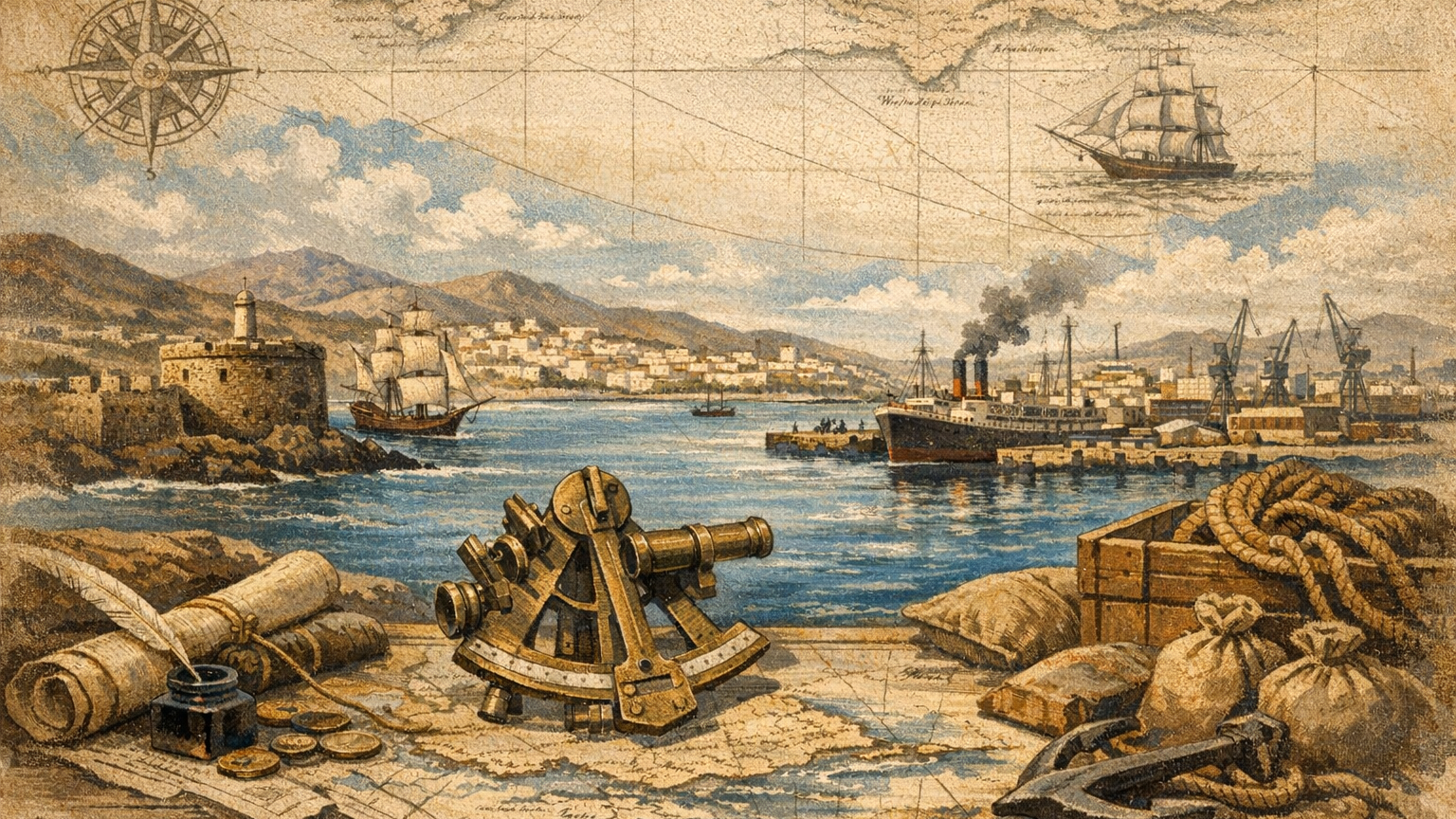
The Port of La Luz: Engine of Change in Las Palmas de Gran Canaria
The evolution of Las Palmas de Gran Canaria is inextricably linked to the development of the Port of La Luz, a crucial infrastructure that has shaped the city’s economic, social, and cultural landscape since the late 19th century1.
A turning point: building the port
Before the mid-19th century, Las Palmas was a city with a rich history and strategic location, but it remained somewhat stagnant. The construction of the Port of La Luz in 1883 marked a decisive turning point. This new port modernized the city, connecting it directly to international trade routes and establishing it as a key hub for goods and passenger traffic in the Atlantic1.
The port’s creation sparked an economic and social revival, attracting ambitious new generations and visionary mayors such as Antonio López Botas and Ambrosio Hurtado de Mendoza. The city expanded towards the La Isleta bay, with the port becoming the focal point of urban and economic activity.
Urban and social transformation
The impact of the Port of La Luz extended beyond economics. New districts like Los Arenales and Ciudad Jardín emerged between the port and the historic Triana neighborhood, the latter influenced by the British colony that introduced new customs and architectural styles1.
The port attracted merchants, sailors, and workers from various parts of the world, enriching the city’s cultural diversity. Port activity generated employment and spurred the growth of hospitality, restaurants, and nightlife, with the rise of hotels, eateries, discos, and terraces.
An economic engine for the 20th and 21st centuries
Throughout the 20th century, the Port of La Luz solidified its role as Las Palmas’ economic engine. Its strategic importance grew further with the creation of the Canary Islands Special Zone (ZEC) in 2000, which drew new investment and encouraged industrial development1.
The port has also been key to the city’s international profile, welcoming tourists and cruise ships and helping make Las Palmas one of Spain’s most cosmopolitan cities and the most populous in the Canary Islands.
Leisure and cultural spaces
The benefits of the port extend to leisure and culture. The nearby Las Canteras and Las Alcaravaneras beaches offer year-round recreation and sports. The modern Alfredo Kraus Auditorium, located by the beach, stands as a cultural landmark honoring one of the city’s most renowned natives1.
Conclusion
The Port of La Luz has been—and remains—the driving force behind Las Palmas de Gran Canaria. Its influence goes far beyond economics, transforming the city into an open, dynamic, and multicultural space that looks to the future while honoring its rich heritage.