

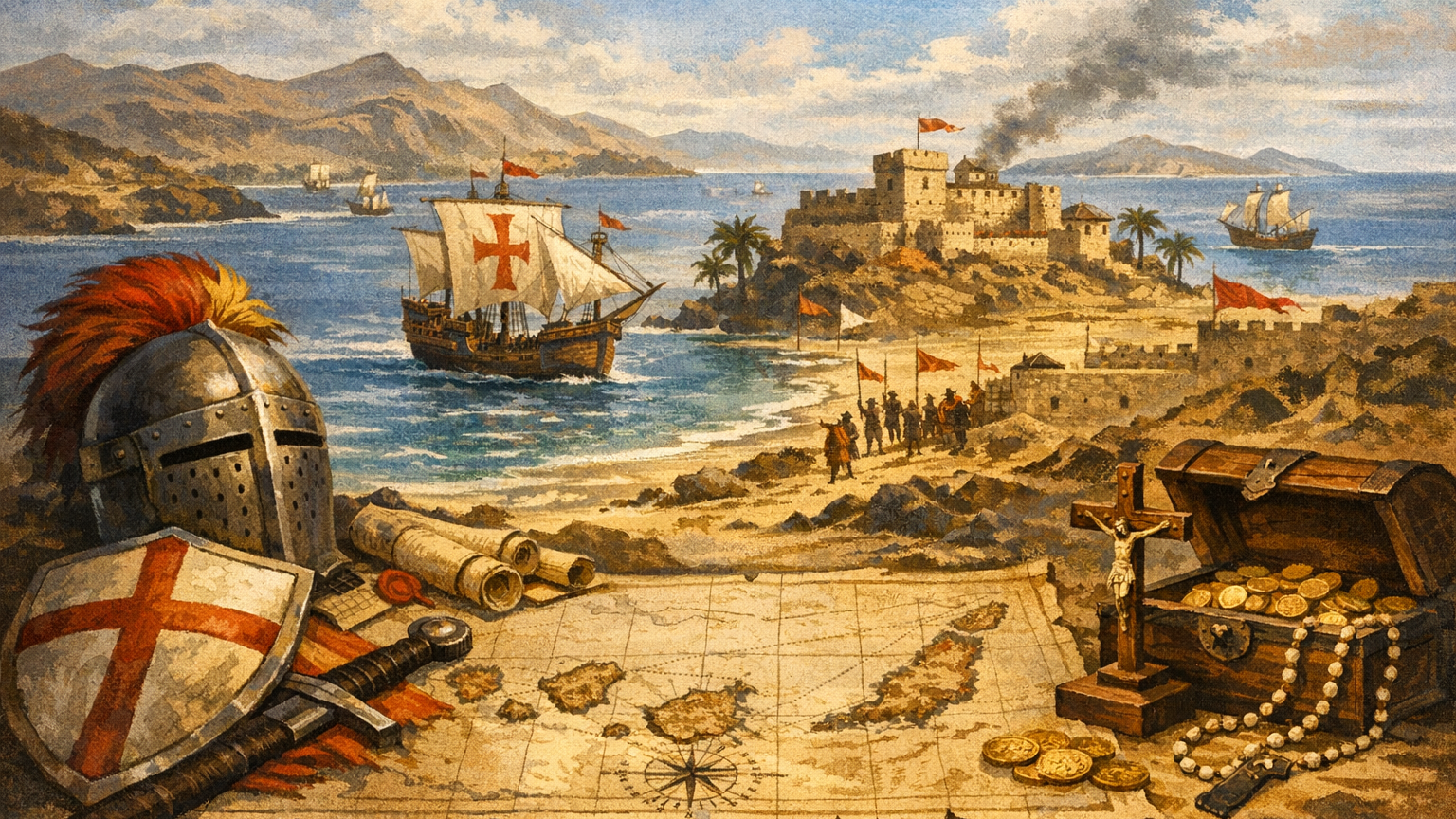
The Lordly Conquest of the Canary Islands: Normans, Power, and Social Change
The conquest of the Canary Islands is a story of ambition, rivalry, and transformation. Among the most decisive chapters is the so-called “lordly conquest,” led by Norman adventurers and supported by European kingdoms, which forever altered the islands’ destiny and their people[^historia-y-patrimonio-vol2-primaria-1].
The Normans Arrive: Béthencourt and La Salle
In 1402, Jean de Béthencourt and Gadifer de La Salle set sail from Normandy, France, seeking wealth through resources like orchil (a valuable natural dye) and slaves. Béthencourt was driven by commercial interests, while La Salle aspired to become lord of the islands. Upon landing in Lanzarote, they found a population greatly reduced by previous slave raids. The indigenous “majos” offered little resistance, and Béthencourt reached an agreement with King Guadarfía, placing the islanders under his protection[^historia-y-patrimonio-vol2-primaria-1].
Rebellions and the Struggle for Control
After securing Lanzarote, the Normans moved to Fuerteventura, where resistance was fiercer. La Salle faced mutinies from both his own men and the indigenous people. Ultimately, in 1405, tribal chiefs Guise and Ayose surrendered and were baptized, marking the beginning of European rule on the island. On El Hierro, Béthencourt landed without resistance, aided by a prior agreement with a captured islander[^historia-y-patrimonio-vol2-primaria-1].
Lordship and Social Transformation
Under the lordly conquest model, conquerors became the new landowners, distributing land among their followers in exchange for tribute. This system introduced a new social and economic order. Indigenous people who aided the conquerors received small plots, but most lost their rights and were subjected to new laws, beliefs, and lifestyles[^historia-y-patrimonio-vol2-primaria-1].
Conflict and Resistance
Not all islands submitted easily. In La Palma, Gran Canaria, and Tenerife, initial attempts at lordly conquest failed due to strong indigenous resistance. For example, in 1447, Guillén Peraza was killed in La Palma, ambushed by the islanders led by King Echedey. In La Gomera, although the union with the lordship was peaceful at first, tensions erupted in the 1488 Gomero Rebellion, resulting in the death of Hernán Peraza and the enslavement of many islanders[^historia-y-patrimonio-vol2-primaria-1].
The Legacy of the Lordly Conquest
The lordly conquest left a lasting mark on the Canary Islands. The Normans and their successors established a new society characterized by inequality, new beliefs, and a transformed landscape. Nevertheless, elements of indigenous culture survived, blending with European influences to shape today’s Canarian identity. Place names, traditions like the Gomeran whistle, Canarian wrestling, and gofio are living testimonies to this complex heritage[^historia-y-patrimonio-vol2-primaria-1].
Understanding the lordly conquest is essential to grasp how the Canary Islands transitioned from isolation to becoming part of the broader European and Atlantic world.