

Historical Figures
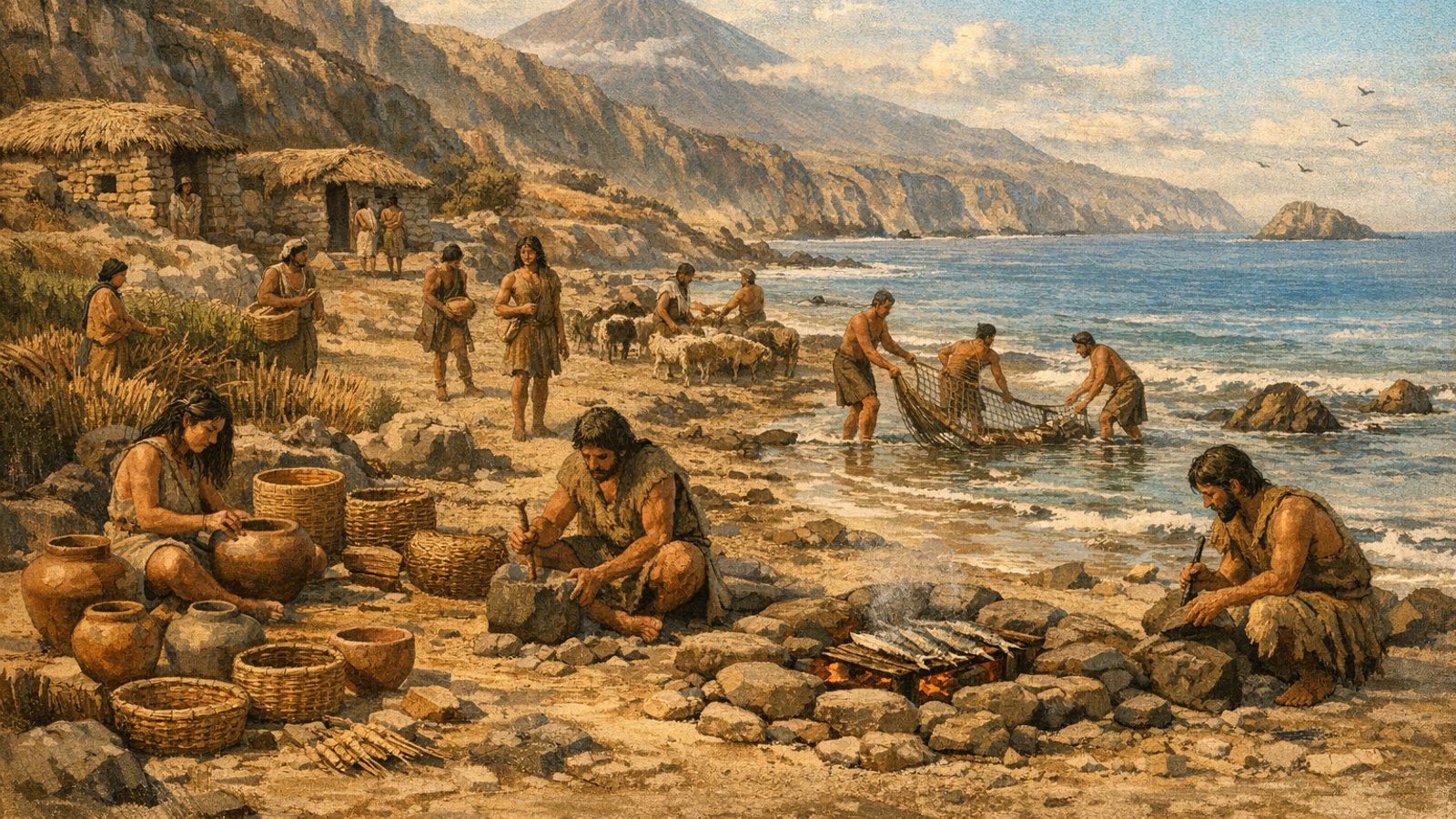
Between around 1000 and 500 BC, the Canary Islands began to be settled by Berber groups from North Africa. The exact date remains a matter of archaeological debate, but DNA studies and material records point to migration waves from the Maghreb, probably aided by knowledge of Atlantic currents. These first inhabitants, later known as Guanches in Tenerife, Benahoaritas in La Palma, Mahos in Lanzarote and Fuerteventura, and by other names on each island, developed cultures adapted to each island's territory with notable internal diversity. They lived in clan-based communities, practised livestock herding, subsistence farming and fishing, and made pottery, basketry and stone carvings. Their language, Guanche, had Berber roots and varied between islands. The absence of metalwork and inter-island navigation shaped their growing isolation. This pre-Hispanic period is the foundation of Canarian cultural identity and its study continues to reveal a history more complex and rich than the first European chroniclers recorded.