

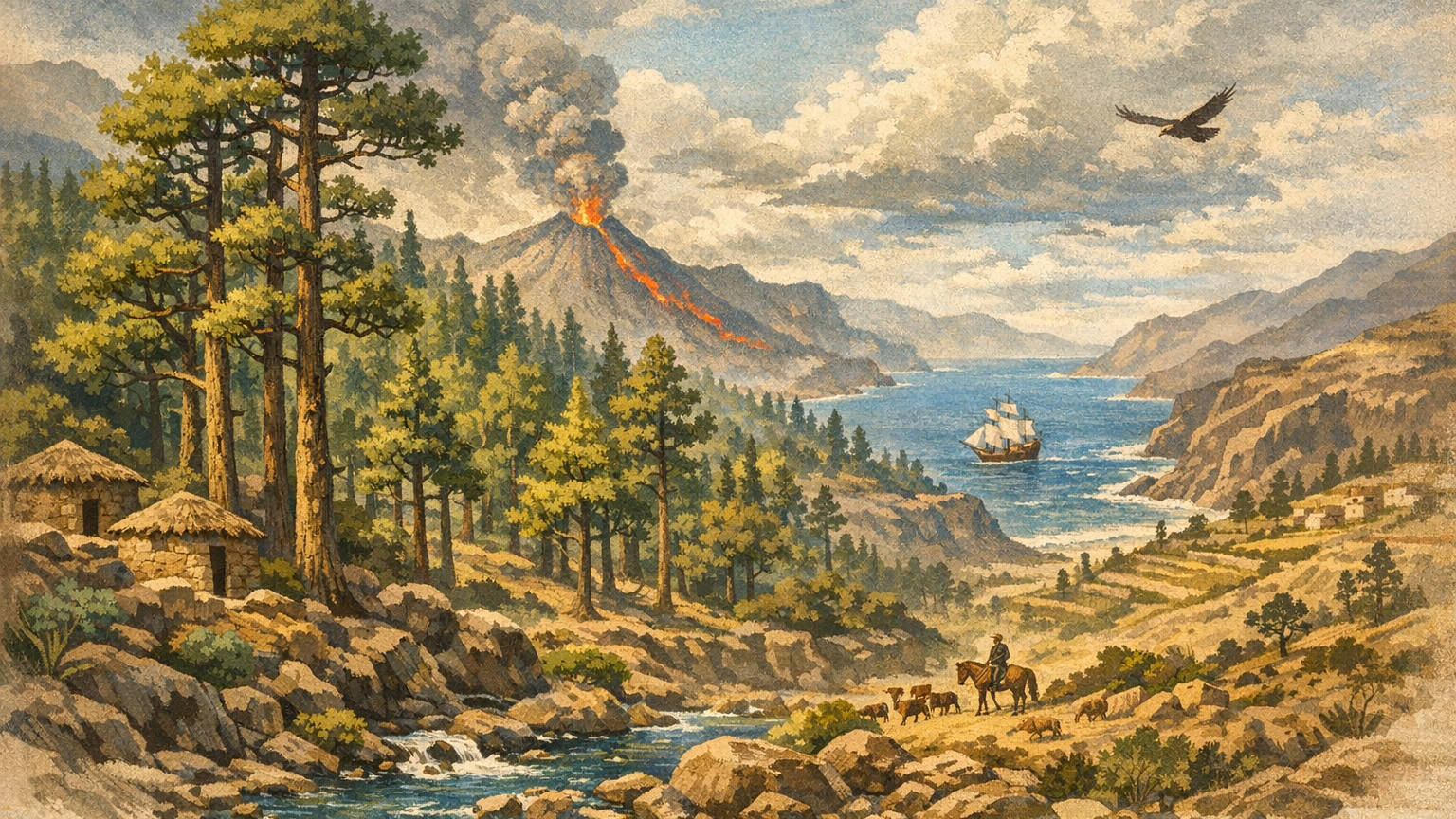
The Arguineguín Pine Forest: A Living Witness to Gran Canaria’s Forest History
On the southwestern slopes of Gran Canaria, the Arguineguín ravine shelters one of the oldest and most unique pine forests in the Canary Islands. Today, only about a hundred scattered pines remain between 150 and 375 meters above sea level, but this relict forest offers a rare glimpse into the ecological and human history of the archipelago1.
An Ancient and Diverse Pine Stand
Genetic research has shown that the Arguineguín pine forest holds the highest molecular diversity among all studied populations of the Canary Island pine (Pinus canariensis). This genetic richness points to a very ancient and uninterrupted presence, unaffected by major volcanic events for the last five million years. Unique molecular markers found here suggest that the ravine’s slopes were once covered by a continuous, dense pine forest, in stark contrast to the sparse landscape seen today1.
Human Impact and Forest Resilience
The dramatic reduction of the Arguineguín pine forest is not due to natural disasters, but to centuries of human activity. Since the arrival of the first settlers, livestock grazing and the use of fire to clear land for pasture initiated a long process of forest degradation, which accelerated in recent centuries. Overgrazing and logging reduced the pine population to a minimum, making natural regeneration difficult due to seed scarcity and arid conditions. However, after traditional grazing ceased, a slow but hopeful recovery has been observed, with new saplings demonstrating the resilience of this iconic species1.
Place Names and Landscape Memory
The importance of the pine in Gran Canaria’s culture and landscape is reflected in local place names. More than 200 toponyms on the island refer to the pine, indicating its former abundance and significance. Names like “Taidía” have Berber roots (tayda, meaning pine), and even Tenerife’s highest mountain, Teide, may be etymologically linked to the pine according to some studies1.
Conservation and the Future
Today, the Arguineguín pine forest stands as a symbol of the need to protect the last remnants of the Canary Islands’ original forests. Its genetic diversity and unique history make it a priority for conservation and ecological restoration. The story of Arguineguín reminds us that, even after centuries of human pressure, Canarian nature still harbors treasures capable of regeneration if given the chance.