

The Rise of Botany in the Canary Islands: A Story of Foreign Science
The development of botany in the Canary Islands during the 19th and early 20th centuries is a striking example of how foreign scientific activity shaped the understanding and appreciation of the archipelago’s unique nature. Far from being an isolated phenomenon, the scientific output on Canarian flora reflects a broader European fascination with the islands’ natural resources and distinctive environment[1].
Exponential Growth
According to Fernando De Ory Ajamil, publications on Canarian botany increased steadily from 1800 to 1920. This trend follows the so-called Law of Exponential Growth of Science, described by Derek J. S. Price, which states that scientific output tends to double every 10 to 15 years, except during major crises like the Great Depression of 1873-1893, which temporarily slowed progress[1].
Foreign Pioneers
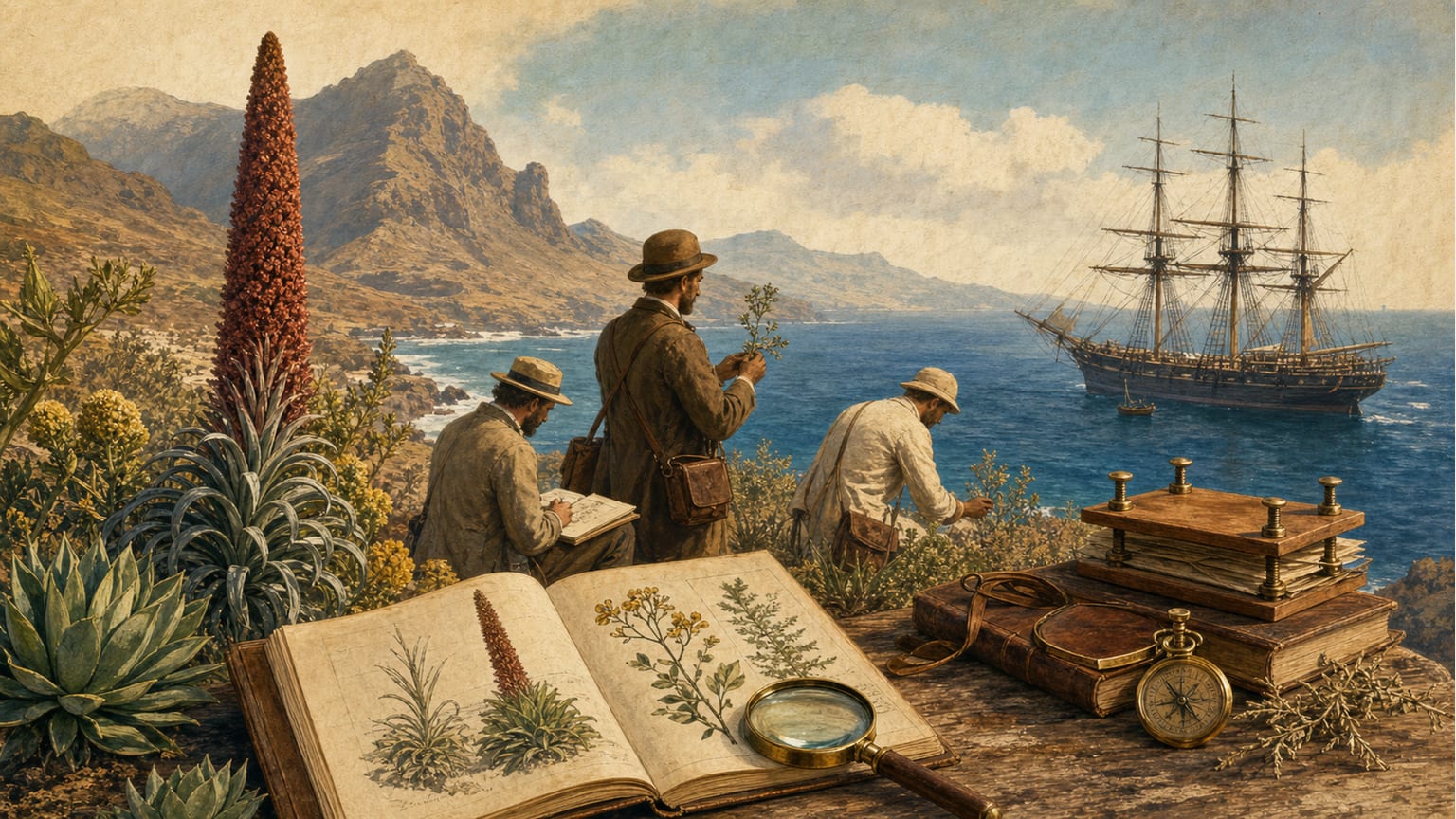
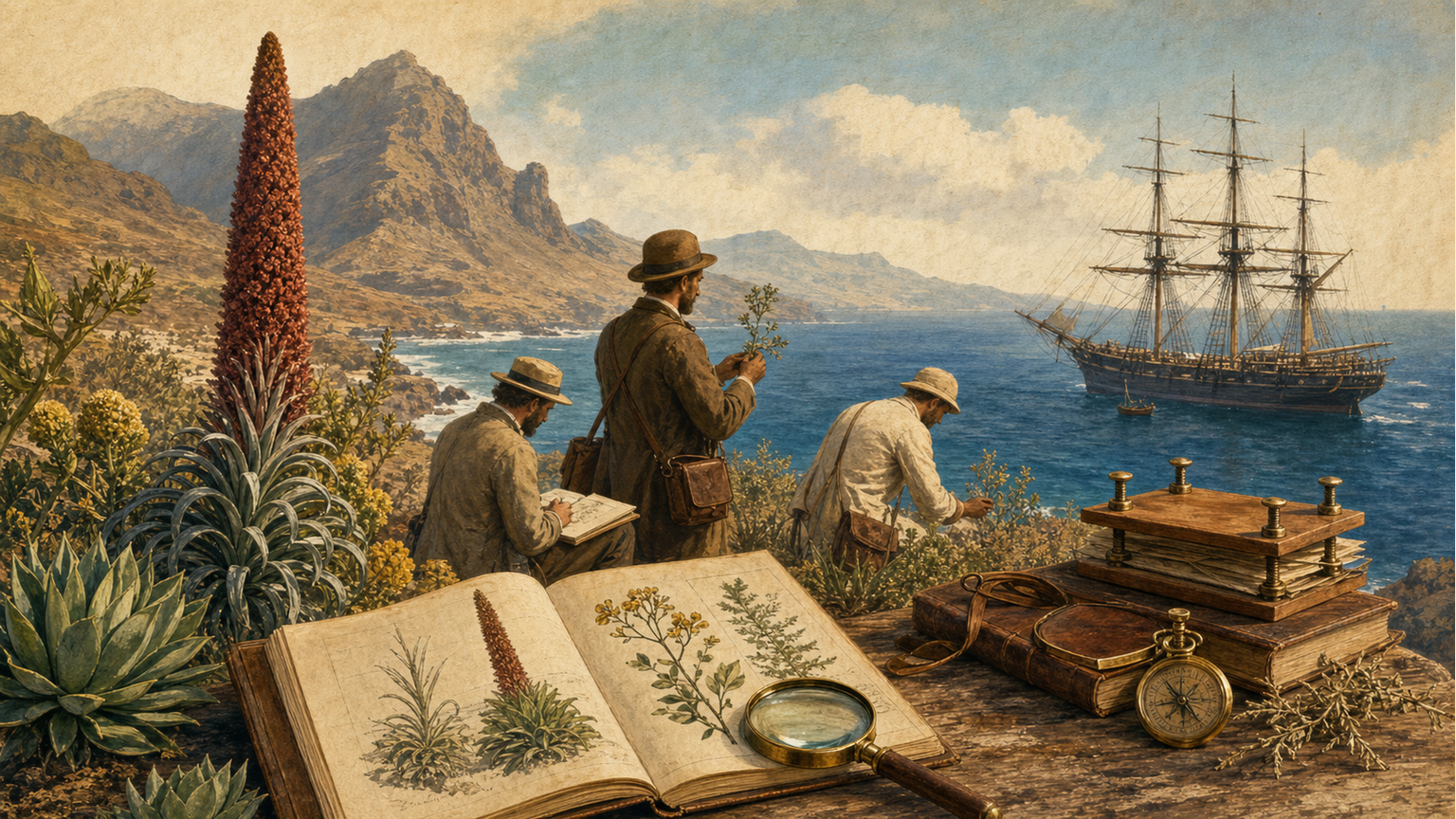
In the early 19th century, British scientists led botanical research in the Canaries, with figures such as J. Sims, S. Edwards, J. Lindley, J. Paxton, and W. J. Hooker publishing most works up to 1845. From the 1860s onward, German researchers took the lead, including C. Bolle, O. Simony, and D. H. Christ. French scientists, notably Sabin Berthelot, maintained a steady presence and made significant contributions to both botany and oceanography[1].
An International Legacy
Per Sunding’s 1973 catalogue lists over 1,000 titles on Canarian botany published between 1788 and 1973, highlighting the diversity and richness of foreign contributions. Between 1800 and 1920 alone, 281 titles were published, with a marked increase in the late 19th and early 20th centuries. This legacy not only expanded scientific knowledge but also established the Canary Islands as a key reference in island flora studies[1].
Science and Canarian Society
Despite the abundance of foreign studies, Canarian society at the time did not always fully embrace these advances. Science largely remained the domain of an intellectual elite and did not deeply penetrate popular culture. Nevertheless, the presence of European scientists and travelers laid the groundwork for later local research and appreciation of Canarian natural heritage[1].
Conclusion
The rise of botany in the Canary Islands during the 19th and early 20th centuries is inseparable from the presence and work of foreign scientists. Their research and publications not only broadened knowledge of the archipelago’s flora but also helped place the Canaries on the international scientific map, demonstrating the value of collaboration and cultural exchange in the history of science.