

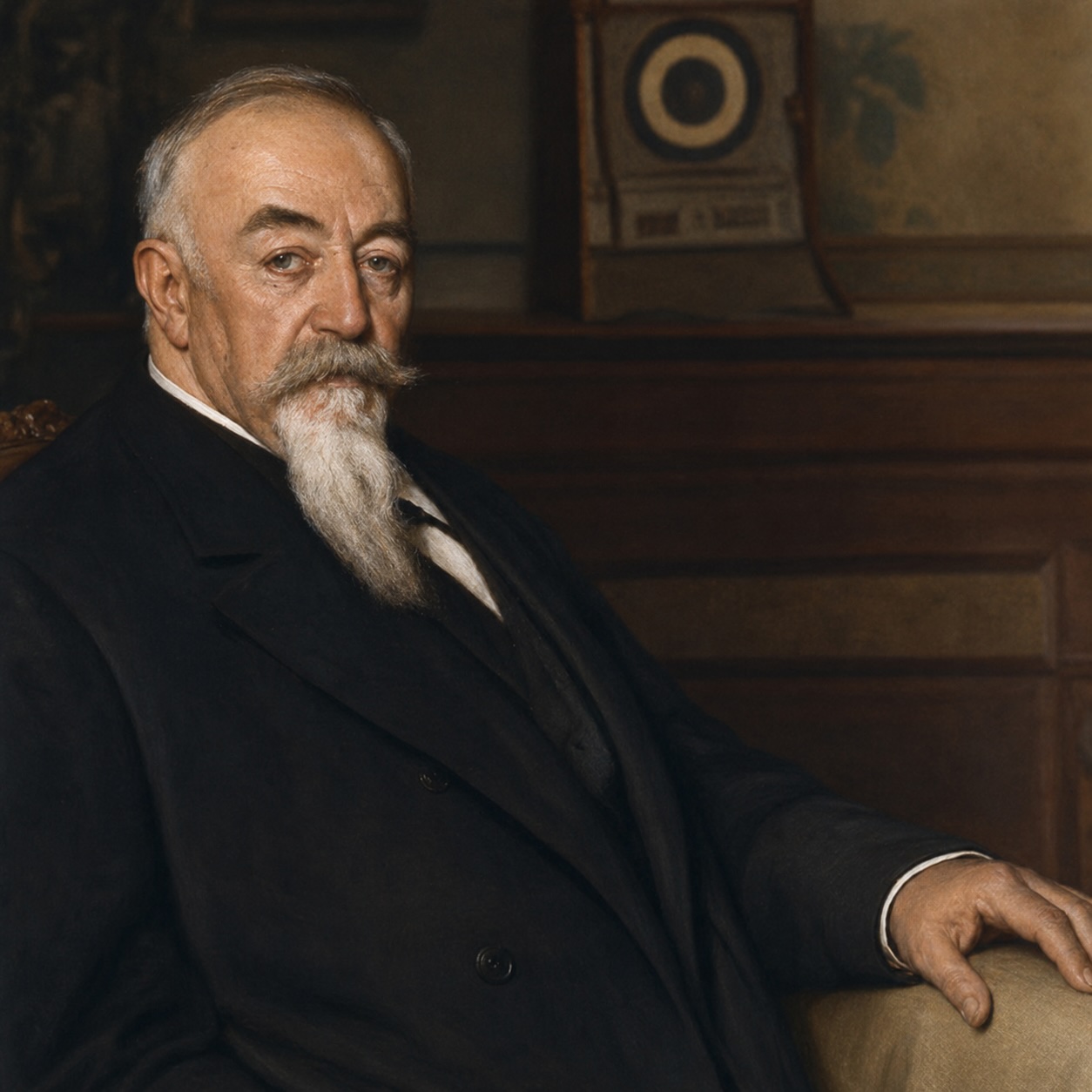
Military officer and republican politician born in Las Palmas. He participated in the revolution of 1868 and served as a deputy in the Spanish Cortes.
Nicolás Estévanez Murphy was born in Las Palmas de Gran Canaria in 1838. He came from a family with Irish and Canarian roots, and from a young age combined a military career with republican and democratic ideas. He participated in the 1868 revolution that overthrew Isabella II, and during the Democratic Sexennium was elected as a deputy to the Cortes for Gran Canaria. In 1873, during the First Republic, he was appointed Minister of the Interior.
His political life was marked by radical consistency: he never compromised with the system of the Bourbon Restoration. He lived long periods of exile in Paris, where he frequented republican circles and knew figures such as Victor Hugo. He was also a lyrical poet, and some of his verses — particularly those dedicated to the islands — have a melancholic beauty that has kept them alive. His Cancionero Revolucionario and memoirs are documents of great historical value.
Estévanez is today a relatively little-known figure outside academic circles, but his importance to Canarian and Spanish political history is undeniable. He represents those Canarians who participated in the great national debates of the nineteenth century without losing their island roots. The Ateneo of Las Palmas preserves documentation about his figure, and his name appears on streets in several cities of the archipelago.