

The linguistic history of the Canary Islands is deeply marked by contact with Portuguese, especially in the traditional vocabulary of La Gomera. In her work Vocabulario tradicional de La Gomera II, Encarnación Tabares Plasencia documents numerous Portuguese-derived words that have been phonetically and semantically adapted into Gomeran speech[1].
A striking example is the word ‘igiada’, which in Valle Gran Rey refers to the ‘night dew’. This term comes from the Portuguese geada, meaning ‘frost’ or ‘frozen dew’, itself derived from Latin gelata. In La Gomera, ‘igiada’ underwent phonetic adaptation (with closing of the first vowel and aspiration of the initial consonant) and a semantic shift: while in Portugal it refers to frost, in the island context it simply means dew, as frost does not occur there. There is also the variant ‘agiada’, more common in the north of the island, which means ‘intense cold’, showing how a single origin can diversify according to local climate and usage[1].
This phenomenon is not unique. Other notable examples include ‘hama’, meaning a small fishing net, derived from Portuguese hamus (‘hook’), and ‘hojame’, meaning leaf litter, from Portuguese folhame. Both terms show phonetic adaptation (aspiration of the h-, gender change) and semantic specialization. For instance, ‘hama’ shifted from ‘hook’ to ‘small net’, while ‘hojame’ refers both to fallen leaves and to corn husks left after harvest[1].
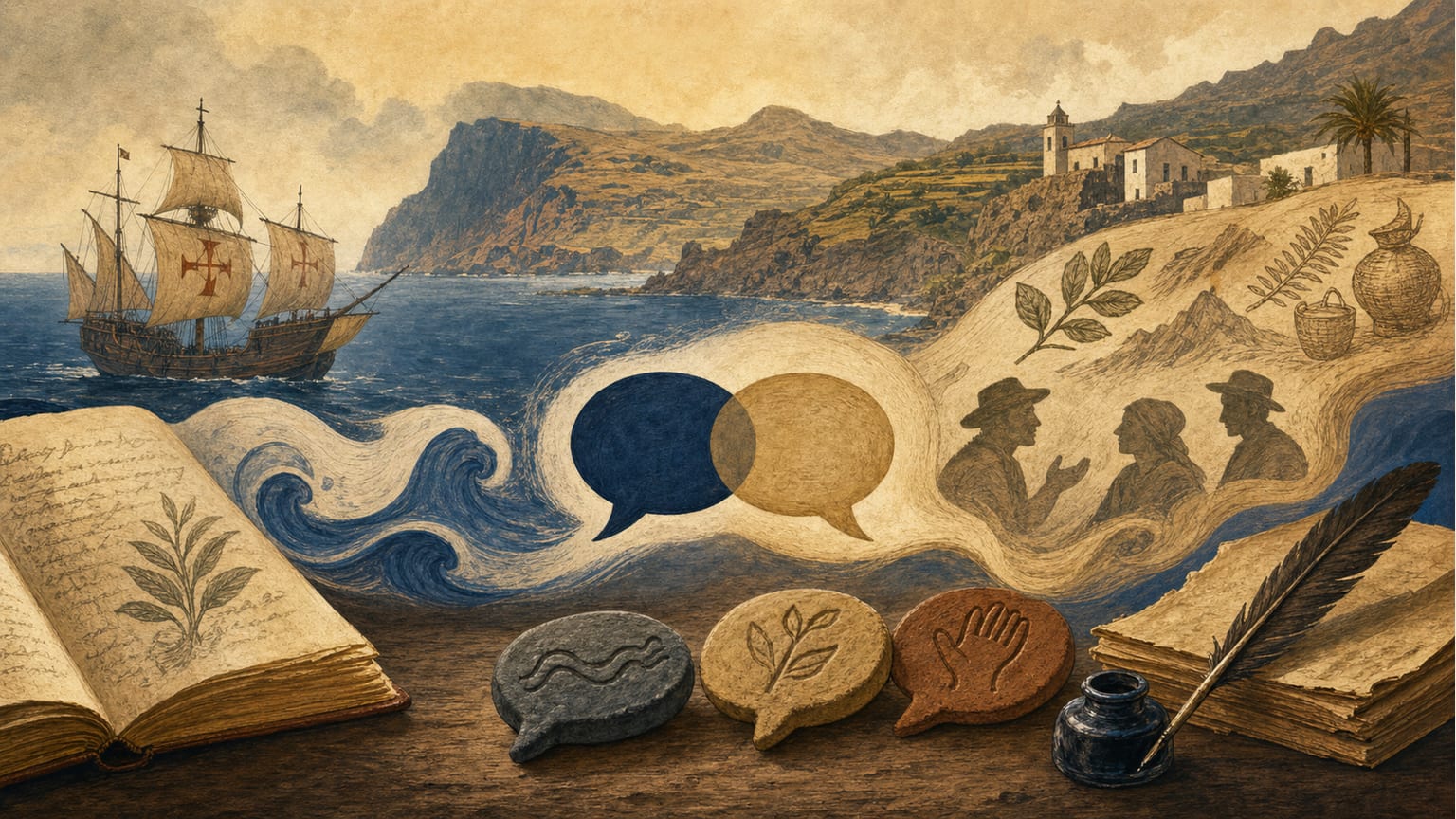
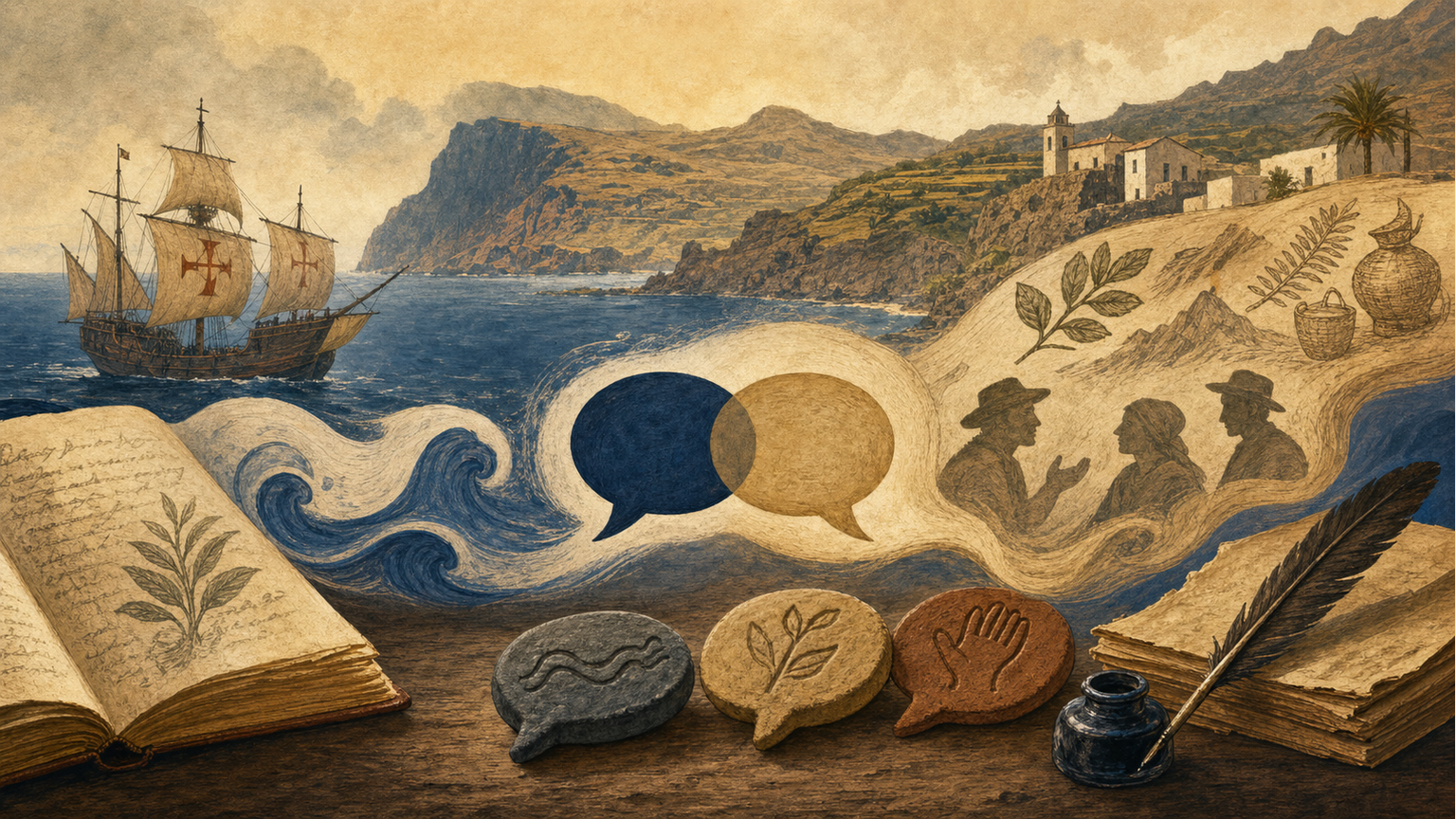
The presence of these Portuguese words in Gomeran vocabulary is explained by the intense historical relationship between the Canary Islands and Portugal, especially in the 15th and 16th centuries, when Portuguese traders, settlers, and sailors left a deep mark on daily life and language. In La Gomera, these borrowings have survived and evolved, sometimes acquiring new meanings or becoming restricted to very local contexts.
Studying these terms reveals not only the richness of Gomeran speech but also the language’s ability to integrate and transform foreign elements. Words like ‘igiada’, ‘hama’, and ‘hojame’ are living testimony to a history of contact and blending, forming a linguistic heritage that deserves recognition and appreciation.