

One Libyco-Berber Alphabet? Comparing El Hierro and Lanzarote Inscriptions
The Libyco-Berber script, a remarkable legacy of the Canary Islands’ ancient societies, has long sparked scholarly debate: did the archipelago share a single alphabet, or did multiple scripts coexist? Recent comparative research focusing on El Hierro and Lanzarote—the islands with the largest number of inscriptions—offers new insights into this linguistic mystery[1].
A Growing and Varied Corpus
Over the past two decades, the discovery of new inscriptions has expanded the corpus of Libyco-Berber texts, though their distribution across the islands remains uneven. El Hierro boasts 19 sites, Lanzarote 12, each with a rich concentration of texts. Notably, the two islands differ in technique: El Hierro predominantly features pecked engravings, while Lanzarote’s are incised. This technical divergence once led some researchers to propose the existence of distinct alphabets[1].
Signs in Comparison: Difference or Unity?
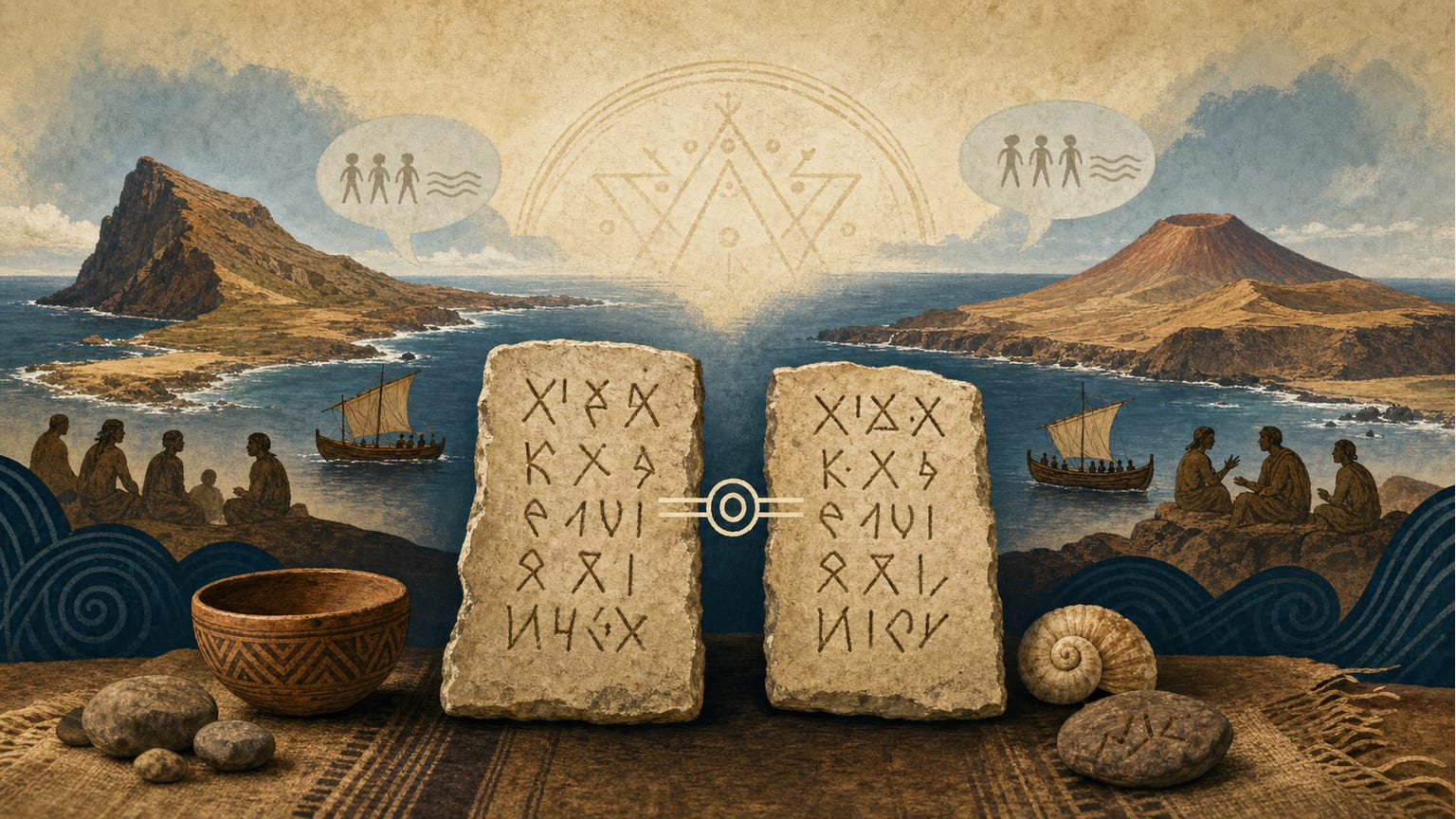
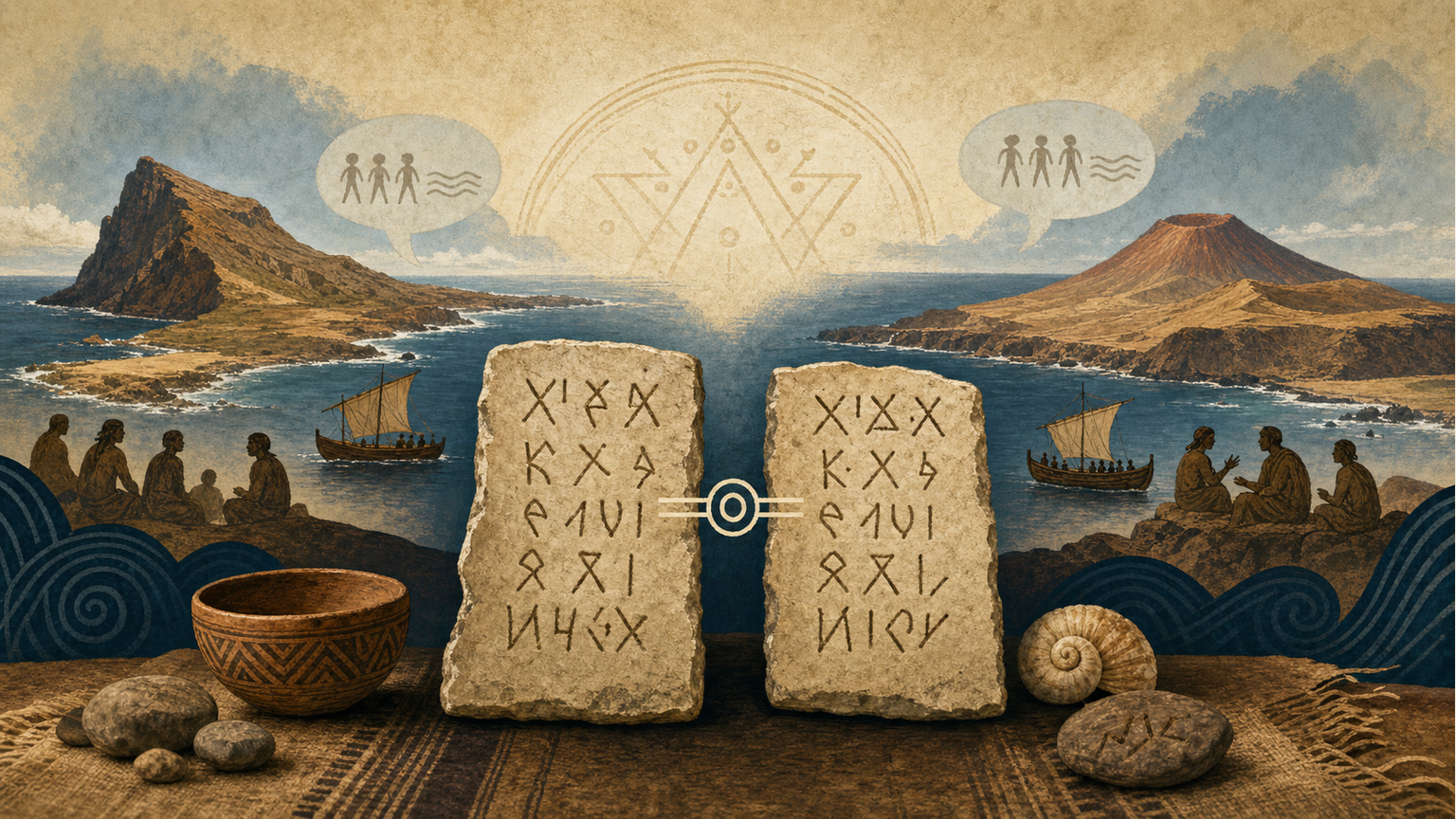
A detailed analysis of vertical, homogeneous inscriptions from both islands shows that, out of 25 characters studied, 24 are formally identical. Only one sign—a single dot—appears exclusively in El Hierro. This level of similarity is remarkable, especially when contrasted with the significant variability found among Libyco-Berber alphabets in North Africa and the Sahara, where even neighboring regions can display much greater differences[1].
Frequency and Variants
Most signs are used with similar frequency in both islands, though some, such as , , and variants of , show notable differences. These disparities may result from chance or the particular words chosen in the texts, rather than indicating separate alphabets. The presence of allographs (graphic variants of the same phoneme) adds complexity, but does not support the idea of independent writing systems[1].
A Conservative Alphabet
Evidence suggests that the Libyco-Berber alphabet arrived in the Canary Islands as a relatively unified system, remaining stable over time with only occasional innovations. The absence of a regulating institution, unlike in other cultures, allowed both the preservation of the script and the emergence of local variants—yet without fracturing it into multiple alphabets[1].
Conclusion
The case of El Hierro and Lanzarote demonstrates that, at least for the inscriptions studied, the Libyco-Berber script in the Canary Islands was surprisingly homogeneous. The hypothesis of multiple alphabets does not withstand current evidence, prompting a reconsideration of the islands’ linguistic history as one of unity rather than fragmentation.