

María del Carmen de Betancourt y Molina (1758-1824) was a remarkable figure in the history of the Canary Islands, particularly for her role in the silk industry in Tenerife during the late 18th century.[1] Born into a cultured and affluent family, María benefited from an environment that encouraged intellectual development and experimentation, allowing her to gain advanced knowledge for a woman of her time.[1]
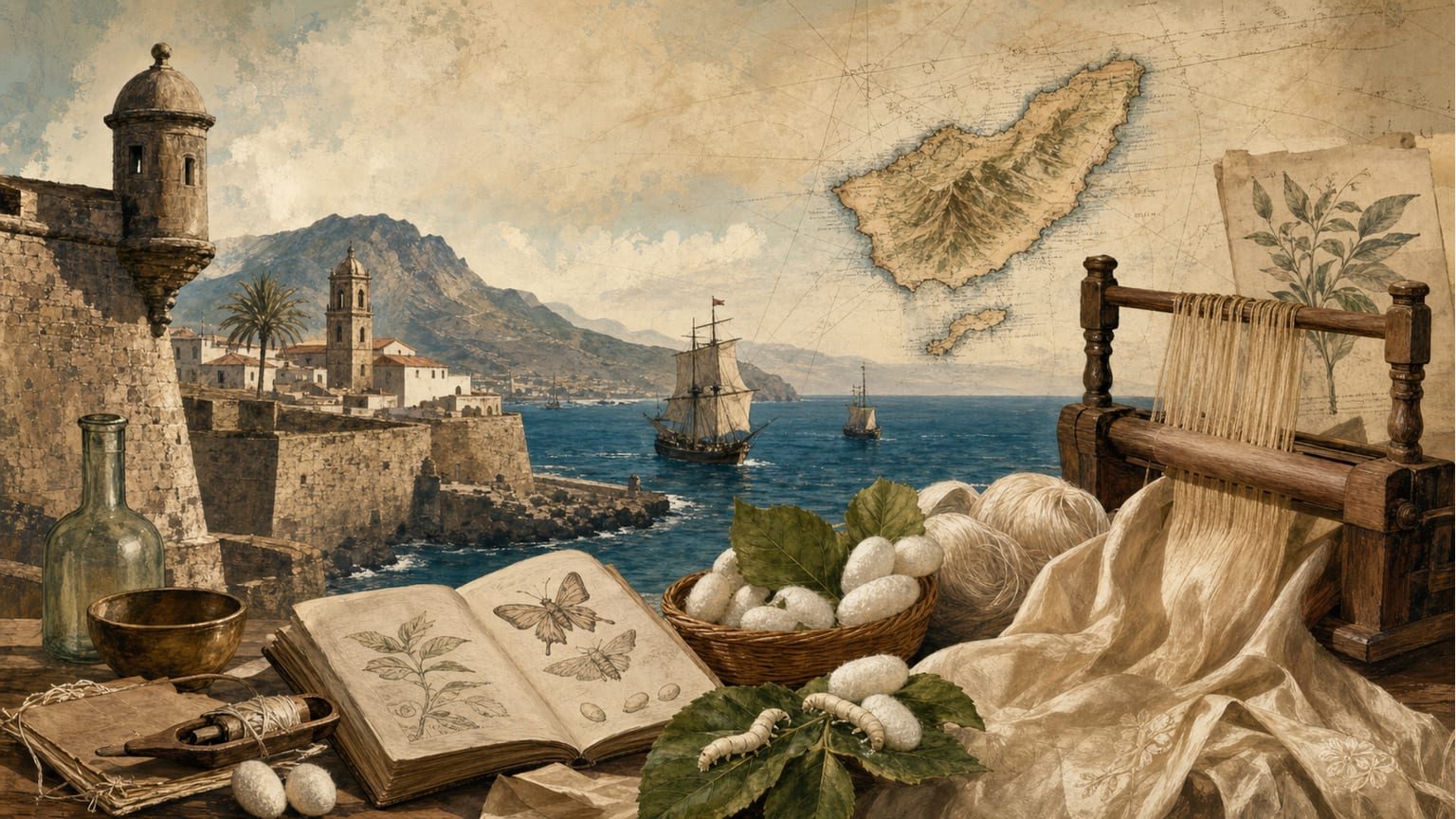
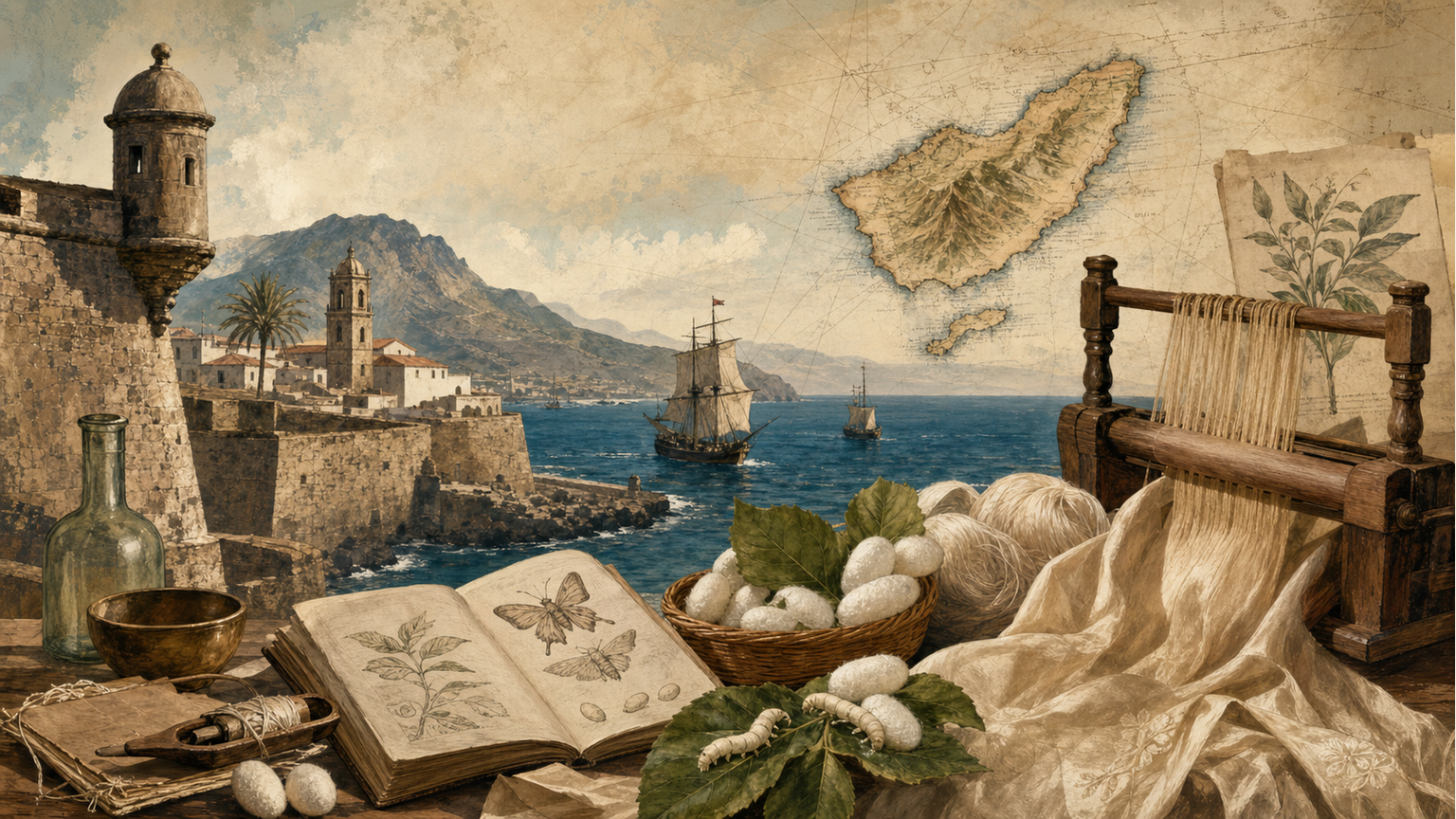
The silk industry in Tenerife, though declining in the 18th century, had achieved significant development since the 16th century, supplying both local consumption and exports to the Americas.[1] Within this context, María not only participated in various stages of silk production but also dedicated herself to teaching her knowledge to other women, as documented by the Real Sociedad de Amigos del País de Tenerife.[1]
A key aspect of María’s work was her commitment to experimentation in weaving and dyeing methods, as well as in silkworm breeding.[1] She conducted trials to determine whether mulberry or moral leaves were more suitable for feeding silkworms, ultimately concluding that mulberry leaves improved the quality of the silk.[1] María also participated in contests organized by the Real Sociedad to promote the silk industry, submitting samples of trimmings noted for their beauty and perfection, demonstrating the refinement achieved by local silk workshops.[1]
María encouraged technical innovation by prompting her brother Agustín to invent the so-called Epicylindrical Machine, a device that allowed threads of different materials to be twisted together, optimizing both time and the quality of the finished products.[1] This machine was used in the production of trimmings and other narrow goods, marking a significant advancement for the local industry.[1]
Her work was recognized and awarded on several occasions, and she was admitted as a member of the Junta de Damas de Honor y Mérito of the Real Sociedad Económica Matritense de Amigos del País.[1] Documentation shows that María and her students contributed advanced weaving and dyeing techniques, rarely seen in local production, and created samples of ribbons, lace, braids, and tassels using threads of various fineness, twists, and colors.[1]
María de Betancourt’s contributions to the silk industry exemplify exceptional experimentation and knowledge transfer during the Canary Islands Enlightenment, highlighting the active participation of women in improving local arts and industries in this period.[1]