

Introduction
On the island of Fuerteventura, where arid conditions and low rainfall prevail, water management has always been a crucial challenge for agriculture. Two traditional systems, known as gavias and nateros, have historically allowed the capture and use of surface runoff water, making cultivation possible in otherwise unproductive areas[1].
Gavias: Technique and Distribution
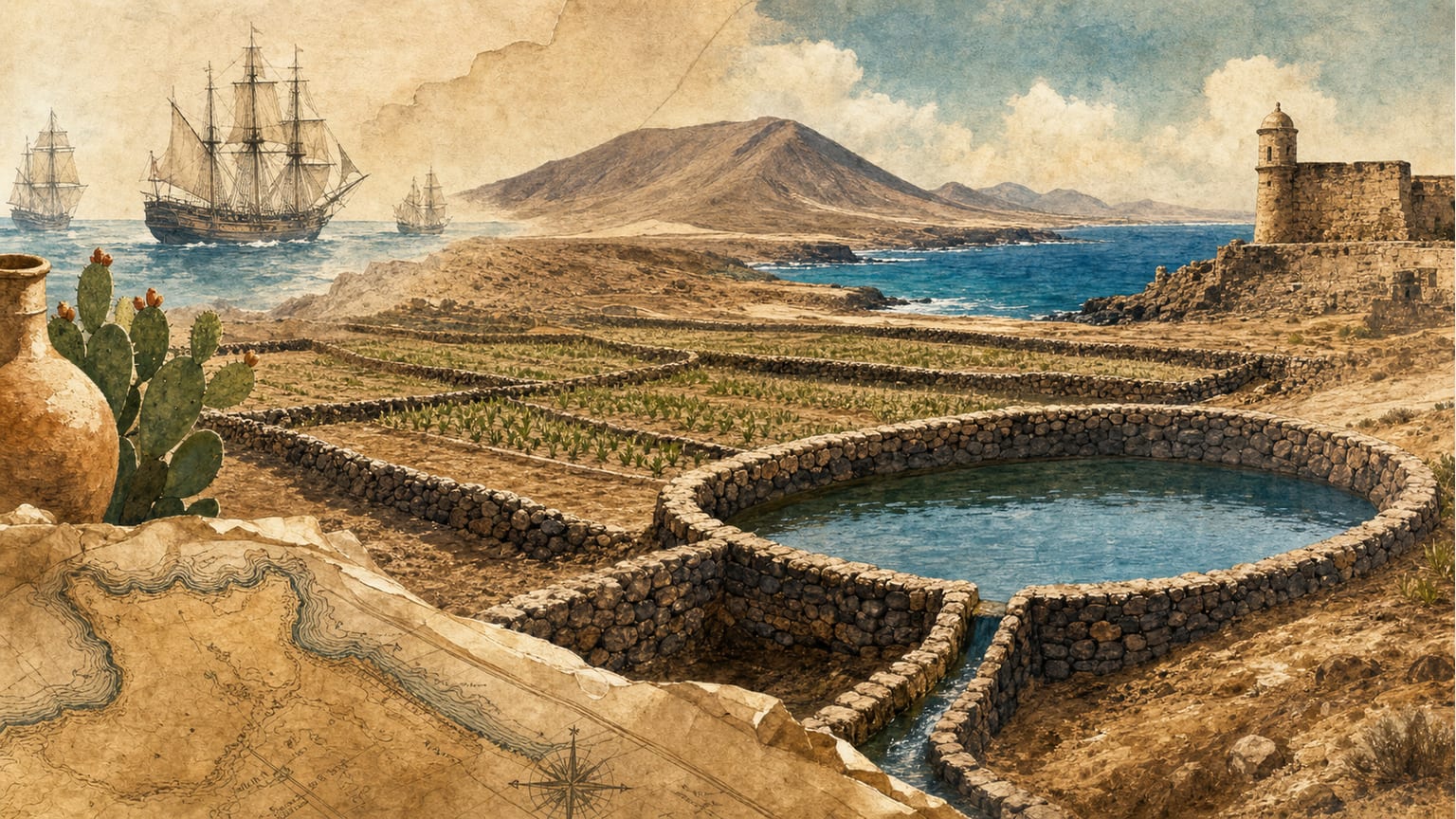
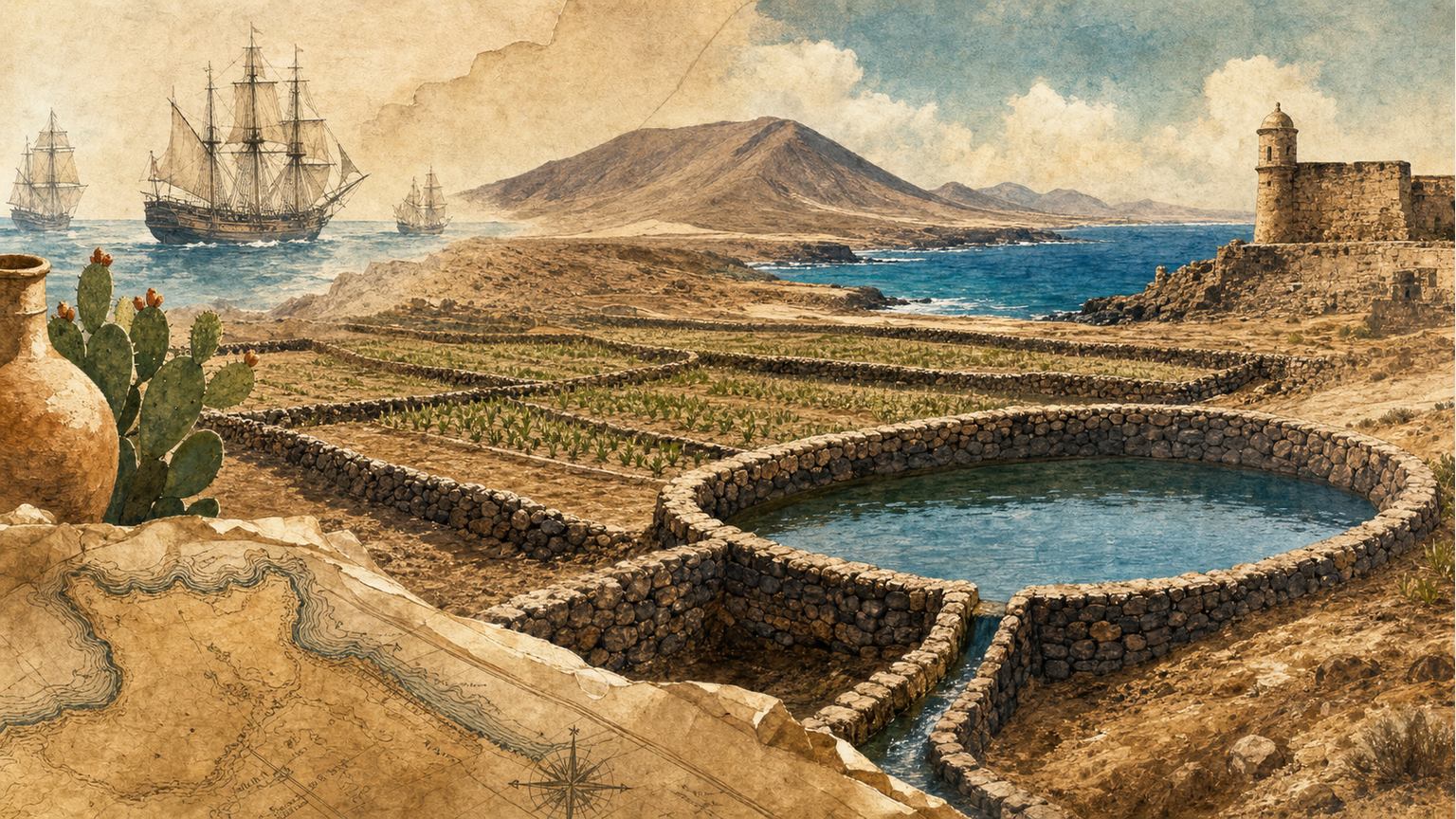
Gavias are specially prepared plots designed to retain runoff water after rainfall. These fields must be flat or gently sloped to prevent erosion and ensure that water remains on the surface. They are surrounded by earth embankments, called “caballones,” which are often reinforced with local limestone to prevent deterioration[1].
Water enters the gavias through gates or “torna”; once the plot is filled, the entrance is closed and the excess water flows to the next gavia through a drain. This cascading system maximizes water use. Gavias are mainly found in the municipalities of Tuineje and Antigua, where both the terrain and the presence of a rural bourgeoisie encouraged their development[1].
Nateros: Creating Fertile Soil
Nateros are stone walls built perpendicular to small ravines to intercept water and silt flows. Unlike gavias, nateros create fertile soil by accumulating silt and organic matter carried by the water. Once the space between the wall and the slope is filled, it is used for cultivation, especially for fruit trees such as figs[1].
Agricultural and Social Function
These systems have enabled the cultivation of cereals, legumes, and drought-resistant fruit trees like figs and almonds. Production was mainly for family subsistence, but in years of abundant rainfall, Fuerteventura was known as the “granary of the Canary Islands”[1].
Water management in these systems is based on turns and cooperation among neighbors, following customs regulated since the 16th century. Each owner has the right to build a “caño” to divert water to their gavia, and the use of water is governed by traditional and legal norms that prevent exclusive appropriation of surface water[1].
Maintenance and Current Status
Maintaining gavias and nateros requires annual effort, especially before the rainy season, to reinforce embankments and clean channels. Although many of these systems are now being abandoned due to the agricultural crisis and rural depopulation, they remain essential for aquifer recharge and soil conservation in Fuerteventura[1].