

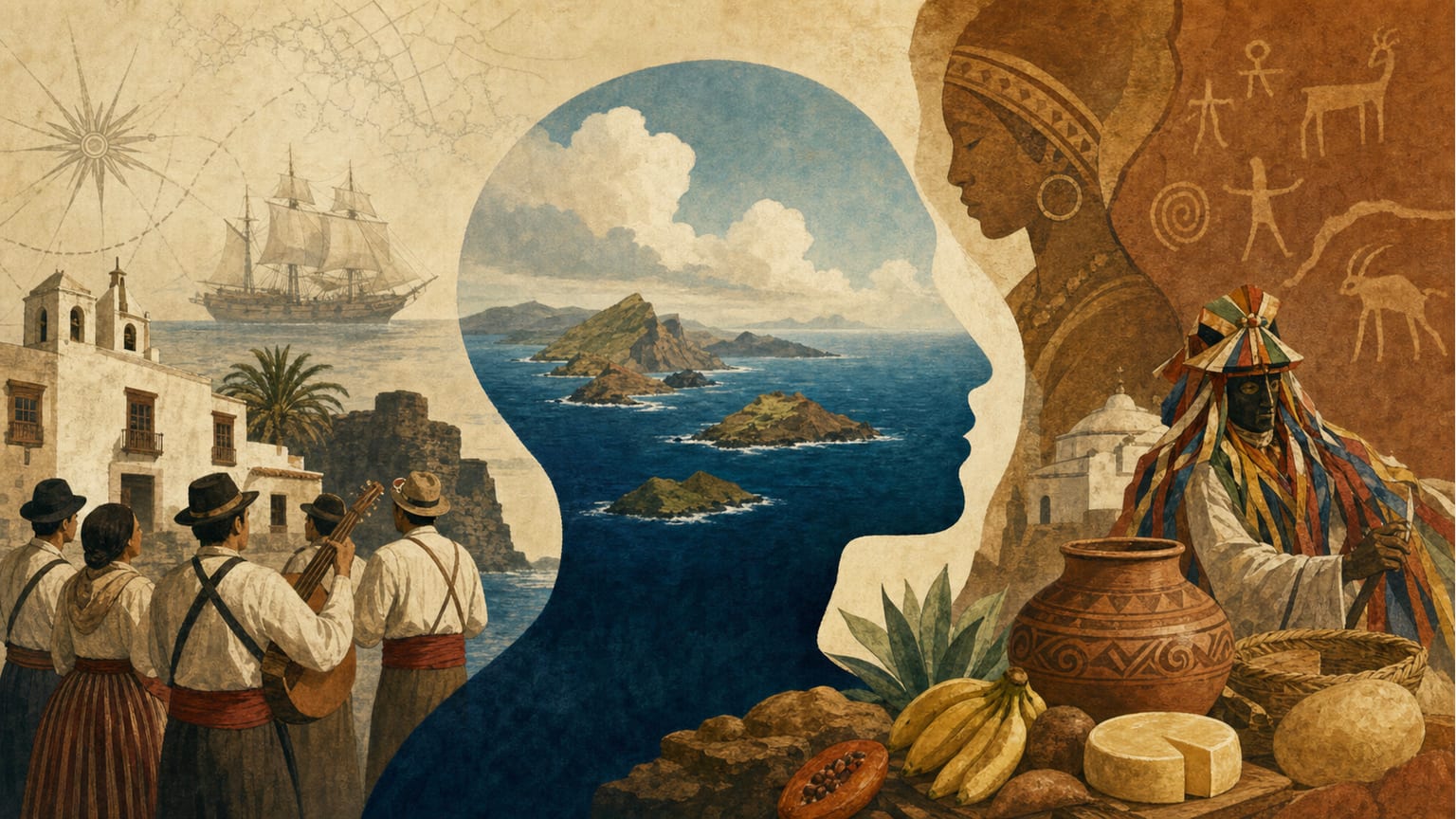
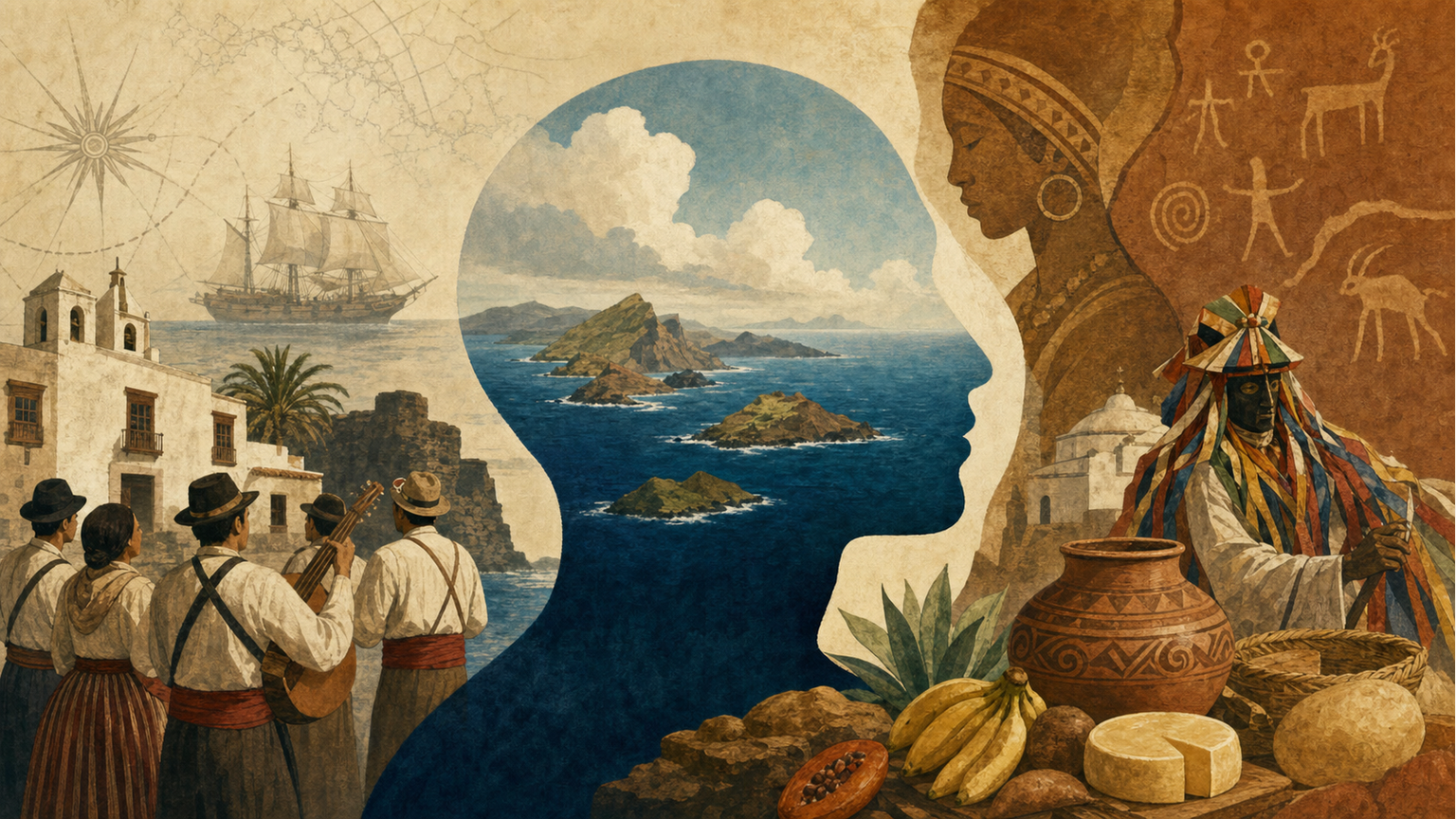
The Myth of Insularity: Canary Islands Between Reality and Fiction
To speak of the Canary Islands is to invoke more than just a place; it is to evoke a web of meanings, myths, and historical tensions. Insularity, the islands’ most obvious trait, has long been at the heart of how Canarian society is represented—but also a powerful fiction that has masked uncomfortable truths and perpetuated an essentialist view of the archipelago[1].
Insularity and Myth: A Colonial Construction
Since the European conquest, the image of the Canary Islands has been shaped by exoticism and idealization. Writers and poets have described the islands as “paradise lands” or “where glory and earth meet.” However, this vision is not innocent: it stems from a colonial tradition that has turned insularity into a myth, concealing deep social inequalities, cultural diversity, and the archipelago’s African proximity[1].
Authors like Ángel Valbuena Prat and Andrés Sánchez Robayna have reduced the Canarian experience to clichés such as isolation, cosmopolitanism, or intimacy, reinforcing the idea of a unique, closed insular identity. Yet other thinkers, like Claude Le Bigot and Nilo Palenzuela, have challenged this essentialism, arguing that insularity does not guarantee a specific mentality nor fully explains the complexity of Canarian society[1].
Insularity as Border and Denial
The myth of insularity has also served to deny the African roots of the Canary Islands. Concepts like “Atlanticism” and “Atlanticity” have been used to displace the African reference and link the islands to the West, reinforcing their peripheral status and dependence on external narratives. This strategy, present in literature, politics, and academia, has helped maintain an image of the Canaries as an exotic, ahistorical space, detached from the real conflicts and inequalities that shape it[1].
Towards a Critical Representation
In contrast, new feminist and decolonial voices have begun to deconstruct the myths of insularity, advocating for the plurality of experiences and the need to recognize the struggles of class, race, gender, and knowledge that shape Canarian society. As Roberto Gil Hernández notes, only by confronting the ideological fantasy surrounding the name “Canary Islands” can we move towards a more just and honest representation of the archipelago[1].
Ultimately, the insularity of the Canary Islands is not just a geographical fact but a symbolic construction that has served both to unite and to exclude. Overcoming the myth means opening space for new narratives that reflect the islands’ complexity and diversity beyond their insular fiction.