
Why this island matters
La Gomera es esencial para comprender como la cultura se adapta a un relieve fragmentado. Sus barrancos, caminos, caserios y bosques explican una identidad donde comunicacion, movilidad y comunidad han tenido un peso historico extraordinario.
La isla tambien ocupa un lugar simbolico en la historia atlantica por San Sebastian y los viajes colombinos. Sin embargo, su valor no se agota en esa escala: Garajonay, el Silbo Gomero y los paisajes aterrazados muestran una relacion profunda entre naturaleza y vida social.
Cultural landscape
Silbo Gomero is probably its best-known cultural expression, but not the only one. Garajonay National Park, terraced hamlets and the memory of traditional paths reveal an island where landscape and culture remain inseparable.
Municipalities and territories
See all 6 municipalities of La Gomera →- AguloAgulo is a municipality of La Gomera, presented through settlement, landscape, local memory and its links with the rest of the island.
- AlajeróAlajeró is a municipality of La Gomera, presented through settlement, landscape, local memory and its links with the rest of the island.
- HermiguaHermigua is a municipality of La Gomera, presented through settlement, landscape, local memory and its links with the rest of the island.
- San Sebastián de La GomeraSan Sebastián de La Gomera is a municipality of La Gomera, presented through settlement, landscape, local memory and its links with the rest of the island.
- Valle Gran ReyValle Gran Rey is a municipality of La Gomera, presented through settlement, landscape, local memory and its links with the rest of the island.
- VallehermosoVallehermoso is a municipality of La Gomera, presented through settlement, landscape, local memory and its links with the rest of the island.
Explore the island
Themes to understand La Gomera
Each block summarises a line of interpretation and links to its own page. The main island page works as an entry point; the sections expand geography, history, nature, heritage and social life without turning this hub into a single long article.
Geography
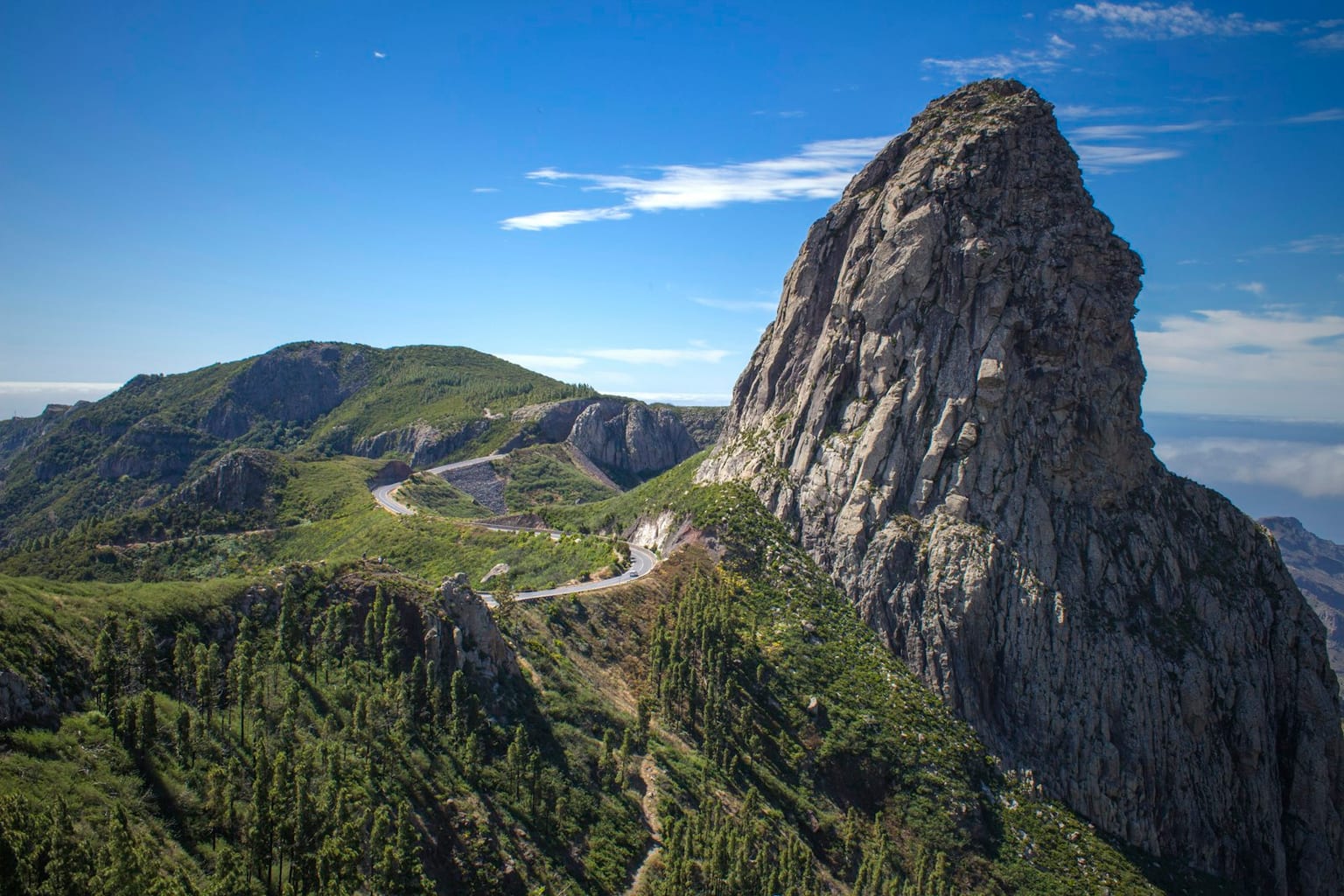
La Gomera is a round, ancient island, some 12 million years old and without eruptions in the last 500 years, crowned by Alto de Garajonay (1,487 m). From its central plateau, covered by the laurel forest of Garajonay National Park —a World Heritage Site since 1986—, deep radial ravines such as Valle Gran Rey, Vallehermoso, Hermigua and Benchijigua descend among volcanic roques, palm groves, terraced fields and a cliff-lined coast where the Silbo Gomero was born as a response to the terrain.
Explore sectionHistory
La Gomera's history links the four aboriginal cantons of Mulagua, Agana, Ipalan and Orone, the whistled language that astonished the first chroniclers, the Peraza lordship, the rebellion of 1488 and Pedro de Vera's repression, Columbus's stopover in San Sebastián in 1492, and a farming and seafaring society marked by emigration.
Explore sectionNature
Garajonay, the laurel forest, the ravines and the cliffs make the island a key site for studying monteverde woodland and island isolation.
Explore sectionFlora
The laurel forest of La Gomera is central, alongside faya-heath woodland, palm groves, coastal scrub and ravine flora.
Explore sectionFauna
Laurel forest pigeons, reptiles, invertebrates and marine life reveal ecosystems closely tied to the forest and the coast.
Explore sectionHeritage
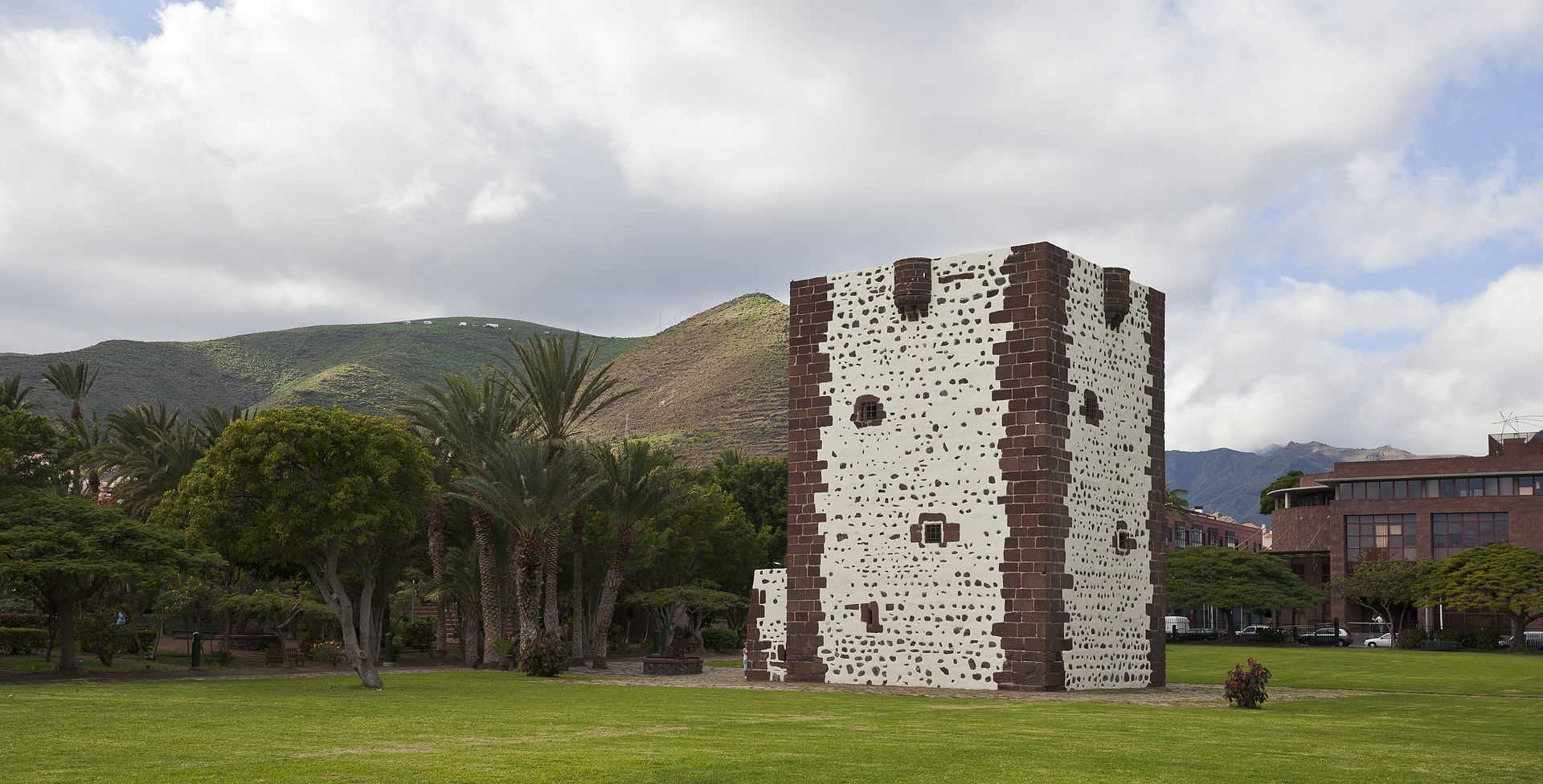
The Torre del Conde, the old paths, the hamlets, the farming terraces and the historic quarters of San Sebastián give shape to the island's memory.
Explore sectionCulture and Traditions
The Silbo Gomero, the local festivals, oral tradition and peasant culture express social adaptations to a rugged terrain.
Explore sectionEconomy and Society
La Gomera's economy moved from the señorío and sharecropping to the sugar mills of 1502, and from export crops —bananas in Hermigua and Agulo, tomatoes in the south— to the tuna canning factories. An emigration that took more than forty thousand people to Cuba, Venezuela and Tenerife between 1871 and 1975 emptied the countryside, while today the island lives on nature tourism, palm honey, crafts and a whistled language declared Intangible Cultural Heritage of Humanity.
Explore sectionMunicipalities and Territories
Valleys, ridges, hamlets and coastal municipalities reveal a territorial organisation shaped by the ravines.
Explore sectionKey Places
Garajonay, San Sebastián, the Roque de Agando, Valle Gran Rey and the traditional paths are essential landmarks.
Explore sectionLinked Figures
Beatriz de Bobadilla, the figures linked to Columbus and the bearers of the Silbo connect the island with a wide range of historical processes.
Explore sectionIsland Chronology
La cronologia gomera enlaza mundo indigena, senorio, viajes atlanticos, despoblamiento relativo y patrimonializacion cultural.
Explore section