

ContemporaryMusic20th CenturyTimple
Timple player and musical innovator
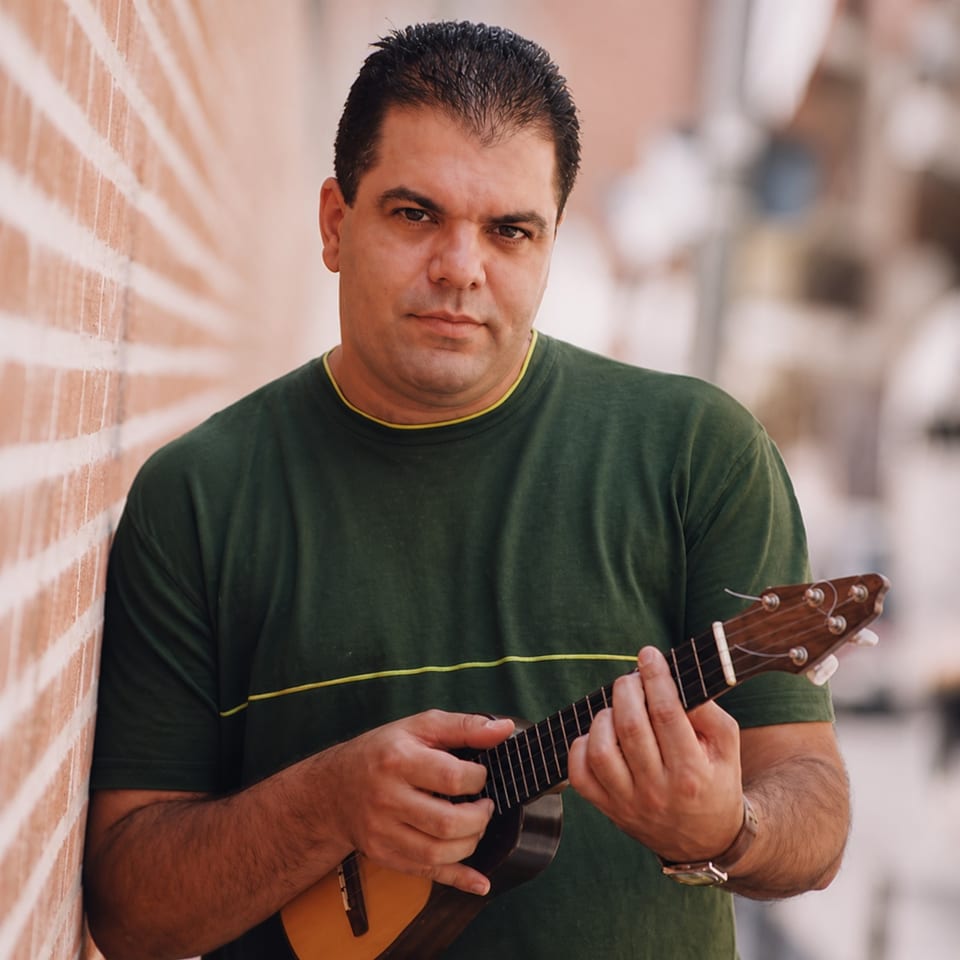
José Antonio Ramos was one of the great renovators of the timple, bridging Canarian tradition, jazz, flamenco and world music.
Timple player and musical innovator · 1969–2008
Timple player and musical innovator
José Antonio Ramos was one of the great renovators of the timple, bridging Canarian tradition, jazz, flamenco and world music.
José Antonio Ramos, born in Las Palmas de Gran Canaria on 10 November 1969, began studying the timple at the age of nine with Totoyo Millares, one of the key figures in the instrument's modern transmission. He later studied classical guitar at the Conservatorio Superior de Música de Las Palmas, but his path was not about separating academic technique from popular roots. Instead, he used both as a foundation for a more ambitious view of the timple. Canarian tradition remained his starting point, while jazz, improvisation, flamenco, Celtic music and other world-music languages expanded the instrument's role. Ramos showed that the timple could carry melody, rhythm, accompaniment and experimentation with a voice of its own.
In 1989 he won the National Folk Music Prize for Young Performers in Santiago de Compostela, a recognition that helped launch him professionally and led to the formation of Trío Timple. With that group he recorded Más que un sueño and Tanekra, touring the Canary Islands with a renewed reading of the instrument's repertoire. During that period he also led Timple. El sonido de Canarias as the central event of the Canary Islands Day programme, bringing together instrumentalists and singers from the archipelago. After Trío Timple, he began a solo career marked by the first electroacoustic timple, designed for him by luthiers Jesús Machín and Juan Molina. That exploration is reflected in albums such as Los Cuatro Gigantes, Puntales, Jeito, Para timple y piano, Y..., Los versos de la vida, 15 años de timple, Música Óptica, Las Manos del Maestro and Very JAR.
Ramos's importance goes beyond his discography: it lies in how he broadened the timple's field of possibilities and placed it in musical conversations where it had rarely appeared before. He collaborated with Carlos Núñez, Kepa Junkera, Pedro Guerra, Rosana, Mestisay, Los Sabandeños, The Chieftains, Béla Fleck, Jorge Pardo, Juan Manuel Cañizares, Taburiente, Javier Ruibal, Pancho Amat, Polo Ortí and Andreas Prittwitz, among others. Alongside his stage and recording work, he maintained a steady teaching practice through lessons, courses, lectures and seminars in the Canary Islands, mainland Spain and abroad. He died in Las Palmas de Gran Canaria on 4 June 2008, aged 38, leaving a decisive reference point for later generations of timple players.
Timple master
1935
Meet figures
Sculptor and architect
1756 - 1815
Meet figures
Historian, Musician
1826 - 1896
Meet figures
Physician, anthropologist and museologist
1831 - 1901
Meet figures
Engineer and public figure
1834 - 1912
Meet figures