

ContemporaryLiterature20th CenturyCanarian poetry
Poet, journalist and illustrator
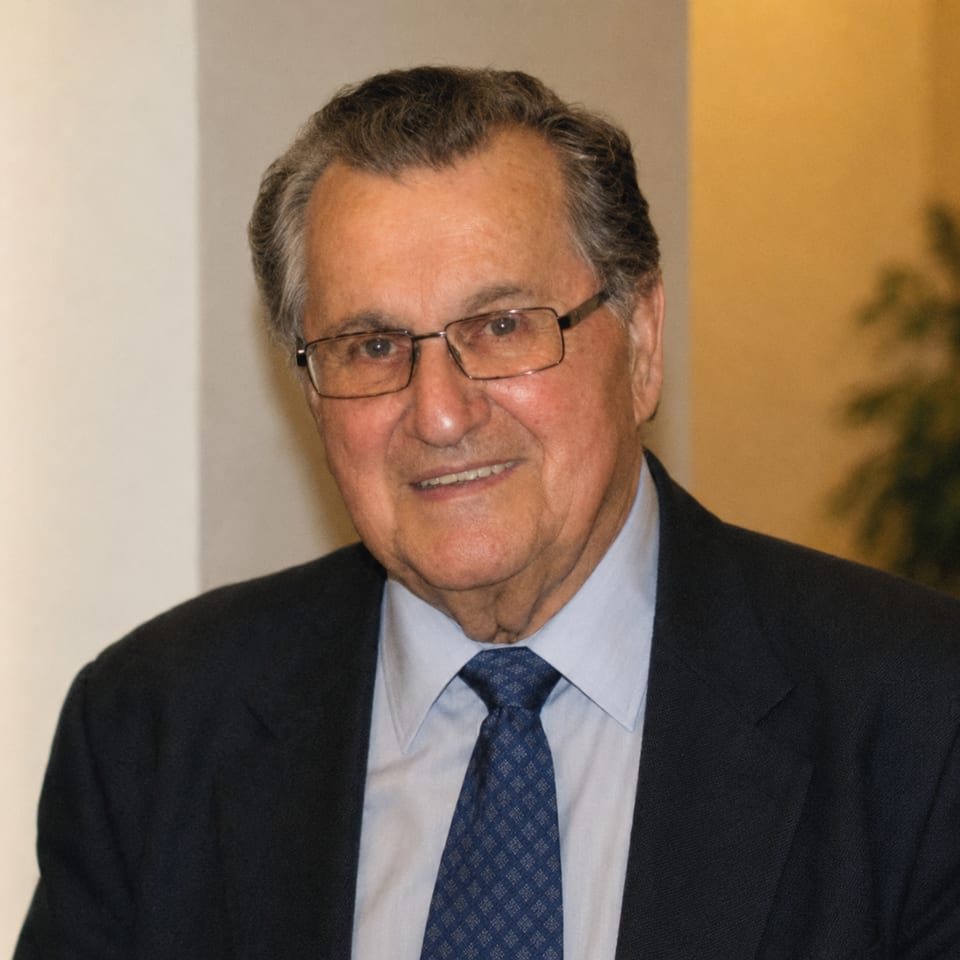
Fernando Ramírez Suárez was a poet from Arucas associated with Poesía Canaria Última, co-founder of the Tagoro poetry series and a journalist at Diario de Las Palmas.
Poet, journalist and illustrator · 1932–2010
Poet, journalist and illustrator
Fernando Ramírez Suárez was a poet from Arucas associated with Poesía Canaria Última, co-founder of the Tagoro poetry series and a journalist at Diario de Las Palmas.
Fernando Ramírez Suárez was born in Arucas on 29 December 1932 and built a career across poetry, editing, journalism, graphic design, illustration and painting. He was a poet of the Poesía Canaria Última generation, co-director of an important literary series and a newspaper worker who moved through several trades of the printed press. His legacy therefore belongs not only to books, but also to supplements, page layouts, posters and local cultural recovery.
His public entry into poetry came through Arucas. In 1962 he received the Flor de Oro at the first Juegos Florales of Arucas for Salmodia de la piedra, where he met Lázaro Santana. In 1963 they founded and co-directed Tagoro, a literary series that published around twenty titles. Tagoro also recovered work by Canarian modernists such as Alonso Quesada and Domingo Rivero, establishing references for a new poetic group in Gran Canaria.
Tagoro published two of his key books: Mar que yace in 1964 and La piedra y el recuerdo in 1966. That year it also issued Homenaje a Domingo Rivero, which included his poem Aún tañe la campana. In 1966 the anthology Poesía Canaria Última appeared in the San Borondón series of Ediciones El Museo Canario, giving its name to the group with which he is identified. His poetry belongs to a generation that sought a voice between island memory, formal experimentation and dialogue with earlier traditions.
Other works had a more complex publication history. En busca de mi barco won second prize in the Antonio de Viana poetry award in 1968 but was not published then. Mujer sentada received second prize in the Tomás Morales award in 1976 and also remained outside normal circulation at the time. BienMeSabe lists these titles among his production, and ParaFernando stresses that some prize-winning books remained unpublished for decades.
Alongside poetry, Ramírez sustained an important career in cultural journalism. He coordinated El séptimo día, the literary supplement of El Eco de Canarias, between 1966 and 1968, and later Cartel at Diario de Las Palmas. From 1968 he worked at Diario de Las Palmas for three decades as page designer, illustrator, desk editor and later street reporter, including coverage related to the Cabildo de Gran Canaria.
His work in newspapers was also visual work. Colleagues remembered his hand-crafted way of composing pages before digital tools became common, measuring spaces and lines with a very personal sense of layout. That visual sensitivity extended to illustration, painting and posters. He took part in Carnival poster competitions in Las Palmas de Gran Canaria and won the 1983 contest with a work remembered for its colour and expressiveness; he also entered competitions in Arucas.
By the end of the 1970s his public life as a poet had largely receded, a silence ParaFernando links to family life and professional dedication. From 1999, however, he returned to the literary scene in Arucas as a permanent jury member of the Pedro Marcelino Quintana Poetry Prize and collaborator with the Tertulia P. Marcelino Quintana.
In 2009, a few months before his death, he gathered his published and unpublished writings in Obra poética, an edition by TEPEMARQUIA reordered by the author and illustrated with his own drawings. After his death, the Para Fernando project and the posthumous volume Piedras ceniza extended that recovery. Fernando Ramírez died in Las Palmas de Gran Canaria on 19 March 2010; he remains a discreet but central reference in 1960s Canarian poetry, independent literary editing and Gran Canarian cultural journalism.
Canon and poet
1538 - 1610
Meet figures
Sculptor and architect
1756 - 1815
Meet figures
Physician and writer
1803 - 1896
Meet figures
Painter and architectural designer
1812 - 1880
Meet figures