

At the end of the 19th and beginning of the 20th centuries, Canarian regionalism became a central issue in the political and cultural life of the archipelago, especially after Spain lost its last overseas colonies in 1898 and the metropolis renewed its interest in the islands[1]. During this period, the press played a crucial role in shaping debates about identity, autonomy, and the relationship between the Canary Islands and Spain.
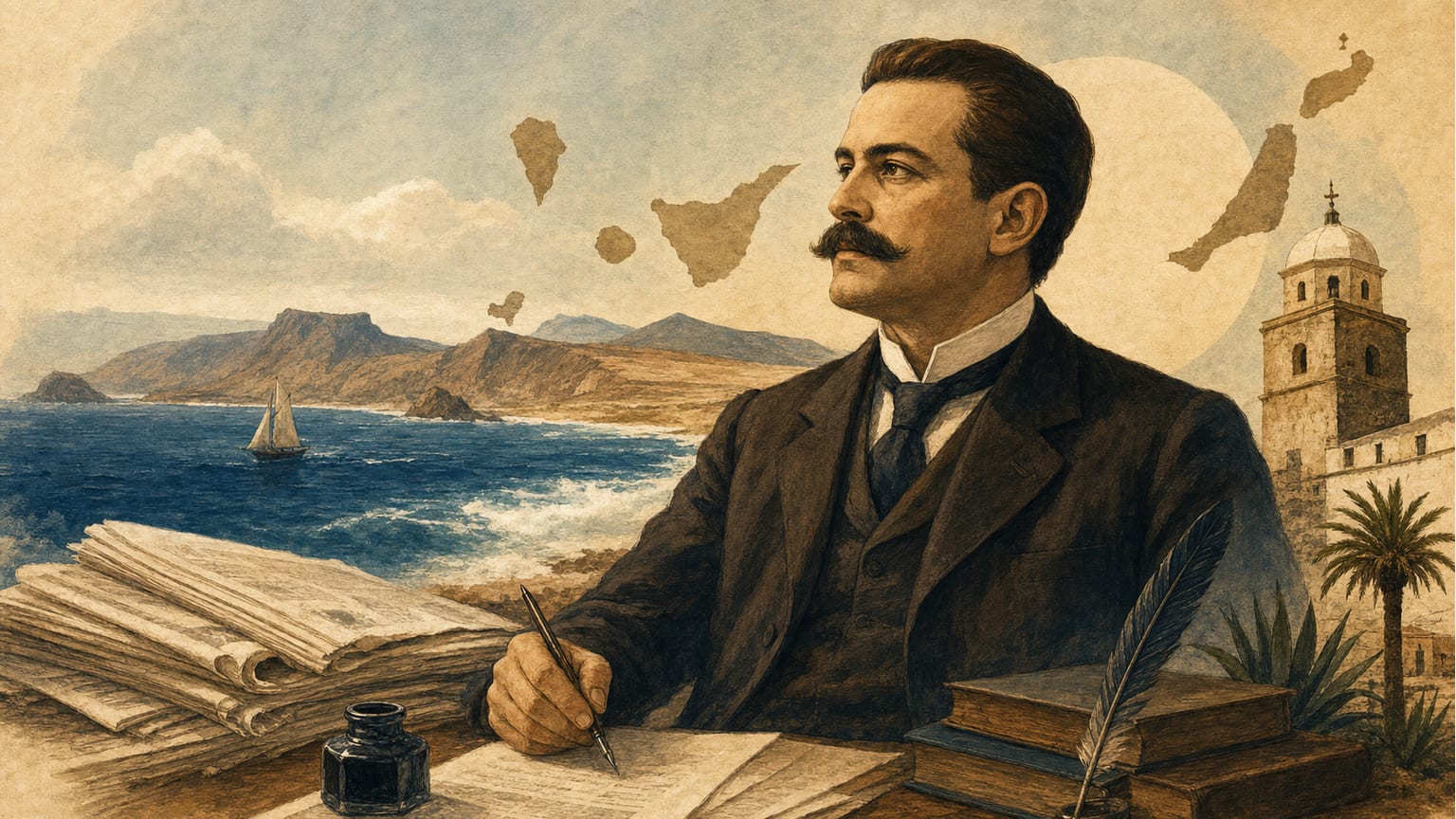
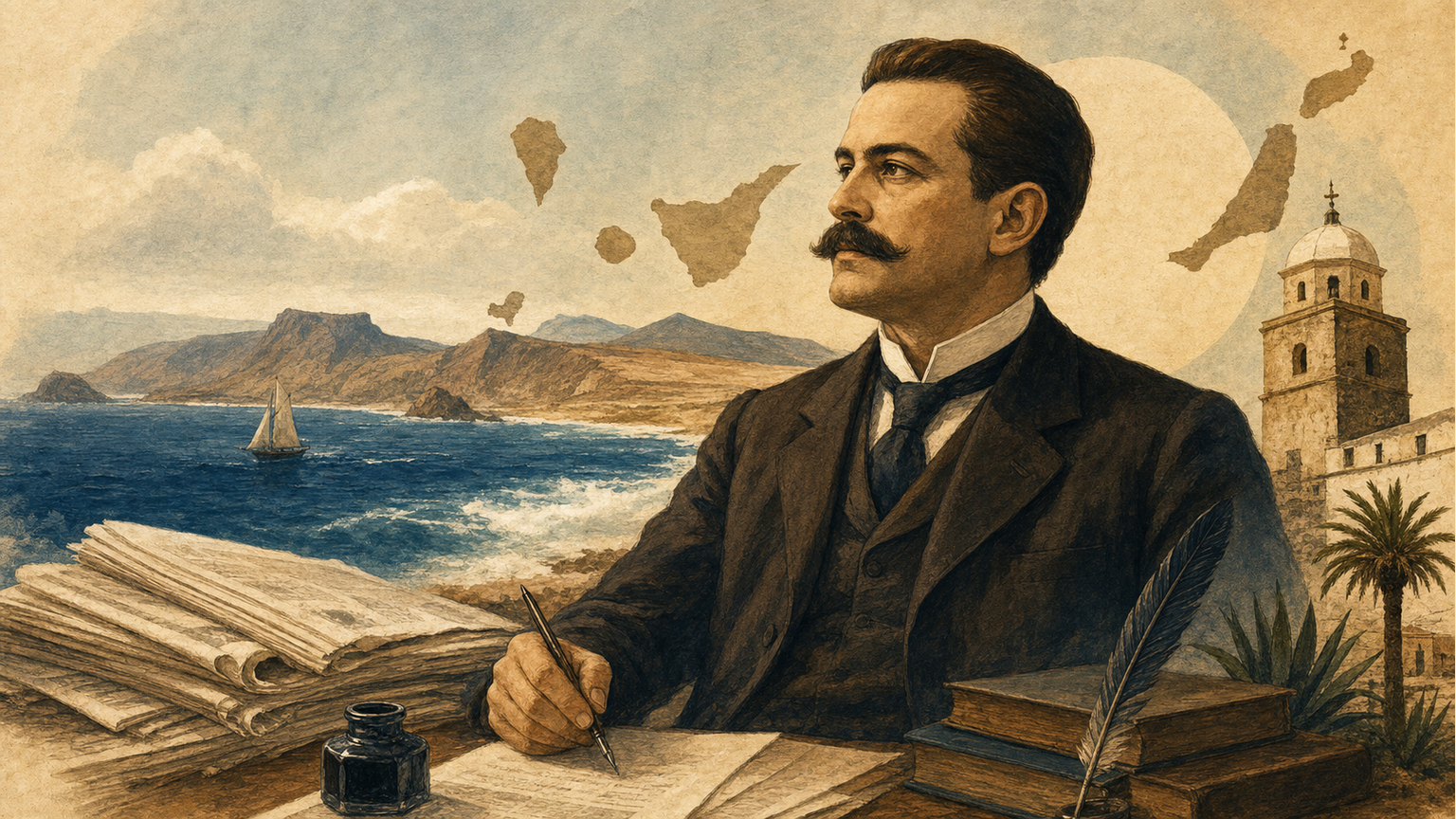
One of the key figures in this debate was José Betancort Cabrera, known by his pseudonym Ángel Guerra, born in the town of Teguise, Lanzarote, in 1874[1]. Betancort Cabrera moved to Las Palmas at a young age to continue his studies and began collaborating with the local press before settling in Madrid in 1900, where he became active in journalism, notably at the “Heraldo de Madrid”[1].
In 1902, Ángel Guerra published a series of five articles in the newspaper “Las Canarias” under the title “Sobre Canarias. Britanización y separatismo” (On the Canary Islands. Britanization and Separatism), responding to accusations in Madrid’s public opinion that the archipelago was becoming “britanized” and separatist[1]. Guerra firmly defended the Spanish identity of the Canary Islands and denied the existence of a real separatist movement, stating that “in the distant province, which is not even troubled by regionalist fevers, the Spanish soul is vibrant”[1].
However, the Canarian press reflected a more complex reality, with voices advocating for administrative and economic autonomy for the archipelago. A notable example was the autonomist campaign led by Secundino Delgado through the newspaper “¡Vacaguaré!”, which called for the creation of legislative and executive bodies specific to the Canary Islands[1]. Delgado’s arrest was interpreted by the local public as an attempt to suppress autonomism, although officially he was accused of conspiring against the Spanish government in Cuba[1].
In his articles, Ángel Guerra positioned himself as a spokesperson for the most pro-Spanish sectors of the Canarian bourgeoisie, who feared any change in the political situation. He argued that “its history, its race, its language, and its soul are noble, chivalrous, and belong entirely to the ancient Castilian homeland”[1]. Nevertheless, he acknowledged that regionalism could have a place as long as it contributed to the unity of the archipelago and the strengthening of its identity within Spain.
The press, both local and national, was the arena where these concepts were debated and where figures such as Ángel Guerra and Secundino Delgado presented their contrasting visions for the political future of the Canary Islands[1]. This debate reflected the tensions between centralism and autonomy, as well as the influence of international factors such as British economic dominance over the archipelago in the 19th century[1].
The figure of Ángel Guerra illustrates the complexity of Canarian regionalism during this period, where the assertion of a distinct identity coexisted with the defense of Spanishness and concerns about the islands’ political and economic future[1].