

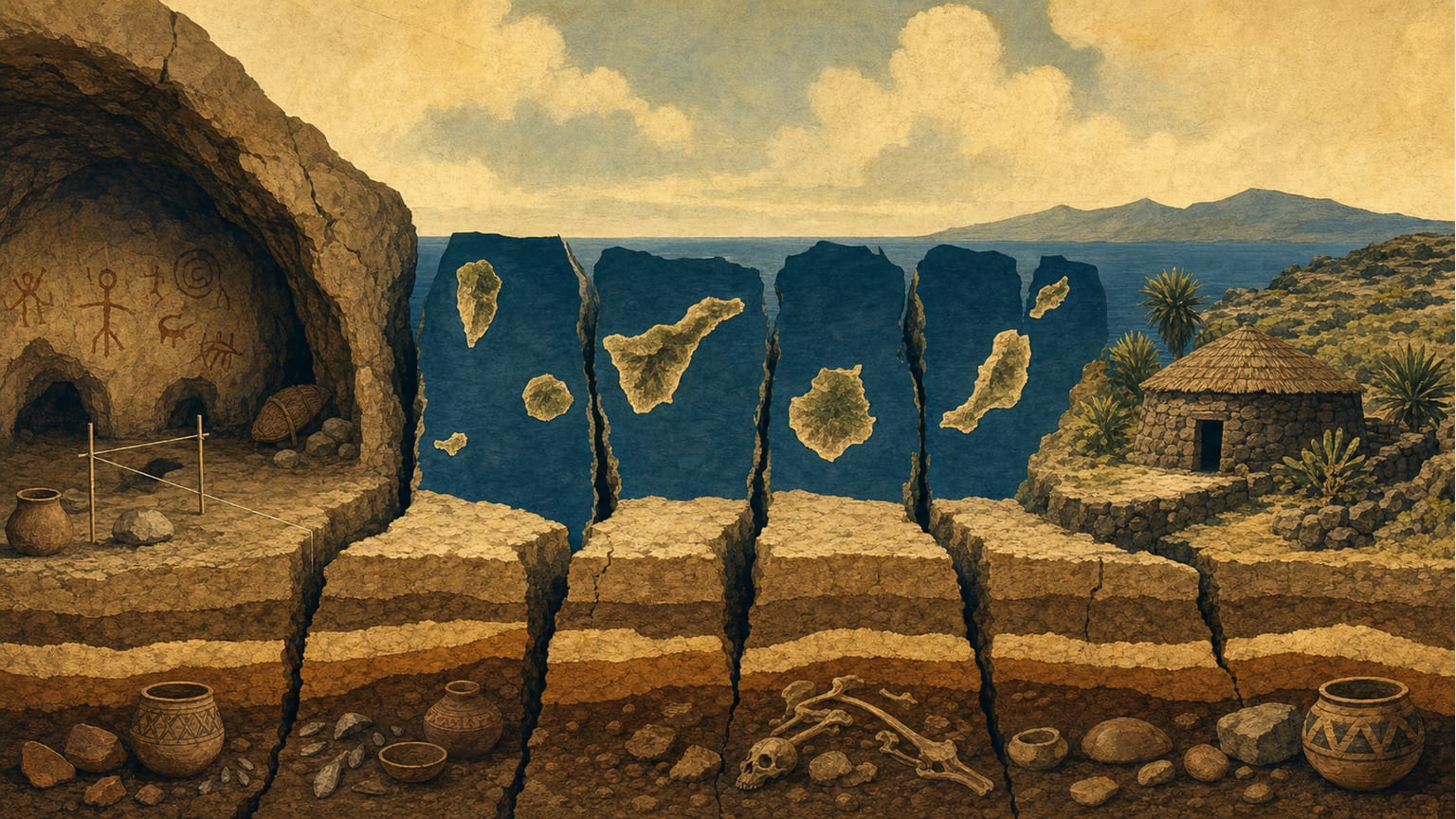
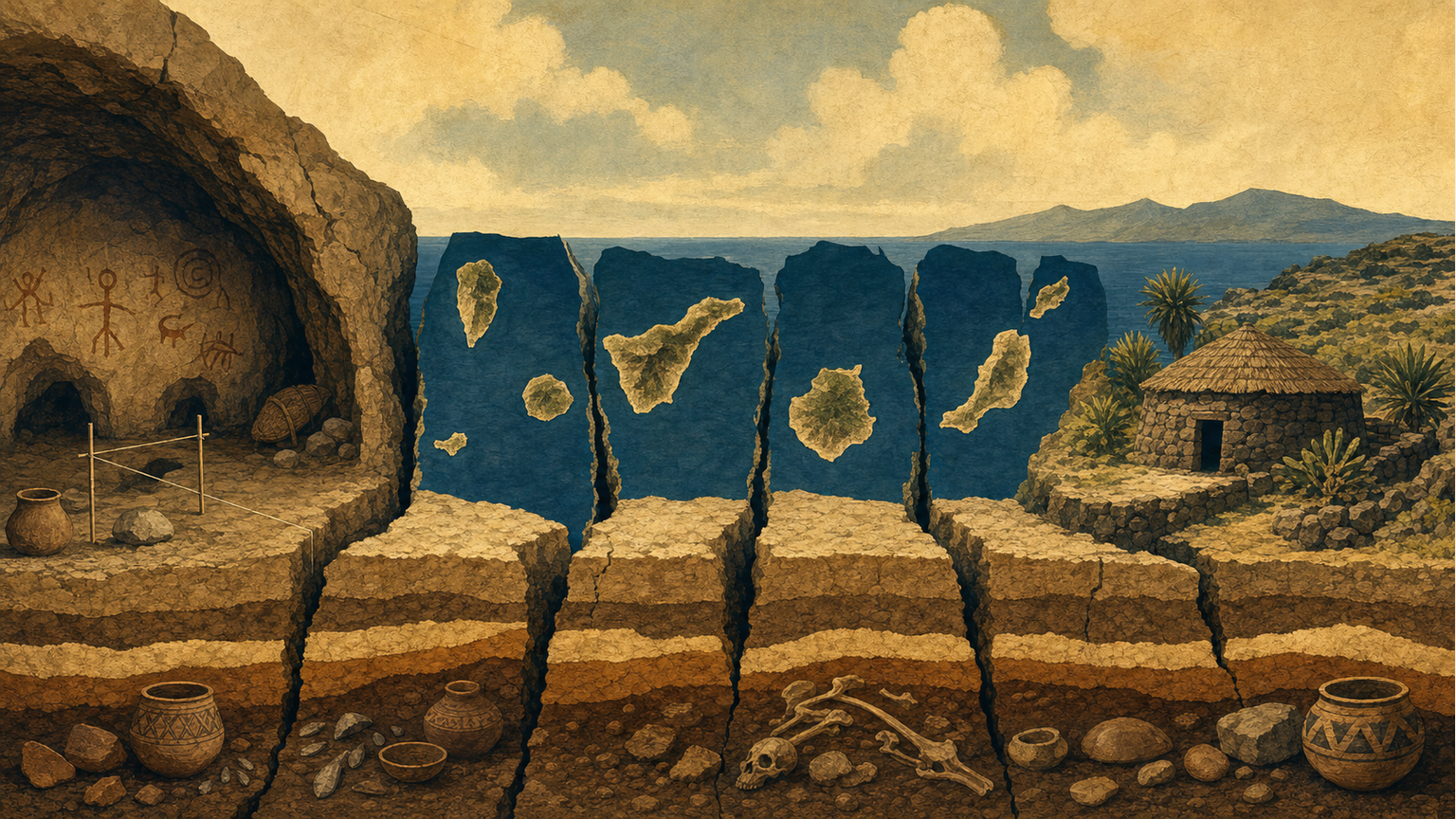
Archaeological interpretations of the early settlement of the Canary Islands have been deeply influenced by political insularism, especially following the implementation of the Statute of Autonomy in 1982[1]. This shift led to the fragmentation of the regional perspective on Canarian prehistory, promoting the idea of distinct insular cultures and reinforcing the perception of each island as a unique historical and cultural entity[1].
The transfer of heritage management powers to the island councils (cabildos) and the rise of island-based political clienteles fostered the development of an insularist archaeological discourse, often at the expense of a regional or pan-Canarian perspective[1]. As Farrujia de la Rosa notes, “el insularismo político se ha traducido en el fraccionamiento del espacio político, en el auge del particularismo insularista como opción política, en su doble expresión de las ideas y de la práctica”[1].
This context led archaeology and museography in the Canaries to emphasize the uniqueness of each island and the supposed ethnic groups that inhabited them, such as the Guanches in Tenerife, the Majos in Lanzarote, or the Gomeros in La Gomera[1]. The multi-volume collection “La prehistoria de Canarias” from the 1990s illustrates this trend by dedicating a volume to each island and explicitly associating an ethnic group with each[1].
However, the empirical basis for this island-ethnic group relationship is weak. Recent archaeological and genetic studies do not support the existence of differentiated insular ethnicities, but rather point to a shared Amazigh substrate, shaped by isolation and local adaptation[1]. Farrujia himself states that “los datos arqueológicos y genéticos no permiten seguir defendiendo la tesis poblamiento-isla-etnia” (archaeological and genetic data do not allow the continued defense of the island-ethnic group settlement thesis)[1].
Nevertheless, heritage management and museum displays have continued to reinforce the insularist discourse, presenting each island’s prehistory as an autonomous and unique phenomenon[1]. This approach has influenced social perceptions of Canarian identity, encouraging identification with one’s island of origin and complicating the construction of a common historical narrative[1].
In summary, political insularism has profoundly shaped archaeological interpretation and heritage management in the Canary Islands, resulting in a fragmented view of ancient settlement that does not always align with the available scientific evidence[1].