

Guanche Cave Dwellings: Archaeology of an Ancestral Home
One of the most intriguing aspects of Guanche life—the indigenous people of Tenerife—is their use of caves as homes. Both ethnohistorical records and archaeological findings agree that natural caves, formed in volcanic conglomerates or lava tubes, were the most widespread type of dwelling among these communities[^publicacion-ulpgc-escaneada-79p].
Selection and Use of Caves
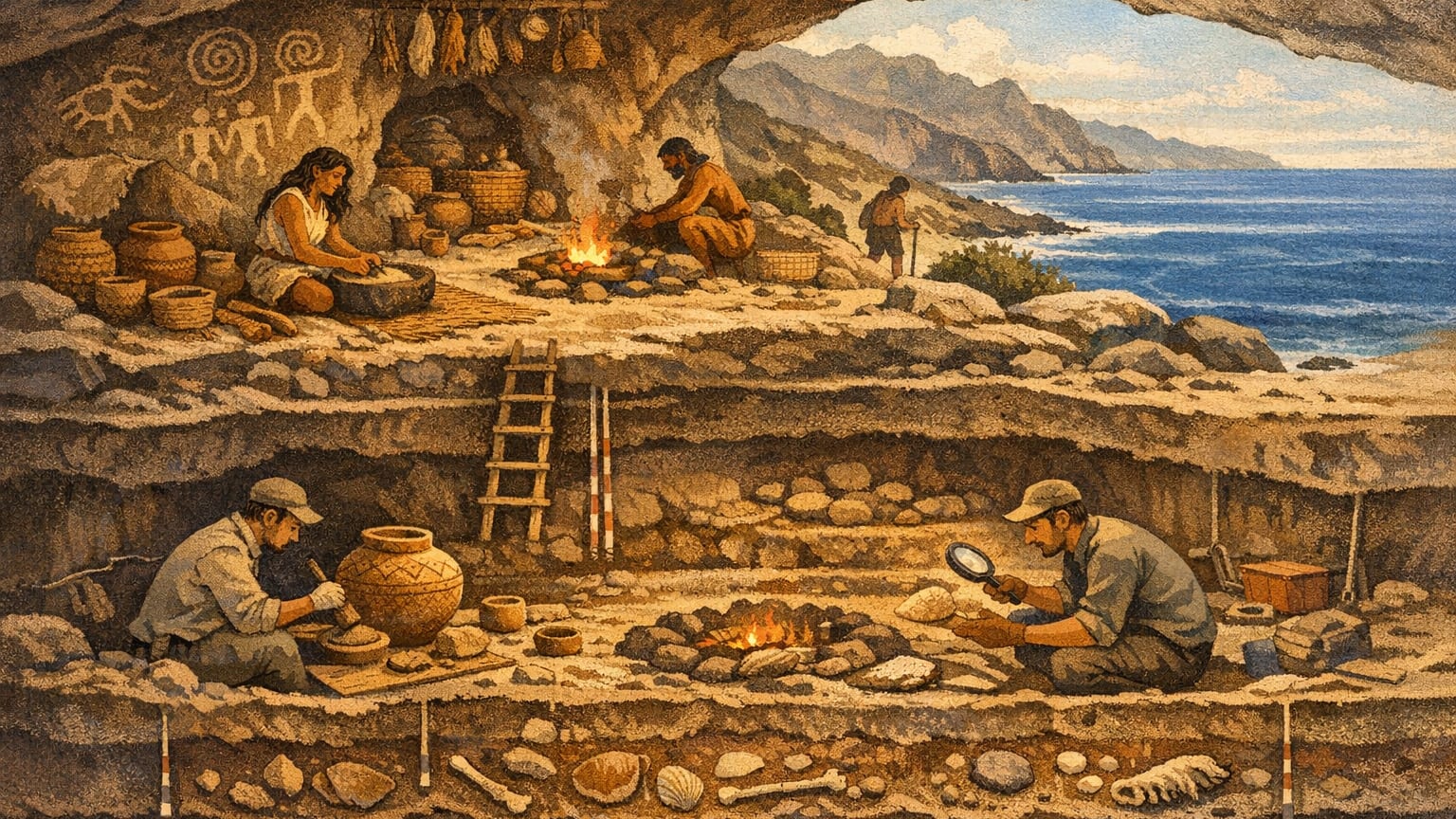
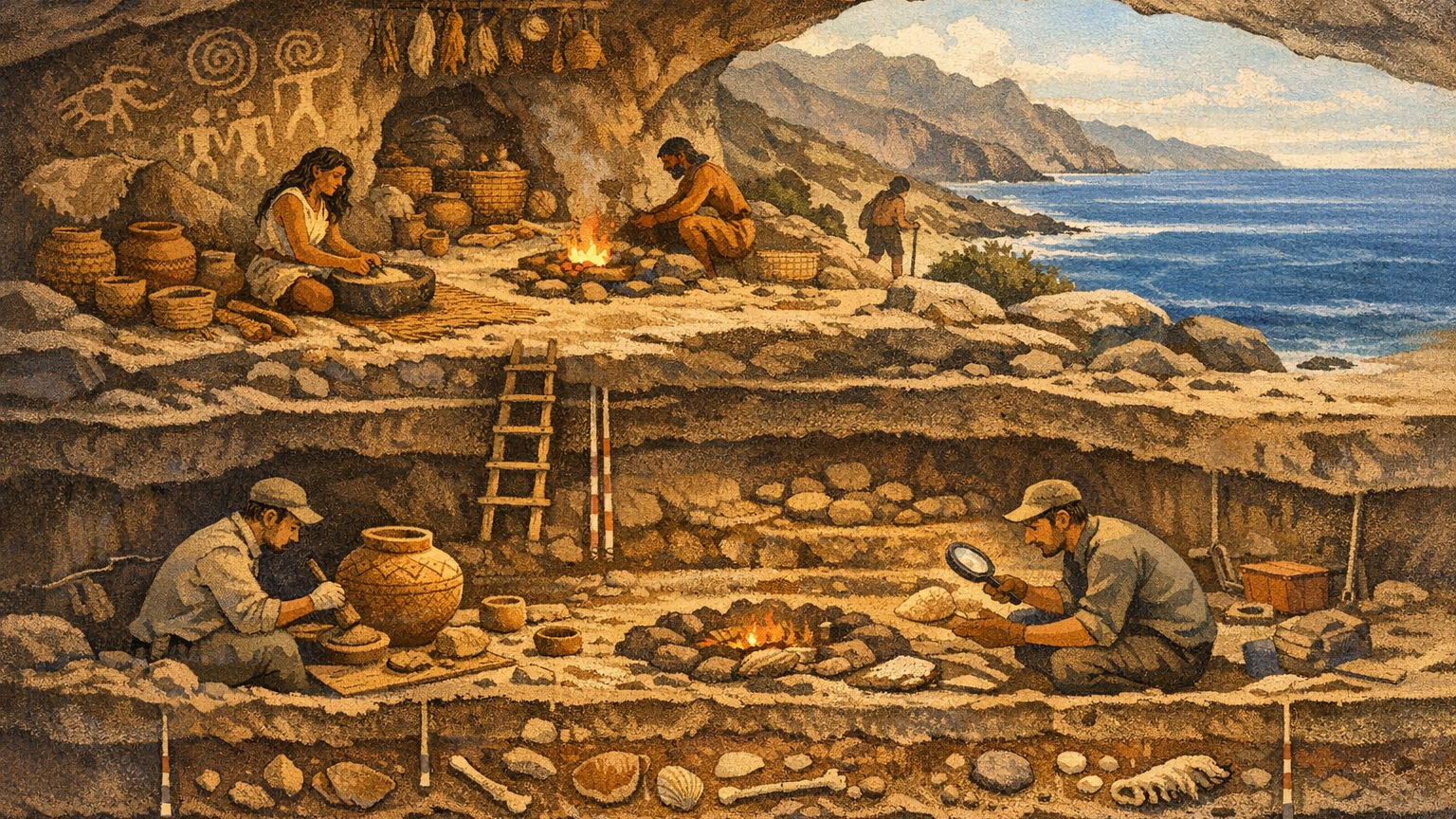
Not every cave was suitable for habitation. The Guanches selected those with ample space, good sunlight, protection from wind and rain, and proximity to water sources and pastures. These conditions made certain caves stable homes, occupied for generations. The accumulation of remains and sediments in these spaces has allowed archaeologists to reconstruct the history of their occupation through stratigraphy, revealing changes in daily life over time[^publicacion-ulpgc-escaneada-79p].
Key Archaeological Examples
Excavations have revealed occupation sequences spanning centuries. The Cueva de La Arena in Barranco Hondo (Candelaria) shows habitation from the 1st century BCE to the 2nd century CE, while in Icod de los Vinos, the caves of Las Palomas and Don Gaspar document continuity from the 3rd century BCE to the post-conquest period[^publicacion-ulpgc-escaneada-79p]. These studies have identified changes in diet, agriculture, and social organization among the Guanches.
Beyond Shelter: Artificial Caves and Other Uses
While traditional historiography has emphasized natural caves, there is evidence that the Guanches also excavated artificial caves, as seen in Gran Canaria. Historical sources mention dwellings “made by hand in rough stone, well crafted,” suggesting a wider architectural diversity[^publicacion-ulpgc-escaneada-79p].
Additionally, some caves served as burial sites, storage spaces, or places of worship, highlighting their multifunctional role in aboriginal life. Ongoing archaeological research continues to catalogue and study both natural and artificial caves to better understand their function and meaning.
Archaeological Significance
Caves with well-preserved stratigraphy are true archives of the past. Through careful excavation, they reveal the evolution of domestic practices, diet, technology, and environmental changes faced by the Guanches. Each sedimentary layer is a testament to the adaptation and resilience of these island communities[^publicacion-ulpgc-escaneada-79p].
In summary, the study of cave dwellings not only reveals how the Guanches lived but also illuminates the complexity and richness of their culture, their relationship with the environment, and their ability to transform the island landscape into a true ancestral home.